

A small roof leak can turn into stained drywall, soaked insulation, mold, and damaged framing fast. If you live in Albany, Saratoga Springs, Clifton Park, Troy, Schenectady, or nearby Capital Region towns, this guide explains how to repair a roof safely, when DIY is reasonable, and when to call Top Gen Roofing for help.
This guide is designed for New York homeowners seeking practical, safe, and cost-effective roof repair solutions.
Quick Answer: What to Do When Your Roof Is Leaking
A leaky roof should be addressed within 24–48 hours. Water can spread behind drywall, soak insulation, and weaken roof decking before the leak looks serious inside the home.
Common immediate causes include missing or damaged shingles, damaged flashing around chimneys or vents, cracked vent boots, and ice dams along eaves after Capital Region snowstorms.
Do this now:
Move furniture, electronics, and valuables away from the leak.
Catch water with buckets and use plastic sheeting to protect floors.
Before attempting any repairs, it’s crucial to identify the exact location of the leak. Use a garden hose to methodically test different areas of the roof and narrow down the source, or carefully remove shingles in the suspected zone to find visible signs of water intrusion.
Call a professional roofer like Top Gen Roofing for emergency roof leaks or same-day guidance.
DIY may be reasonable for one or two damaged shingles on a low-slope asphalt shingle roof. Call a roofing professional immediately for an active ceiling leak, sagging roofline, electrical risk, steep roof, or leaking roof after severe weather.
Roof Repair vs. Roof Replacement
Roof repair involves fixing specific problems or damaged areas, while roof replacement entails removing the entire existing roof and installing a new one. Repairs may address leaks, damaged shingles, damaged flashing, or minor roof decking issues; replacement means a new roof system across the entire roof.
Repair is usually best when:
The issue is isolated, such as a few missing shingles or one vent leak.
Asphalt shingles are under 15–18 years old.
Storm damage is localized.
Replacement makes more sense when:
Granule loss, curling, or cracking is widespread.
Repeated roof leaks appear in different areas.
The old roof is over 20–25 years old.
More than 25% of your roof needs attention or there are structural issues, because a professional can determine if a full replacement is more cost-effective.
Choosing between roof repair and replacement often depends on the extent of the damage; minor issues may only require repairs, while extensive damage may necessitate a full replacement. In the Capital Region, snow loads, ice dams, high winds, and freeze–thaw cycles can make older asphalt shingles and metal roofing deteriorate faster, especially on north-facing slopes. If your roof is more than 20 years old, it is critical to have a skilled professional inspect it to assess whether it remains sound, as older roofs are more prone to significant issues.
Repair costs are lower upfront, but repeated minor repairs can add up if the roof is near the end of its life. A complete roof replacement or full roof replacement has a higher immediate cost, but it can reduce future leaks and long-term interior damage. Top Gen Roofing provides honest recommendations after a roof inspection and will not push replacement if targeted roof repair is more cost-effective.
How to Spot Roof Damage Early
Catching roof damage early keeps roof repair costs down and helps prevent future leaks inside walls, ceilings, and attic spaces. Using a structured basic roof inspection checklist for homeowners as part of regular roof maintenance can prolong the lifespan of your roof and prevent the need for expensive repairs.
From the ground, inspect the exterior ground by checking the roofline for sagging, moss growth, and rusted or cracked flashing. Also look for:
Missing or damaged shingles
Curling or cupping asphalt shingle edges
Rusted flashing, old flashing, or loose metal flashing
Dented metal roofs
Cracked rubber boot collars on pipe vents
Granules collecting in gutters
Check gutters for an excessive buildup of coarse shingle granules, which indicates the protective UV coating is wearing away. Ultraviolet light gradually breaks down roofing materials, especially on an asphalt roof.
Inside, roof leaks can often be detected by looking for water spots on ceilings or walls, which indicate moisture breaching from above. In the attic, inspect for dark water spots, damp insulation, and beams of daylight coming through cracks. Also note musty odors after rain, peeling paint, and damp insulation.
To locate a roof leak, start by inspecting areas uphill from water stains, as leaks typically originate from penetrations like vents or skylights. Using a garden hose to soak sections of the roof can help pinpoint difficult leaks; have someone inside the house to signal when water appears.
Inspect your roof and gutters after heavy rain, hailstorms, or January–February snow and ice events. Top Gen Roofing offers professional roof inspections to identify hidden roofing issues like soft decking, damaged flashing, valley flashing problems, and early ice dam damage.
Safety and Preparation Before Any Roof Repair
Safety is more important than saving money on DIY. DIY roof assessments and repairs should only be attempted on one-story roofs and under dry weather conditions.
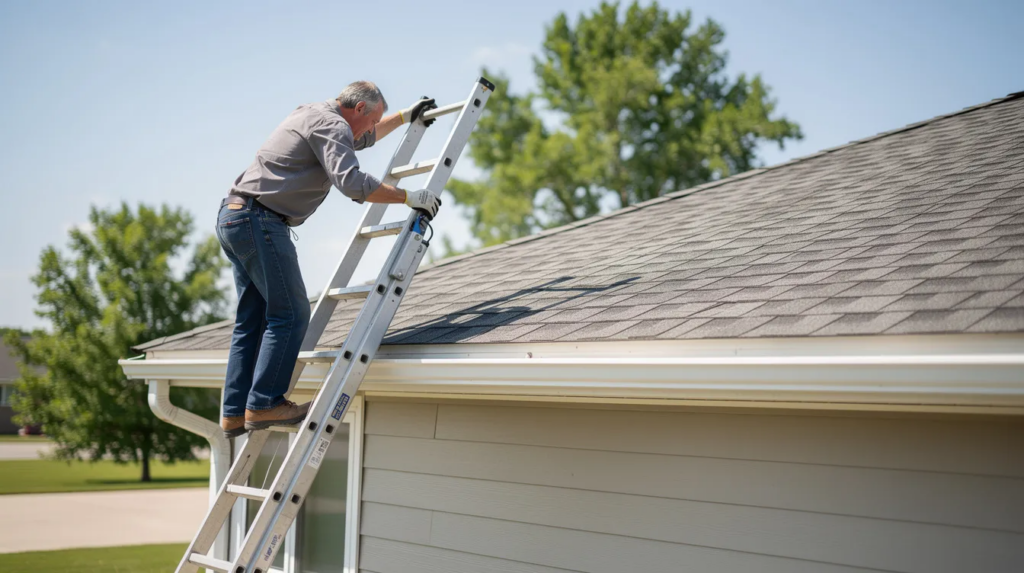
Use a sturdy extension ladder tied off at the top, non-slip shoes, gloves, and fall protection on steep slopes. Never work on icy, wet, snowy, or windy roofs. If your roof has a steep pitch, multiple stories, or is difficult to access, safety equipment and professional training are required. Contact a licensed professional for steep, multi-story roofs or structural damage like a sagging roofline and failing framing.
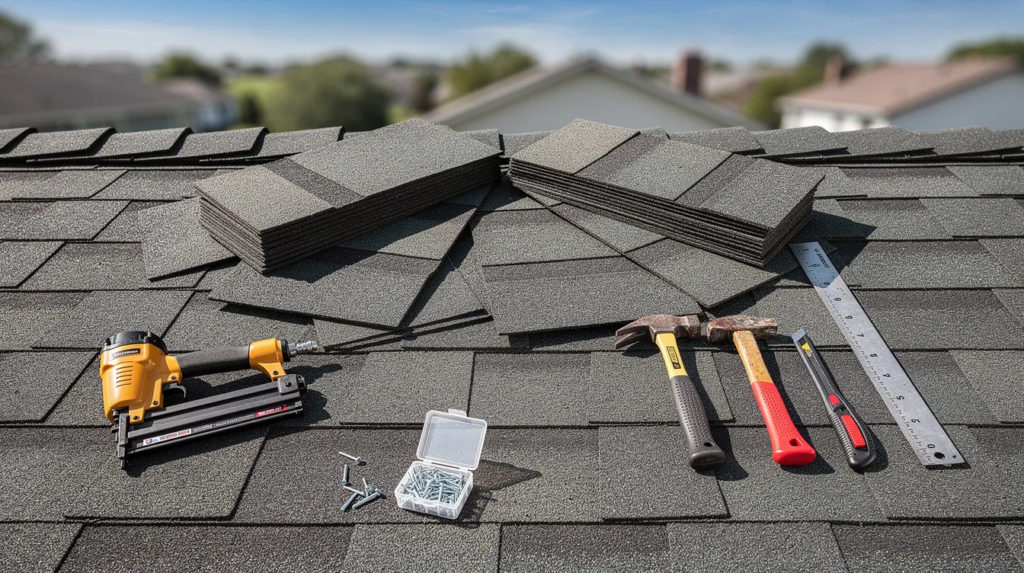
For simple repairs on an asphalt shingle roof, basic roofing tools include a flat bar, hammer, roofing nails, replacement shingles, roofing cement, utility knife, caulk gun, roofing caulk, roof sealant, and a putty knife. Document all damaged areas with clear photos before attempting repairs to provide a baseline for contractors and insurance claims.
Metal roofs, skylights, dormers, chimneys, flat roofs, and a slate roof require specialized experience. Tasks involving valley leaks, chimney flashing, or pipe boots require specialized skills to prevent leaks. Also, attempting DIY repairs on a relatively new roof can completely void the manufacturer’s or contractor’s warranty. Check the weather forecast for at least 24 hours of dry conditions before permanent work.
Temporary Fixes for an Active Leak
Temporary fixes are stopgap measures to protect interiors until a permanent repair is completed. They are not substitutes for addressing serious issues like a sagging roof and structural problems with proper repair work.
For a tarp, extend it from the ridge down over the leaky section. Secure the tarp with 2x4s screwed into the roof deck above the leak zone, avoiding valley areas when possible because water concentrates there.
For small holes or cracked flashing, roofing cement may slow water entry on a clean, dry roof surface. Seal visible nail heads only as a temporary patch.
Inside, use buckets and plastic sheeting to channel water away from drywall, flooring, and furniture. Then call a local roofing company the same day. Top Gen Roofing offers fast, free estimates within 24 hours for emergency leak repair.
Step-by-Step: Repairing Asphalt Shingle Roof Damage
Asphalt shingles are the most common roofing material in Upstate New York. Replacing shingles can work for localized damage, but stop if you discover widespread deterioration.
To start removing shingles, gently lift the surrounding shingles with a flat bar. Remove roofing nails in the damaged course and the course above it, then slide out cracked or broken shingles.
Next, slide the asphalt shingle replacement into place. Align it with surrounding courses, match the exposure, nail along the factory nail line, and seal tabs with asphalt roof cement to improve wind resistance.
Replacing a few shingles is different from discovering extensive damage across multiple slopes. If you see widespread missing shingles, brittle tabs, soft roof decking, or recurring leaks, schedule a professional inspection.
Along eaves and rakes, check for damaged shingles caused by ice dams. Seal small nail holes with appropriate roof sealant to prevent future leaks, but do not rely on roof coating to fix failing shingles or bad flashing.
Fixing Flashing, Vents, and Other Common Leak Sources
Many roof leaks come from details like flashing, vent boots, skylights, and pipe penetrations rather than the open field of shingles.
Damaged flashing around chimneys, skylights, and roof-to-wall transitions can allow wind-driven rain to enter and cause a leaky roof. Proper step flashing should overlap with each shingle course, while counter flashing should shed water over it.
High-level flashing repair involves removing siding or shingles as needed, installing new metal flashing that overlaps correctly, and sealing nail heads with roofing cement. However, this is one of the more complex repairs because poor overlap can cause further damage.
Inspect vent boots for cracked rubber, missing nails, gaps, or a deteriorated rubber boot. Replacement usually involves loosening nearby shingles, setting a new boot, and securing it with screws with rubber washers.
Call a professional roofer for masonry chimneys, multiple dormers, skylights, or repeated leaks. Bad flashing work often leads to recurring water paths that are hard to trace.
Metal Roof and Flat Roof Repairs
Metal roofs and flat roofing systems are less common on homes, but they require different repair techniques than asphalt shingles.
Common metal roofing issues include loose fasteners, failed sealant at seams, rust spots, punctures, and panel damage from hail or falling branches. Minor maintenance may include tightening exposed fasteners and sealing small fastener holes, but panel replacement and seam work should be handled by experienced metal roofing contractors. The cost of metal roofing materials can vary significantly and is often quoted per square foot, with aluminum and copper roofing having different price points depending on material quality and type.
For flat or low-slope roof types like EPDM membranes, patching generally means cleaning the area, applying compatible membrane patches, using the right adhesive, and rolling seams. Standing water on flat roofs can signal drainage problems that need correction, not just patching.
Top Gen Roofing can inspect and repair metal roofs and many flat roofing systems, and will advise when replacement is more cost-effective than repeated patching, answering many common concerns covered in their roofing FAQs for Capital Region homeowners.
Gutters, Ice Dams, and Preventing Future Leaks
Clogged gutters can force water behind the fascia board, into soffits, and down walls. A poorly draining gutter system also increases winter problems during Upstate New York freeze–thaw cycles.
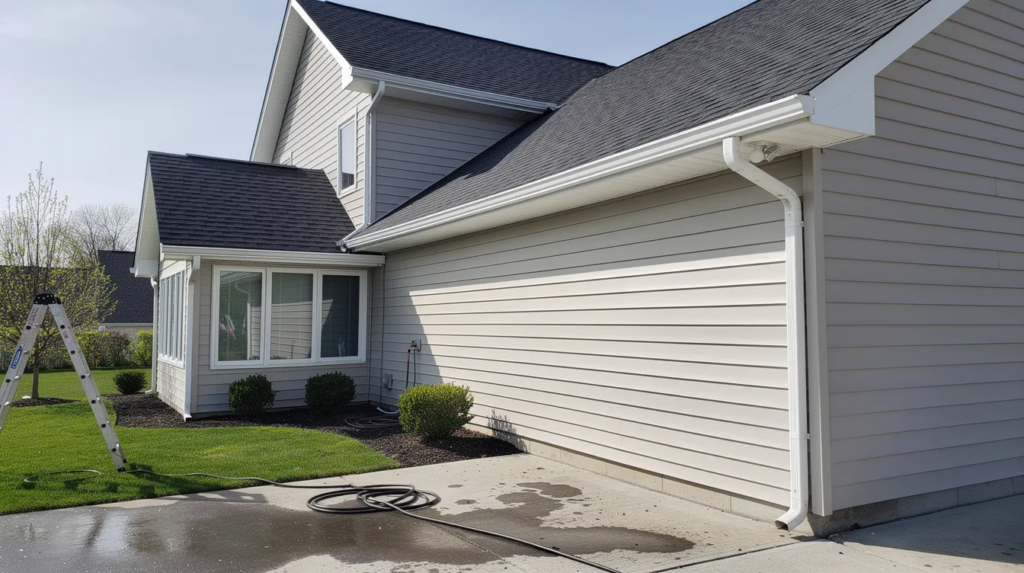
Clean gutters at least twice per year, check downspouts for clogs, and ensure water discharges away from the foundation. After storms, look for loose hangers and sagging gutter runs.
Ice dams form when warm upper roof sections melt snow and cold eaves refreeze that runoff. Water backs up under shingles and enters the house. The Greater New York Mutual guidance on ice dams also emphasizes insulation, ventilation, and drainage.
Long-term solutions include better attic insulation, soffit-to-ridge ventilation, properly sized gutters, and heating cables in trouble spots. Top Gen Roofing provides gutter repair, gutter replacement, and gutter cleaning to help prevent future leaks and reduce winter repair costs as part of their broader role as a leading roofing company in Saratoga County.
Roof Repair Costs and What Affects Your Budget
The cost of repairing a roof can vary widely depending on the extent of the damage, the type of roofing material, and the location of the property. Key factors include roof pitch, access, material costs, labor costs, and whether the work is planned or emergency.
Repairing a roof leak typically costs between $200 and $1,500 depending on the size and severity of the leak. Minor shingle repairs and small leak fixes may land in the few-hundred-dollar range. Flashing, skylight, or valley work can run from mid-hundreds to over a thousand. Extensive repairs involving rotten decking or structural work cost more.
Most roofing contractors charge a labor rate between $40–$80 per hour or charge a flat fee for minor repairs. A national average cost can be useful, but Albany-area pricing depends heavily on winter access, steepness, and roofing materials. Local estimates from sources like HomeYou’s Albany roof repair cost data place moderate repairs around $1,100 to $1,500.
Metal roofing, slate, and specialty systems usually have higher repair costs because of materials and specialized labor. Emergency call-outs during storms, winter conditions, evenings, or weekends may also increase the bill. Top Gen Roofing provides transparent pricing and free written estimates so homeowners can contact Top Gen Roofing for a free roofing estimate and compare repair your roof options against roof replacement.
DIY vs. Professional Roof Repair
Some small jobs are DIY-friendly, but many roof repairs are safer and more reliable when handled by a licensed contractor.
Reasonable DIY tasks include:
Replacing a few asphalt shingles on a single-story, low-slope roof
Sealing a small, clearly identified nail hole
Clearing gutters
Photographing roof damage for documentation
Hire a professional roofer for repeated leaks, damaged flashing around chimneys and skylights, sagging or soft spots, metal roofs, any work above one story, and any job requiring high quality materials or warranty protection.
Professional roofers bring fall protection, leak diagnosis experience, and access to better products that prevent future leaks. Top Gen Roofing’s licensed and certified crews handle roof leak repair, storm damage repair, hail damage repair, and insurance claim documentation throughout the Capital Region, including serving homeowners who need roofing contractors in Guilderland, NY.
Choosing a Roof Repair Contractor in New York’s Capital Region
The right roofing contractor can mean the difference between a one-time fix and ongoing problems.
Look for:
New York State licensing or required residential improvement registration
Proof of liability insurance and workers’ compensation
Local Capital Region experience
Written estimates and clear warranties
Manufacturer certifications for the roofing materials being installed
When choosing a roofing contractor, it is essential to verify that they hold a valid state license for residential improvement tasks, ensuring they are qualified to perform the work. A reputable roofing contractor should provide comprehensive written contracts that detail all costs and payment schedules to avoid misunderstandings.
It is advisable to choose a roofing contractor who has certifications from manufacturers regarding the materials they plan to use, as this indicates their expertise and adherence to industry standards. Checking for a contractor’s track record and the number of successful installations they have completed can help ensure you select a qualified professional for your roofing needs.
Ask about experience with asphalt shingles and metal roofing, their approach to fixing leaks versus recommending replacement, and whether they help with storm-related insurance claims. Reviews from Albany, Saratoga Springs, Clifton Park, Troy, and Schenectady homeowners are valuable indicators of reliability, and you can see detailed Top Gen Roofing customer reviews and testimonials to gauge service quality. Top Gen Roofing offers roof inspections, roof repair, roof replacement, and full gutter services with fast response and no-pressure consultations.
Maintaining Your Roof to Avoid Future Leaks
Regular maintenance is the best way to extend roof life and avoid emergency leak repairs. Conducting yearly assessments of your roof can help identify potential issues before they escalate into major problems.
Schedule annual or post-storm inspections, especially for roofs over 15–20 years old or after heavy wind, hail, or ice events. Participating in a roof maintenance program can provide consistent care, which significantly improves the longevity of your roof.
Homeowners should visually check for missing or damaged shingles, clean gutters, trim overhanging branches, and monitor the attic for new stains or mold. Routine gutter cleaning and occasional roof tune-ups can catch damaged flashing, vent boot cracks, loose nail heads, and minor issues before they become expensive repairs.
Contact Top Gen Roofing for a free inspection and estimate to keep your roof in good shape and repair costs predictable over time.
Summary
Repairing a roof promptly, whether the problem is missing or damaged shingles, damaged flashing, ice dam leaks, or storm damage, protects your home and keeps overall repair cost down.
Focus on safety, early leak detection, and regular maintenance to prevent future leaks, mold, and structural damage. If you have a leaky roof, visible roof damage, or an aging roof system, Top Gen Roofing offers transparent pricing, fast free estimates, and professional roof and gutter services across New York’s Capital Region, including dedicated teams of roofers in Saratoga Springs, NY, affordable roofing services in Schenectady, and specialized roof repair and replacement in Johnstown, NY.
Schedule an inspection with Top Gen Roofing as soon as possible to get clear answers and a durable repair plan.