

If you own a home in Albany, Clifton Park, Saratoga Springs, Schenectady, or Troy, the question comes up sooner or later. Maybe after a rough winter. Maybe after spotting a water stain on the ceiling. Maybe because the roof is just getting old and you want a real number before things get expensive.
The problem is that most roofing cost guides are useless for this area. They quote national averages built around warm-climate housing, cheap labor markets, and simple ranch-style roofs. None of that reflects what you will actually pay in Upstate New York.
This guide is built specifically for Capital Region homeowners. Real local price ranges, the factors that move those numbers up or down, the warning signs that mean it is time to act, and what to look for before you sign anything.
What Does a Roof Replacement Cost in Albany, NY?
For most single-family homes in the Capital Region, a full asphalt shingle roof replacement runs between $8,500 and $22,000. The majority of standard projects land somewhere in the $11,000 to $17,000 range.
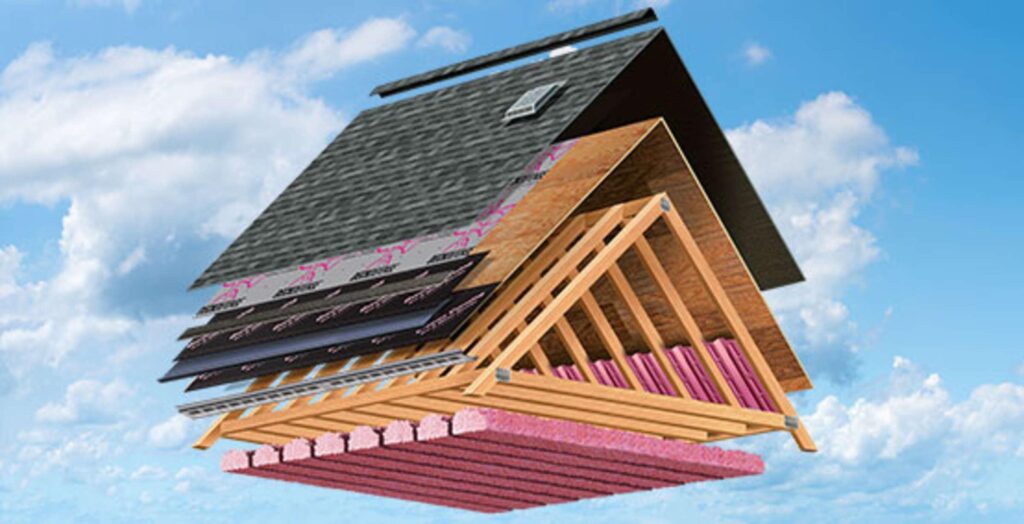
That range covers the complete job: tear-off and disposal of one existing shingle layer, new architectural shingles, ice-and-water shield, underlayment, flashing, and professional installation. It is not a “starting at” price. It reflects real projects on real homes in this market.
Here is a size-based breakdown to give you a working number before you call anyone:
| Home Footprint | Estimated Roof Size | Typical Cost Range (Asphalt) |
|---|---|---|
| ~1,200 sq ft | ~14–16 squares | $8,500 – $12,500 |
| ~1,500 sq ft | ~17–20 squares | $10,500 – $15,000 |
| ~2,000 sq ft | ~22–26 squares | $13,500 – $19,000 |
| ~2,500 sq ft | ~27–32 squares | $17,000 – $22,500 |
| ~3,000 sq ft | ~33–38 squares | $20,000 – $26,000 |
One roofing square equals 100 square feet of roof surface. Your contractor measures the actual roof, which is always larger than your home’s footprint because of the pitch and overhang. A 1,500 square foot house typically has a 1,700 to 2,000 square foot roof.
Why Capital Region Roofing Costs Run Higher Than National Averages
National cost calculators are built around averages across tens of thousands of projects in all 50 states. They are not built around Albany winters or pre-war housing stock in Schenectady. Here is what actually drives the difference.
The climate puts more demand on materials. The Capital Region deals with heavy snow loads, ice dams, and repeated freeze-thaw cycles every winter. Local contractors install higher-grade underlayment, extend ice-and-water shield further up the roof plane, and spec architectural shingles with higher wind ratings. That is not upselling. It is what the conditions require.
Labor costs reflect a real regional market. Skilled, licensed roofing crews in the 518 area are not priced like crews in rural Alabama. Experienced local labor commands fair wages, and that factors into every estimate.
Older housing stock creates complications. Large portions of Albany, Schenectady, and Troy consist of homes built in the 1940s through 1970s. These houses often have complex roof geometries, older decking that needs inspection, steep pitches, and irregular flashing conditions. Each complication adds time.
Previous layering adds tear-off cost. In many older homes, a second layer of shingles was added over the original instead of a proper tear-off. Removing both layers requires extra labor and disposal and typically adds $500 to $1,500 to a project.
The 7 Factors That Determine Your Final Number
1. Roof Size and Complexity
Surface area drives material quantity and labor hours. But complexity matters as much as size. A clean gable roof on a 1,500 square foot ranch is far simpler than a hip roof on a 1,500 square foot colonial with a dormer, a chimney, and two valleys. Every penetration and transition point requires custom flashing and additional time.
2. Roofing Material
Architectural asphalt shingles are the right choice for most Capital Region homes. They balance cost, lifespan, and performance better than any alternative for this climate. Here is how the main options compare:
Architectural (Dimensional) Asphalt Shingles are the standard for residential roofing in this market. They carry a 30-year-plus lifespan, strong wind and impact resistance, and a wide range of colors. Most projects in Albany, Clifton Park, and Saratoga Springs use shingles from GAF or Owens Corning.
3-Tab Asphalt Shingles cost less upfront but are thinner and less durable. They are not a good fit for the ice dam and heavy snow conditions this region sees every winter. Most contractors have largely stopped recommending them for new installations here.
Metal Roofing is a serious long-term investment. Standing seam and steel shingle systems last 40 to 60 years, shed snow well, and hold up reliably through freeze-thaw conditions. Cost runs 2 to 2.5 times that of architectural asphalt shingles. Worth considering for homeowners planning to stay in the home long-term.
EPDM Rubber is used on flat or low-pitch roof sections. It is durable and cost-effective for additions, porches, and the low-slope sections common on older Albany-area homes.
3. Tear-Off and Disposal
Tear-off of a single shingle layer is included in most quotes as part of the base scope. Two existing layers add $600 to $1,500 for extra labor and disposal, depending on the size of the roof.
4. Decking Condition
The plywood or OSB beneath your shingles has to be solid. Rot, soft spots, or water-damaged sections get replaced before anything else goes down. Replacement runs roughly $2 to $4 per square foot. A few damaged sheets may add a few hundred dollars; widespread rot can add $1,500 to $3,000 or more.
The honest reality is that no contractor knows the full extent of decking damage until tear-off begins. Any estimate that guarantees a firm all-in price before the roof is opened is not being straight with you. Reputable contractors list decking as a potential additional line item and explain it clearly upfront.
5. Ice and Water Shield
Ice-and-water shield is non-negotiable in this climate. It is a self-adhering membrane installed along eaves and in valleys to block water infiltration from ice dams. Building code requires it in this climate zone, but the meaningful variable is how far up the roof plane it extends. Quality installations run it past the interior wall line to provide real protection against the ice dam conditions this region sees every January and February.
6. Ventilation
A poorly ventilated attic is one of the most common causes of premature roof failure. It creates heat buildup in summer that degrades shingles from below, contributes to ice dam formation in winter, and can lead to decking rot over time. If your ventilation is inadequate, a quality contractor will say so and include an upgrade in their recommendation. It adds cost upfront. It saves significantly more over the life of the roof.
7. Roof Pitch
Steeper pitches take longer to work on safely and require more equipment. Unusually steep roofs, which are common on Victorian-era homes in Albany and Saratoga Springs, can add 20% to 40% to labor costs compared to a standard-pitch roof of the same square footage.
Other Costs to Factor Into Your Budget
Permits: Most municipalities in the Capital Region require a building permit for a full roof replacement in Albany, Clifton Park, Saratoga Springs, Schenectady, and Troy. Fees typically run $100 to $400. A reputable contractor pulls the permit as part of the project. You should never have to chase this yourself.
Fascia and soffit repairs: Rotted fascia boards get replaced before new drip edge is installed. If repairs are needed, budget $8 to $15 per linear foot.
Flashing replacement: Chimney, skylight, and step flashing should be replaced with every new roof. Reusing old flashing with new shingles is one of the most common sources of post-installation leaks, and a reliable sign that a contractor is cutting corners.
Gutters: Many homeowners take care of gutters at the same time as the roof since the crew is already working on that section of the home. Top Gen Roofing offers seamless gutter installation and replacement for homeowners who want to address both.
8 Signs You Need a New Roof (Not Just a Repair)
Most homeowners asking this question already know something is not right. Here are the situations where full replacement is almost always the correct decision.
1. Your roof is 20 years old or older. Architectural shingles carry 30-year warranties, but in Upstate New York’s climate, meaningful performance degradation typically starts between 18 and 22 years. If your roof was installed in the early 2000s or before, get a professional inspection.
2. You are finding granules in your gutters. Granule loss is the clearest visible indicator of shingle breakdown. When the protective coating goes, the roof’s remaining useful life is short, regardless of how it looks from the street.
3. Shingles are curling, cupping, or cracking. Curling at the edges and cupping in the center both indicate age, heat damage from poor ventilation, or moisture absorption. Widespread curling or cracking across multiple sections is a replacement signal, not a repair signal.
4. You deal with serious ice dams every winter. Ice dams form when heat escaping from the living space melts roof snow, and that water refreezes at the cold eaves. Recurring severe ice dams accelerate shingle and flashing wear significantly. Multiple winters of serious ice dam activity warrants a thorough inspection.
5. You can see daylight from inside the attic. Any visible light through roof boards from the attic is a serious problem. Have it looked at immediately.
6. The roof is sagging or dipping. Visible sags or dips in the roof deck indicate failing structural members, compromised decking, or serious long-term water damage. This is not a repair situation.
7. You have patched the same spot more than once. A section that has been repaired two or three times and keeps leaking has an underlying problem the patch cannot solve. At some point, continued repair spending exceeds the cost of replacement.
8. Widespread missing tabs or brittle shingles across multiple areas. Storm damage in one isolated area may be repairable. Brittleness, cracking, or missing shingle pieces spread across different sections of the roof is age-related system failure across the whole installation.
Not sure which side of the line you are on? Request a free inspection and get a straight answer.
Best Time to Replace a Roof in the Capital Region
The optimal window is late spring through early fall, roughly May through October.
Asphalt shingles seal down through a heat-activated adhesive strip that bonds to the course below when warmed by direct sun. This process is what gives the roof its wind resistance, and it works best when ambient temperatures stay consistently above 50°F. The Capital Region cannot reliably deliver those temperatures from November through April.
Winter replacements are possible when necessary. Experienced crews hand-seal shingles in cold conditions, but it takes more time and care. If your roof is actively leaking into the living space or shows structural damage, do not wait for spring. Get a temporary repair to stop active water intrusion while a full replacement is scheduled properly.
One underrated tip: get your inspection and estimate done in spring, not midsummer. The Capital Region’s peak roofing season runs July through September. Crews that are not overbooked consistently have more time for detail work, cleaner installs, and more thorough cleanup.
How to Read a Roofing Estimate
Getting multiple quotes is smart. Knowing what is actually in them is what protects you.
Require a written, itemized scope of work. A legitimate estimate specifies the shingle brand and grade, underlayment type, how far ice-and-water shield extends, flashing details, ventilation plan, the number of existing shingle layers being removed, and warranty terms. Vague one-number proposals make honest comparison impossible.
Understand the decking language. Any honest contractor notes that decking replacement is priced separately and depends on what is found once the old roof comes off. A contractor who promises a firm all-in total before tear-off begins either has not inspected the roof carefully or is planning to absorb surprises in a way that affects quality.
Ask about both warranties separately. There is a manufacturer’s material warranty on the shingles and a contractor’s workmanship warranty on the installation. Both matter. Get the term for each in writing. A contractor who cannot produce written warranty documentation is a contractor to pass on.
Check licensing and insurance directly. Ask for certificates of workers’ compensation and general liability insurance. Do not accept verbal confirmation. Any legitimate contractor in New York provides these without hesitation.
No full payment upfront. A reasonable deposit to hold your start date is standard practice. Full or majority payment before work begins is a red flag.
What Top Gen Roofing Includes on Every Job
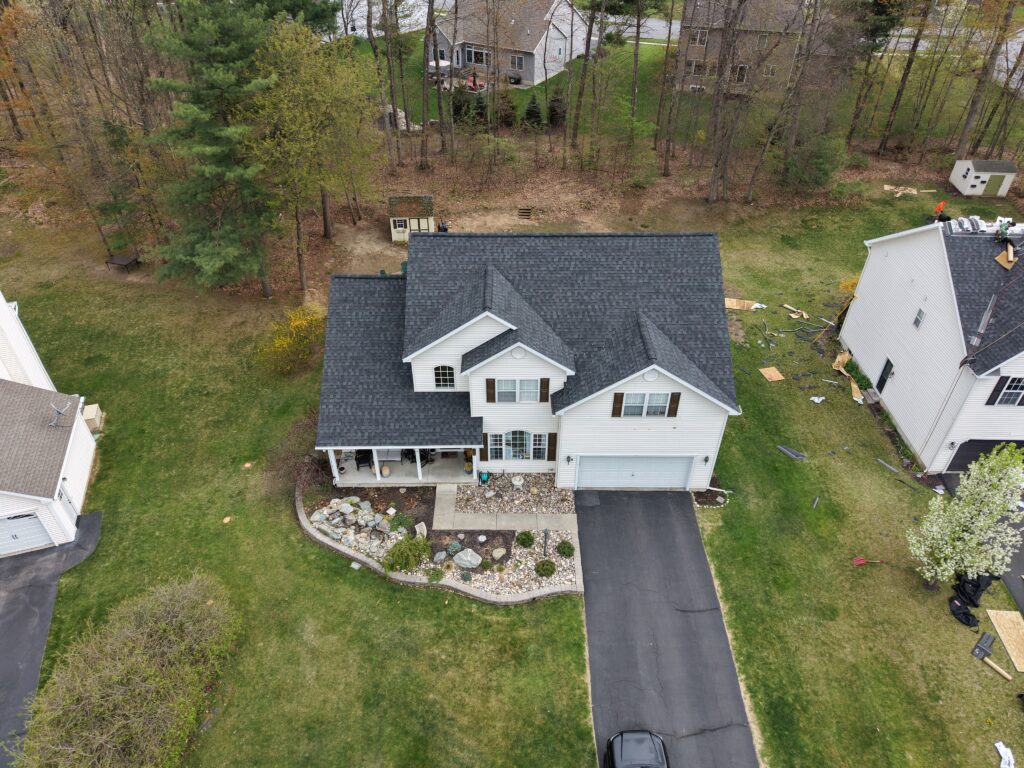
At Top Gen Roofing, every estimate is written in plain language covering every component: materials, tear-off, disposal, flashing, ventilation, and cleanup. There are no line items that appear after tear-off that were never part of the original conversation.
We are based in Clifton Park and serve homeowners across Albany, Clifton Park, Saratoga Springs, Schenectady, Troy, Round Lake, and the surrounding Capital Region. We know what this climate does to roofs, and we install with that in mind.
We also handle gutter installation and replacement for homeowners who want to protect their roofline and drainage at the same time.
Ready to get a clear, honest number? Schedule your free estimate from Top Gen Roofing. We inspect the roof, walk you through what we find, and give you a straight price with no surprises and no pressure.
📞 (518) 633-2477
Frequently Asked Questions
How much does a new roof cost in Albany, NY?
For most single-family homes in the Albany area, a full asphalt shingle replacement runs between $11,000 and $17,000. Smaller homes or simpler roof shapes may come in under that range. Larger homes or those with complex geometry may go over. The accurate number for your home comes from an on-site inspection, not an online calculator.
How long does roof replacement take in the Capital Region?
Most standard residential replacements are finished in a single full day. Larger roofs or those requiring significant decking work may take two days. Weather holds are always a possibility when working outside the main spring-through-fall window.
Does homeowners insurance cover roof replacement in New York?
Insurance covers damage caused by a covered event: storm, wind, hail, or a falling object. It does not cover a roof that needs replacement because of age or normal wear. If a storm recently damaged your roof, photograph everything before any temporary repairs begin and contact your insurer right away. Top Gen Roofing can assist with damage documentation for insurance claims.
What is the best roofing material for Upstate New York?
Architectural asphalt shingles are the right choice for most Capital Region homeowners. They offer the best balance of cost, durability, and performance in freeze-thaw conditions. Metal roofing is a strong long-term option for homeowners committed to staying in their home who want a 40-to-60-year lifespan at a higher upfront cost.
Do I need a permit for roof replacement in Albany?
Yes. Albany, Clifton Park, Saratoga Springs, Schenectady, Troy, and most Capital Region municipalities require a building permit for a full roof replacement. Your contractor should pull the permit as part of the project. If they suggest skipping it, that is a problem.
Should I repair or replace my roof?
If damage is localized and the rest of the roof has real life left in it, a targeted repair may be the right call. If the roof is 18 years or older, has widespread shingle degradation, or has had multiple leak events in the same or different areas, replacement is almost always more cost-effective over a three-to-five-year horizon. We will give you an honest answer at the inspection, including when repair is the right choice.
What are the warning signs I need a new roof?
The main ones: granules collecting in gutters, shingles curling or cupping, a roof that is 20 or more years old, visible sagging in the roof deck, daylight visible from inside the attic, repeated leaks in the same spot, and severe ice dams recurring across multiple winters.
Can I stay home during roof replacement?
Yes. The work is noisy and you will feel some vibration, but you can stay in the house. Most projects are done in a single day. Full exterior cleanup is part of every Top Gen Roofing job before the crew leaves.