


Key Takeaways
- Roofing material is the single largest cost variable, with options ranging from budget asphalt shingles to premium slate or metal.
- Roof size, pitch, and structural complexity directly raise labor hours and material quantities.
- Local market rates and contractor overhead explain a significant portion of the price gap between bids.
- Existing roof condition, including how many layers need tear-off and whether decking needs repair, can add thousands to the final number.
- Getting itemized quotes and asking the right questions protects you from low-ball bids that balloon after work starts.
Material Type Shapes Your Overall Price
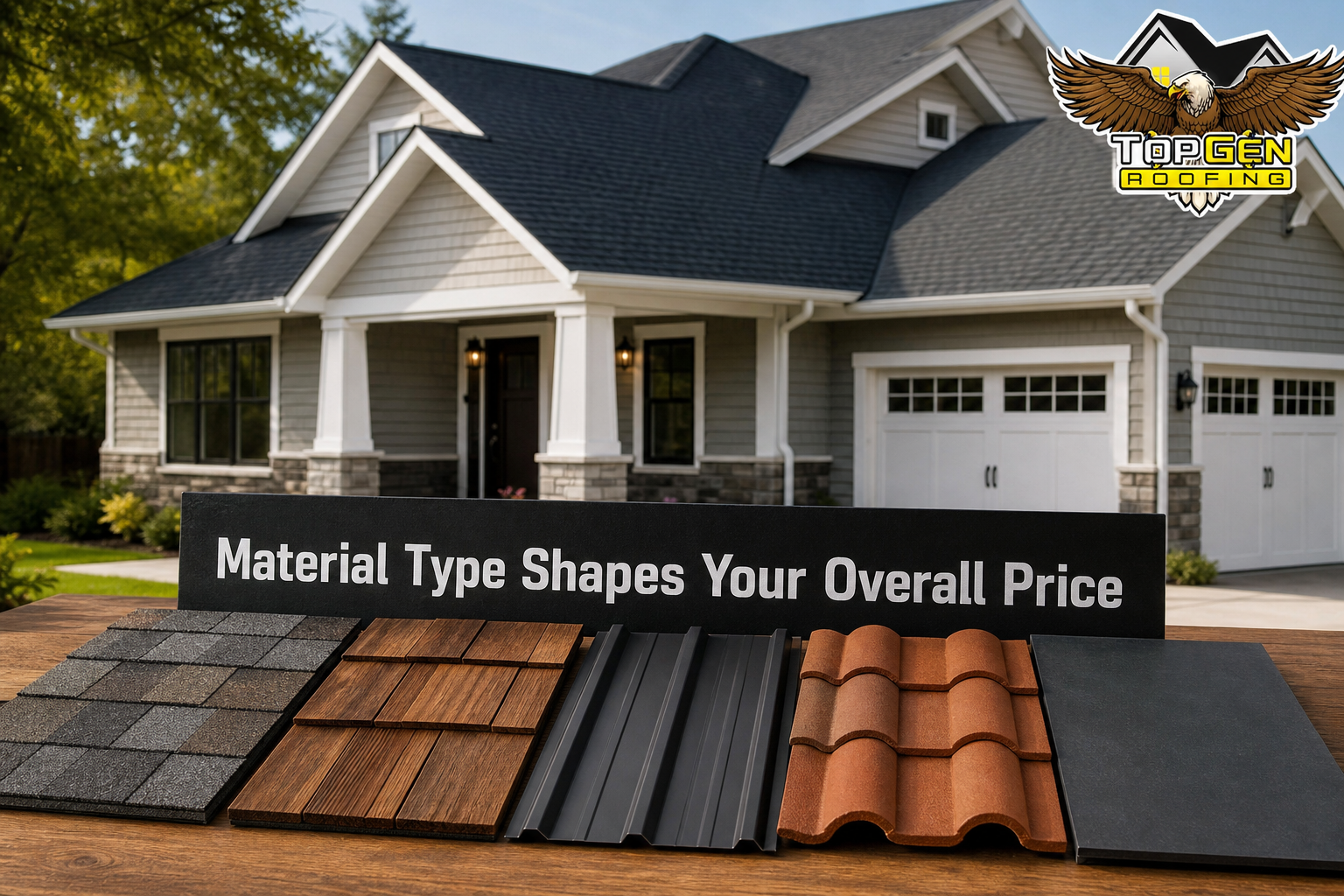
The roofing material you choose typically accounts for 40, 50% of your total replacement cost, making it the most important single decision in your project budget.
Factors that affect roof cost start here. Material type sets a floor and ceiling for every other number on your estimate. A contractor working with standard three-tab shingles and one installing a standing-seam metal roof are quoting entirely different projects, even on the same house.
Asphalt Shingles vs. Metal vs. Slate
Asphalt shingles remain the most common roofing material in the United States because they balance upfront cost with reliable performance. Architectural shingles offer more dimensional texture and a longer warranty than three-tab options and cost more per square. Metal roofing, whether steel panels or aluminum, sits at a higher price point but comes with a much longer service life.
Slate is the premium end: durable, heavy, and expensive to both purchase and install correctly.
| Material | Typical Lifespan | Relative Cost (vs. Asphalt) | Key Trade-off |
|---|---|---|---|
| 3-Tab Asphalt | 15, 20 years | Baseline | Shorter life, lower upfront cost |
| Architectural Asphalt | 25, 30 years | Slightly higher | Better durability, common choice |
| Metal (Steel/Aluminum) | 40, 70 years | 2, 3x higher | High upfront, low long-term cost |
| Natural Slate | 75, 100+ years | 4, 6x higher | Maximum lifespan, heavy, specialist install |
| Synthetic Slate/Shake | 30, 50 years | 2, 4x higher | Lighter than natural, wide warranty range |
As noted in key factors affecting roof replacement cost, the quality and complexity of materials is one of the primary drivers of final pricing.
Durability and Lifespan Trade-offs
Choosing a cheaper material to save money upfront can cost more over a 20-year window if replacement comes sooner. A 30-year architectural shingle system may cost more today than a basic three-tab roof but avoids an early second replacement. When you compare bids, make sure each contractor is quoting the same material grade, not just the same generic category.
Premium Options and Energy Efficiency
Cool-roof shingles and reflective metal panels can reduce summer heat gain and lower cooling loads. In New York, where winters are the bigger energy concern, the payback on these upgrades varies. Ask your contractor to specify the energy rating of any product they’re recommending so you can weigh the real-world benefit against the added cost.
Roof Size and Complexity Drive Labor Costs
Contractors measure roofs in roofing squares, where one square equals 100 square feet of surface area. A larger roof needs more material and more labor hours, but the number of squares alone doesn’t tell the full story. Complexity multiplies the cost per square significantly.
Square Footage and Pitch Angle
A low-slope roof lets crews work faster and with lighter safety equipment. A steep-pitch roof above 6:12 requires safety harnesses, slower progress, and sometimes additional scaffolding. Most contractors apply a pitch multiplier to their base labor rate once the angle crosses certain thresholds.
This is a legitimate cost, not padding.
Number of Valleys, Dormers, and Penetrations
Every valley, dormer, skylight, chimney, or pipe penetration adds flashing work and cuts into material efficiency. A simple gable roof with two slopes is the most affordable to replace. A home with six intersecting planes, three dormers, and two skylights will take significantly longer and require more precise cuts, waste allowances, and custom flashing.
According to a detailed breakdown of roof cost factors, roof shape and design complexity are among the most impactful variables on the final invoice.
If your project includes roof replacement in the Capital Region, knowing your roof’s pitch and feature count before you call for quotes helps you evaluate whether bids are accounting for the actual scope.
Local Market Rates and Contractor Overhead
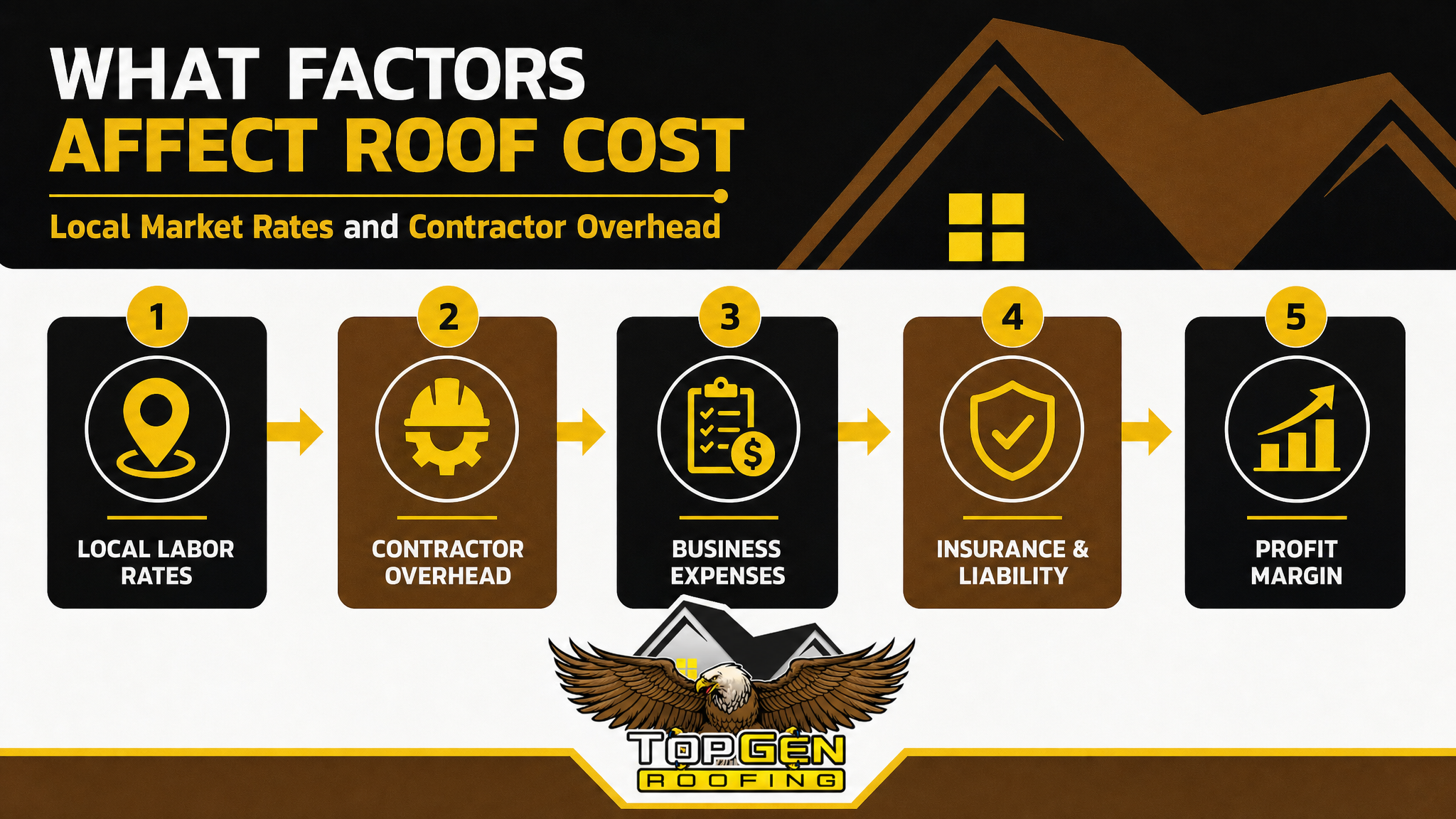
In markets like Saratoga Springs, NY, labor rates and business overhead reflect local costs of living, licensing requirements, and material supply chains, all of which show up in your estimate.
Geographic Pricing Differences
A contractor in rural upstate New York doesn’t carry the same overhead as a large firm operating in Manhattan, but Saratoga Springs and the broader Capital Region still reflect regional market rates. Insurance, licensing, crew wages, and material supplier relationships all factor into what a local contractor charges per square. Don’t compare a quote from a Capital Region roofer to one you saw advertised by an out-of-state company running a seasonal crew.
Why Established Contractors Cost More
Licensed, insured, and experienced roofing contractors carry real business costs: workers’ compensation insurance, liability coverage, manufacturer certifications, and warranty administration. These aren’t upsells. They’re protections that matter when something goes wrong.
If two bids are dramatically different, the cheaper one is often skipping one of these line items. Our guide on tips for hiring roofing contractors covers exactly what to verify before you commit to any contractor.
Existing Roof Condition and Removal Costs
Before new shingles go down, the old roof has to come off, and the condition underneath determines what else needs to happen. This is where estimates diverge the most dramatically between contractors, and where low bids often hide their real costs.
Single vs. Multiple Layer Tear-off
Many homes have two layers of shingles already installed, which is the legal maximum in most jurisdictions before a full tear-off is required. Removing two layers instead of one takes more labor hours and generates more disposal weight. Some contractors skip disclosing this until they’re already on your roof.
Ask upfront how many existing layers are present and whether the estimate includes full tear-off and haul-away.
Structural Repairs and Underlayment Upgrades
Rotted decking, damaged sheathing, and deteriorated underlayment are common in older homes. A thorough roof inspection before you finalize your contract should identify these issues so the estimate includes repair costs, not just shingle replacement. If a contractor gives you a quote without inspecting the deck, assume the number will change after demo starts.
How to Get Accurate Quotes and Avoid Hidden Fees
Getting three quotes is standard advice. Getting three useful quotes requires knowing what to look for in the paperwork.
Red Flags in Low Estimates
A bid that’s 20, 30% lower than competitors isn’t always a deal. Common reasons a bid comes in low include: no workers’ compensation coverage, substandard material grades, excluding tear-off or disposal, skipping underlayment, or using unlicensed subcontractors. Ask for proof of insurance and licensing before any conversation about price.
| What to Check | Why It Matters |
|---|---|
| Itemized material list | Confirms product grade and quantity |
| Tear-off and disposal included | Prevents surprise charges after demo |
| Warranty terms (labor + material) | Identifies what’s actually covered |
| Proof of liability insurance | Protects you if property is damaged |
| Workers’ comp certificate | Prevents liability if a crew member is injured |
| Payment schedule | Avoid contractors requiring full payment upfront |
What to Ask Contractors Before You Sign
Ask each contractor to specify the shingle brand and product line, total square footage measured, number of existing layers to be removed, underlayment type, and what happens if decking damage is found. A contractor who answers these questions clearly and in writing is one worth considering. One who gives vague answers is telling you something.
Next Steps: Getting a Fair Price for Your Roof
Understanding the factors that affect roof cost puts you in a stronger position than most homeowners when the bids arrive. You know what drives the number up, where to look for missing scope, and what questions separate credible contractors from ones cutting corners.
Top Gen Roofing provides honest, itemized estimates for homeowners and commercial property owners across Saratoga Springs, NY and the surrounding Capital Region. We show up, measure your roof properly, and give you a quote that reflects the actual work required, not a low number designed to get a signature.
Request your FREE estimate within 24 hours and get a clear picture of what your roof replacement actually costs and why. Contact Top Gen Roofing to schedule your assessment today.
Frequently Asked Questions
What is the biggest factor affecting roof replacement cost?
Roofing material is typically the largest single cost variable in any replacement project. Asphalt shingles, metal panels, and natural slate can differ by hundreds of dollars per square, meaning a material upgrade on an average-sized home can shift the total by several thousand dollars before labor is even considered.
Why do roofing quotes vary so much between contractors?
Quotes differ because contractors include different scope, use different material grades, carry different overhead costs, and price labor at different rates. One contractor may exclude tear-off; another may spec architectural shingles while a competitor quotes three-tab. Always compare itemized bids, not just the bottom-line number.
How does roof pitch affect the cost of replacement?
Steeper roofs require safety equipment, slower crew movement, and additional setup time. Contractors typically apply a pitch multiplier to their base rate for roofs above a certain slope threshold. A steep-pitch roof can cost meaningfully more per square than a low-slope equivalent on the same house.
Does removing old shingles add to the replacement cost?
Yes. Tear-off and disposal are real labor and hauling costs that some contractors exclude from initial estimates. If your home already has two layers of shingles, the removal takes longer and generates more debris weight.
Always confirm whether tear-off and disposal are included in a quote before you compare it against other bids.
How does roof complexity affect the final price?
Valleys, dormers, skylights, chimneys, and other penetrations all require additional flashing work, more precise cuts, and higher material waste. A straightforward gable roof with two slopes is the least expensive design to replace. Each additional feature adds labor time and specialty materials, which compounds quickly on a complex roofline.
Should I choose the lowest bid I receive?
Not automatically. A low bid can reflect genuine efficiency, but it can also signal missing scope, lower material grades, or inadequate insurance coverage. Review each bid line by line.
If one contractor is substantially cheaper than two others quoting the same scope and materials, ask specifically what they’ve excluded. A clear, itemized answer is a good sign. Vague reassurances are not.
 FREE estimate within 24 hours Share a few details with Top Gen Roofing, we’ll help you choose the right next step. Get a free estimate |