

Key Takeaways
- Improper nail placement is one of the most common installation errors and causes shingles to lift, curl, and eventually blow off.
- Poor attic ventilation installed alongside the roof traps heat and moisture, accelerating shingle deterioration from the inside out.
- Shingles installed in freezing temperatures or rain can fail to seal properly, leading to early curling and cracking.
- A licensed contractor who follows manufacturer specifications protects both your roof warranty and your home’s structural integrity.
- Early inspection after a new installation can catch defects before minor issues become costly replacements.
How Installation Mistakes Cause Premature Shingle Failure
Poor asphalt shingles installation is a leading cause of premature roof failure, responsible for curling, cracking, granule loss, and water intrusion long before a roof reaches the end of its rated lifespan.
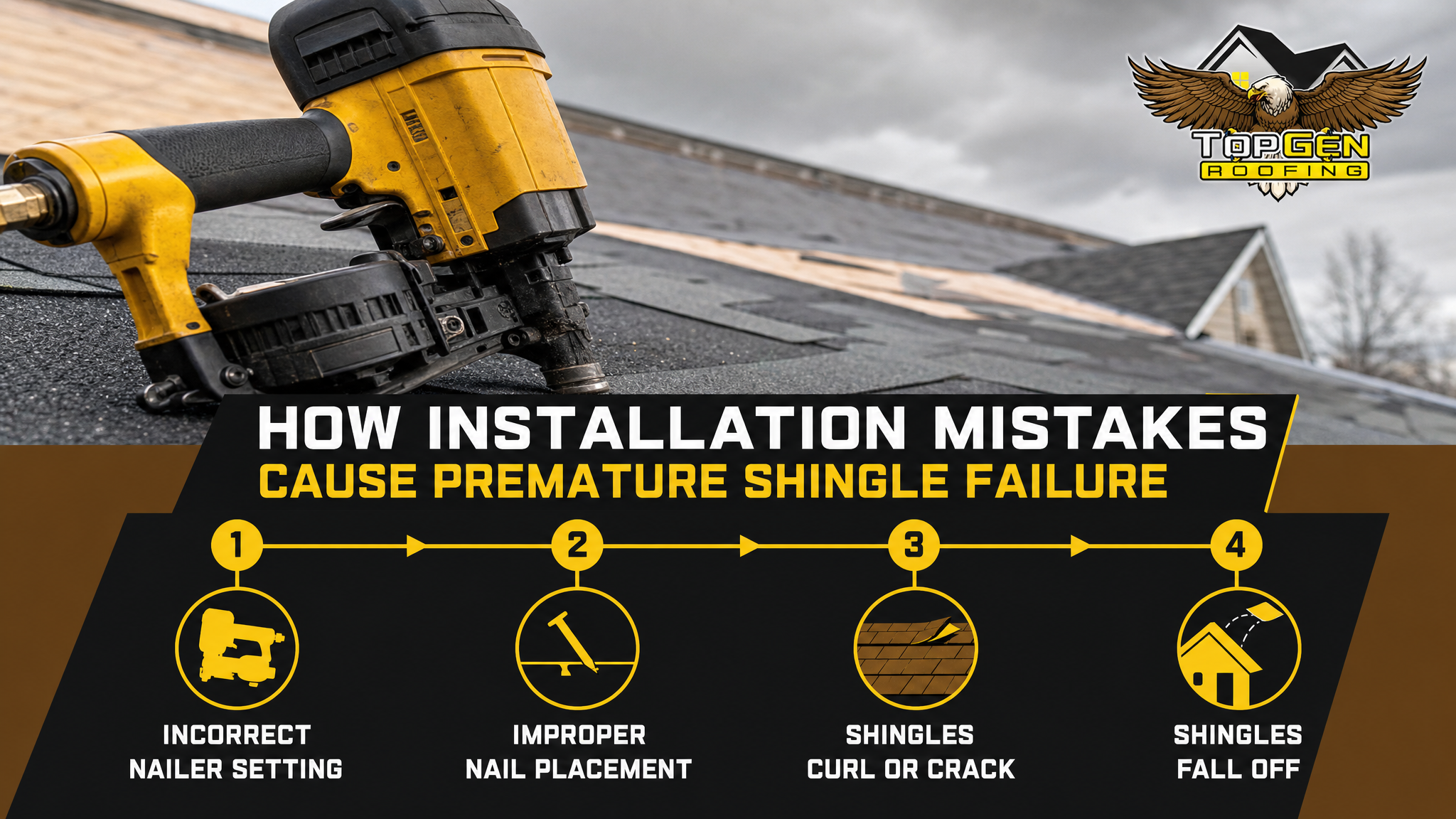
Most shingle problems aren’t random. They trace back to decisions made during installation: how nails were placed, whether the deck was prepared correctly, and whether ventilation was part of the plan. Knowing what goes wrong helps you ask the right questions before and after your roof is installed.
Improper Fastening and Nail Placement
Every shingle manufacturer specifies a nail zone, typically a narrow strip near the top of the shingle where fasteners must land. When a crew misses that zone by even an inch, the shingle loses holding strength. Wind, thermal movement, and simple gravity do the rest.
Nails placed too high (called "high nailing") leave the lower portion of the shingle unsecured. Over time, those tabs lift and curl. Nails placed too low puncture the waterproof surface, creating entry points for moisture.
Both mistakes are preventable with proper training and job-site oversight. For more on what happens when shingles lift or detach, see this resource on shingles ripping up or ripped off by wind.
Inadequate Ventilation During Installation
Ventilation isn’t just an afterthought, it’s part of the roof system. When a crew installs new shingles without addressing attic airflow, heat and moisture build up below the deck. That buildup pushes upward, causing shingles to buckle and warp from the underside.
According to roofing industry research on shingle failure causes, poor ventilation is one of the top reasons asphalt shingles fail ahead of schedule. Proper intake and exhaust ventilation must be planned as part of every roof installation project, not added later as a fix.
Poor Underlayment and Deck Preparation
The roof deck, typically OSB or plywood, must be dry, flat, and structurally sound before any shingles go on. Soft spots, warped panels, or wet wood create uneven surfaces that cause shingles to ripple or crack under foot traffic and weather load.
Underlayment protects the deck if water gets past the shingles. When installers skip proper underlayment or use the wrong weight for the pitch, that backup layer disappears. A single storm can then push water directly into your home’s structure.
Three Critical Installation Defects That Lead to Curling and Cracking
Curling shingles are a symptom, not the disease. Three specific installation defects are responsible for most of what homeowners see on failing roofs.
Over-Nailing and Fastener Overdrive
A nail gun set at too high a pressure drives fasteners too deep, breaking through the shingle’s fiberglass mat. That mat is what gives the shingle its structural backbone. Once it fractures, the shingle becomes brittle, cracks under thermal stress, and loses its ability to shed water correctly.
Over-nailing is especially common when crews rush or when equipment pressure isn’t calibrated for shingle thickness. The damage is invisible from the ground but causes accelerated cracking within a few seasons.
Insufficient Shingle Overlap and Exposure
Shingle exposure refers to how much of each shingle is visible and unprotected by the row above it. Manufacturers specify this measurement precisely, usually around 5 to 5.5 inches for standard three-tab shingles. Too much exposure means the lower portion of each shingle takes the full brunt of UV rays, rain, and hail without the thermal buffer of overlapping layers.
Installers trying to stretch a material order sometimes increase exposure to cover more roof with fewer shingles. The cost savings are real. The long-term damage is worse.
Shingles age faster, granules shed earlier, and you end up with a roof replacement years ahead of schedule.
Installation in Extreme Weather Conditions
Asphalt shingles need a minimum temperature, typically above 40°F, for the self-sealing adhesive strip on each shingle to activate properly. Installing shingles in freezing temperatures leaves them without that bond. They stay loose, lift in wind, and allow water infiltration from the first storm.
Rain during installation soaks the deck and prevents underlayment from lying flat. Reputable contractors monitor forecasts and reschedule when conditions compromise the work. If your contractor doesn’t mention weather as a factor, that’s worth asking about directly.
Ventilation and Moisture Issues Caused by Faulty Installation
Blocked or Missing Roof Ventilation
A properly ventilated attic relies on a balance between intake (soffit vents) and exhaust (ridge or box vents). When installation crews block soffit vents with insulation, close off ridge vents, or simply skip exhaust points, your attic becomes an oven in summer and a humidity trap in winter.
That extreme heat warps shingles from below. Moisture condenses on the underside of the deck, promoting rot and mold. Both conditions destroy roofing materials years before their rated life ends.
Understanding the roofing process from start to finish helps you verify that ventilation is addressed before work begins.
Moisture Trapped Under Shingles
Even small installation gaps, around flashing, at valleys, or along the eaves, allow moisture to work its way under the shingle layer. Once water gets beneath the shingles, it has nowhere to go. It soaks the deck, wicks into insulation, and promotes the kind of structural rot that turns a shingle repair into a full roof replacement.
Ice dams in colder climates like Saratoga Springs, New York, make this worse. Inadequate ventilation lets heat escape through the roof deck, melting snow above while the eaves stay frozen. Water pools behind the ice and forces its way under shingles.
How Poor Installation Accelerates Shingle Deterioration
Granule Loss and Surface Wear
Asphalt shingles rely on their granule coating for UV protection and fire resistance. When nails are driven incorrectly or shingles are handled roughly during installation, granules dislodge early. You’ll see them collecting in your gutters within the first year or two rather than after the normal 15 to 20 years.
Early granule loss exposes the asphalt layer directly to sunlight. That accelerates cracking, surface erosion, and color fade, all signs that your roof is aging faster than it should. Monitoring your gutters after installation is one of the simplest ways to catch this early.
UV Damage and Material Breakdown
Shingles without proper overlap or granule coverage deteriorate faster under UV exposure. The asphalt base becomes brittle, loses flexibility, and eventually cracks along stress lines. This is why understanding why asphalt shingles curl matters, curling itself signals that the asphalt has lost its flexibility, often years ahead of schedule due to installation shortcuts.
Spotting Installation Errors Before They Destroy Your Roof
Red Flags That Indicate Faulty Installation
You don’t need to climb on the roof to see early warning signs. Several indicators are visible from the ground or during a basic attic check.
Warning signs to look for:
- Shingle edges that curl upward (cupping) or downward (clawing) within the first few years
- Visible nail heads poking through shingle tabs
- Misaligned shingle rows or inconsistent exposure widths
- Shingles that rattle or lift in moderate wind
- Granules collecting in gutters shortly after installation
- Soft spots or staining on attic ceiling boards
Inspection Checklist for New Roof Installation
Run this checklist within 60 to 90 days of a new installation:
| Inspection Item | What to Check | Concern Level |
|---|---|---|
| Nail exposure | No visible nail heads below shingle tabs | High |
| Shingle alignment | Even rows, consistent exposure | Medium |
| Ridge cap quality | Tight, overlapping ridge shingles | High |
| Flashing condition | Sealed at all penetrations, valleys, edges | High |
| Soffit and ridge vents | Clear, unobstructed airflow | High |
| Granule presence | Minimal granules in gutters | Medium |
| Deck flatness | No visible rippling or waves | Medium |
If any of these items raise concerns, schedule a professional roof inspection before the issue compounds. Top Gen Roofing offers a roof tune-up service that covers these exact checkpoints.
How to Protect Your Investment: Installation Best Practices and Contractor Selection
What to Look For in a Licensed Roofing Contractor
The most reliable protection against a faulty asphalt shingles installation is choosing the right contractor before work begins. A qualified crew does more than lay shingles, they assess the deck, plan ventilation, follow manufacturer specifications, and stand behind their work.
| Contractor Quality Indicator | Why It Matters |
|---|---|
| Licensed and insured in your state | Protects you from liability and ensures code compliance |
| Manufacturer-certified installer status | Warranty coverage depends on approved installation methods |
| Written contract with material specs | Confirms shingles, underlayment, and ventilation plan before work starts |
| Local references and completed jobs | Demonstrates experience in your specific climate and building type |
| Clear warranty terms (labor and material) | Separates quality contractors from cut-rate crews |
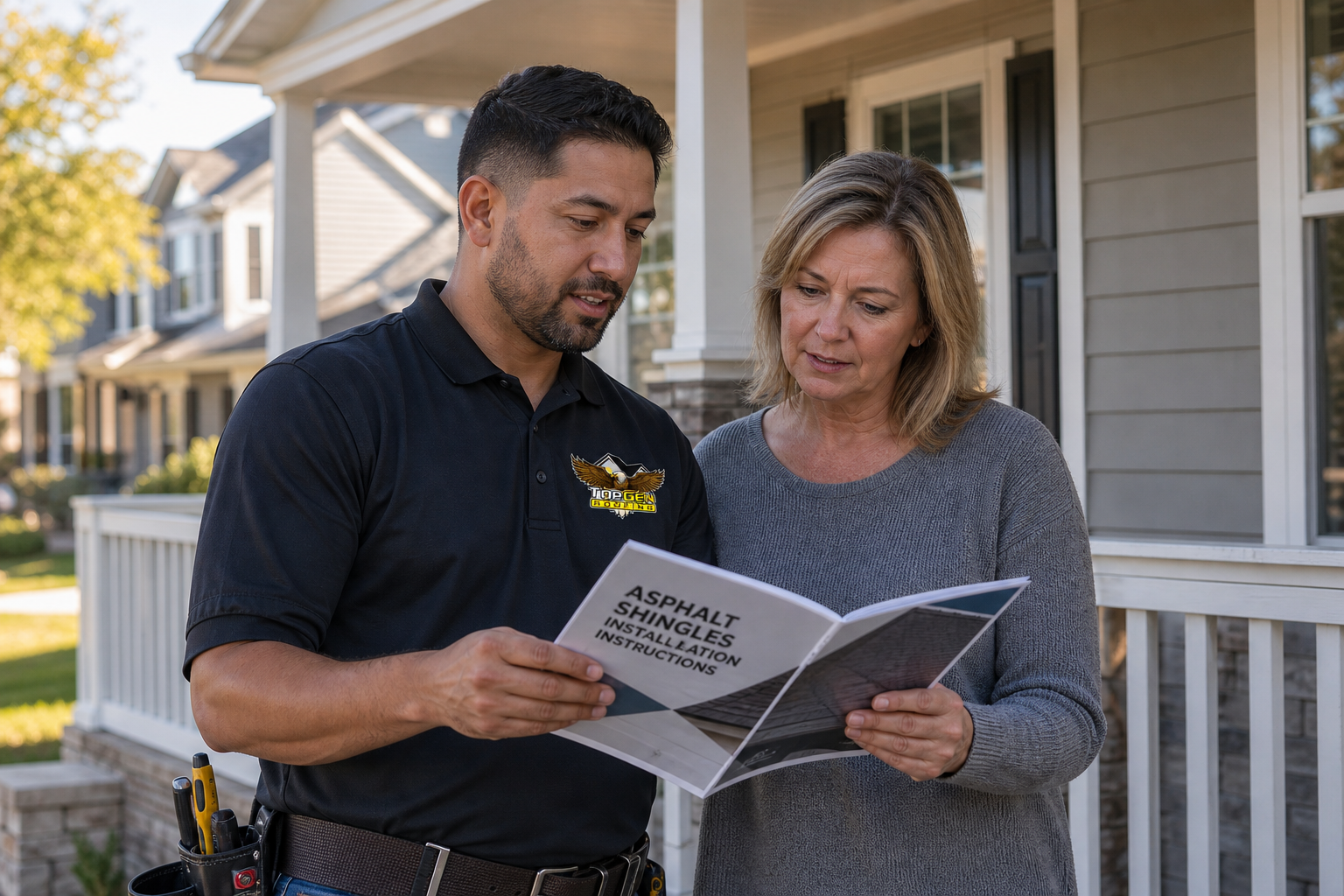
Ask any contractor you interview whether they follow the shingle manufacturer’s installation instructions to the letter. That document specifies nail placement, exposure width, temperature minimums, and deck preparation requirements. Deviating from it voids the manufacturer warranty, leaving you with no recourse when problems appear.
Installation Standards and Manufacturer Warranty Requirements
Most major shingle manufacturers require certified installation to honor their product warranties. That means the crew must follow published guidelines covering fastener type, nail zone placement, underlayment requirements, and minimum installation temperature. A warranty that looks impressive on paper becomes worthless if the installation didn’t meet those standards.
Before signing any contract, ask for written confirmation that the installation will meet manufacturer specifications and that labor is covered separately from the material warranty. A reputable contractor handles both without hesitation. You can also review what a full roof installation looks like from a professional standpoint to know what standard process should include.
Frequently Asked Questions
Why do asphalt shingles curl upward at the edges?
Curling at the edges, called cupping, typically happens when moisture imbalance develops between the top and bottom layers of the shingle. Poor attic ventilation allows heat and humidity to build beneath the shingles, causing the lower surface to expand while the exposed top dries and contracts. Installation errors that prevent the self-seal strip from bonding also leave shingle edges free to lift over time.
How soon after installation should I expect problems if the work was done poorly?
Visible signs of faulty asphalt shingles installation can appear within the first one to three years. Cupping, granule loss in gutters, misaligned rows, and shingles that rattle in moderate wind are early indicators. Some defects, like moisture damage to the deck, take longer to surface but cause significant structural damage before they’re visible from inside the home.
Does a manufacturer warranty cover installation defects?
Manufacturer warranties cover material defects in the shingles themselves, not labor or installation errors. If the crew deviated from the manufacturer’s published installation instructions, your material warranty may already be void. A separate labor warranty from the contractor covers installation quality.
Always confirm both are in writing before work begins. For more details on what to expect throughout the process, see this guide on roof replacement preparation.
Can poor ventilation really shorten a roof’s lifespan?
Yes, significantly. Attics that trap heat above 130°F in summer accelerate the breakdown of asphalt and fiberglass in shingles. That heat also causes wood decking to dry out and warp, creating the uneven surface that leads to cracked and rippling shingles.
Proper balanced ventilation, measured intake at the soffits and exhaust at the ridge, is not optional. It’s part of what makes a roof last its full rated life.
What is the difference between cupping and clawing in shingles?
Cupping means the shingle edges curl upward, forming a concave shape when viewed from straight on. It’s usually caused by moisture below the shingle or poor ventilation. Clawing means the middle of the shingle buckles upward while the edges stay flat, creating a convex or arched shape.
Clawing often points to installation over an existing layer of shingles or thermal stress from inadequate ventilation. Industry analysis of shingle curl and crack patterns confirms that both patterns indicate the shingle has lost its structural integrity and needs professional evaluation.
How do I know if my contractor followed proper installation standards?
Ask for the manufacturer’s installation guide specific to the shingle product used, then review the key requirements: nail zone placement, exposure width, underlayment type, and minimum temperature at time of install. A trustworthy contractor will walk you through the job documentation without hesitation. If they installed the roof and can’t produce those records, request a professional inspection from an independent roofer.
You can also check completed jobs and reviews at Top Gen Roofing’s reviews page to see the standard of work real clients have received.
 FREE estimate within 24 hours Share a few details with Top Gen Roofing, we’ll help you choose the right next step. Get a free estimate |