

Key Takeaways
- Most asphalt shingle roofs last 20 to 30 years under normal conditions, but climate, installation quality, and maintenance all affect that range.
- Age alone does not trigger replacement. Visible wear, interior water damage, and failed inspections are stronger signals.
- Repeated repairs on a roof older than 15 to 20 years rarely pencil out. Replacement becomes the better investment.
- A professional roof inspection gives you hard evidence, not guesswork, before you spend a dollar.
- Upstate New York’s freeze-thaw cycles and heavy snowfall accelerate roof aging faster than national averages suggest.
- If you own a home in the Capital Region and your roof is pushing 20 years old, this guide is for you.
How Age Affects Roof Lifespan and Replacement Timing
Most roofing materials have a defined service life, but the real question is not "how old is it?", it is "how much useful life is left given its condition and local climate?"
In our experience, homeowners who ask the right questions early save thousands compared to those who wait until an active leak forces their hand, often in the $2,500 to $6,000 range for mid-size repairs. Knowing when a roof has deteriorated past the point of cost-effective patching is the first skill any homeowner benefits from developing. Following replacing an old roof best practices from the start is what separates a smart capital decision from an expensive emergency.
Relevant expertise includes Residential Roofing, Shingle Roofing, Project Estimation.
Typical roof lifespan by material type
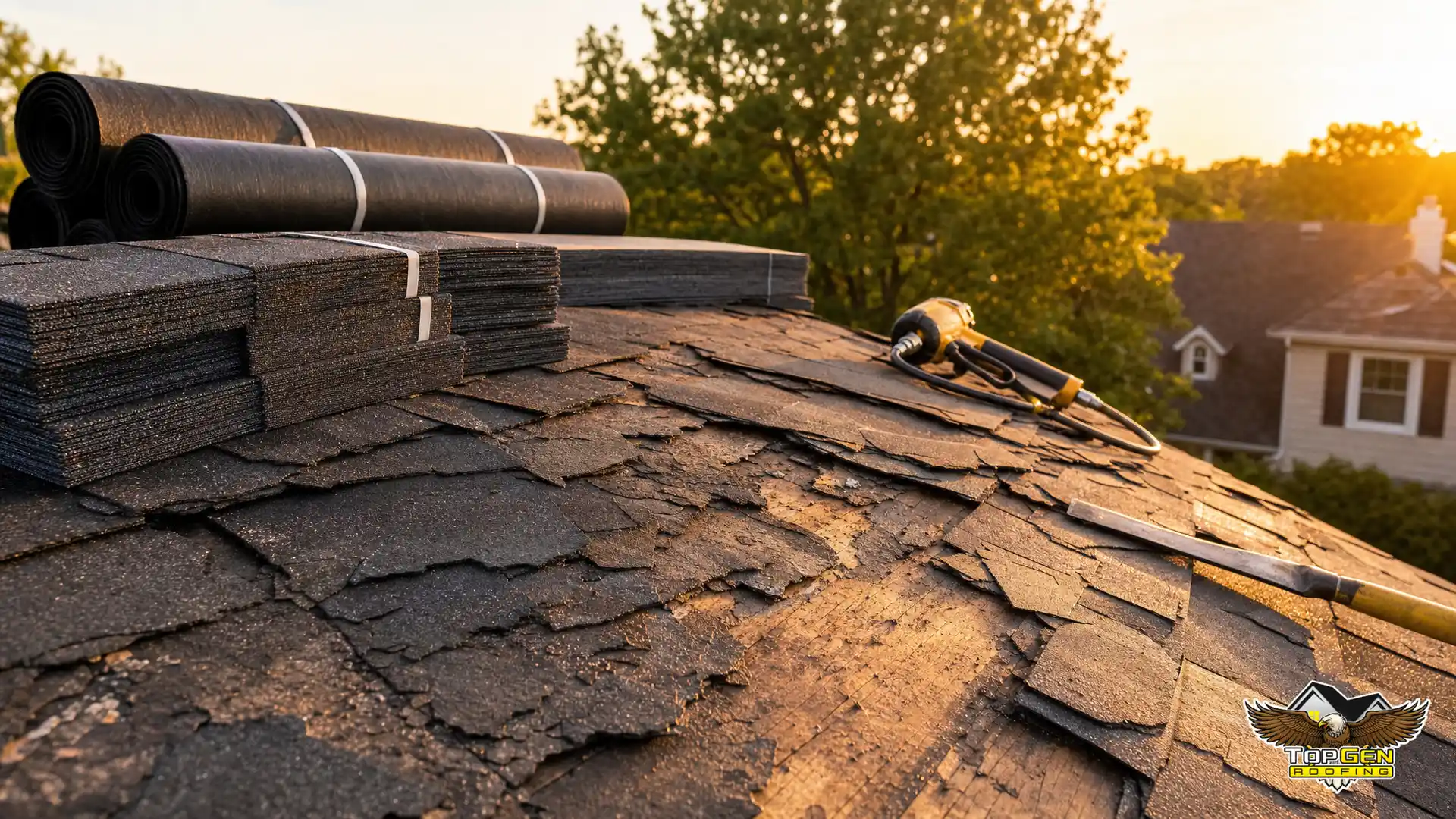
Every roofing material has a practical ceiling. Here is a quick reference based on commonly accepted industry standards:
| Material | Typical Lifespan | Notes |
|---|---|---|
| 3-tab asphalt shingles | 15 to 20 years | Lightest and least durable option |
| Architectural asphalt shingles | 25 to 30 years | Most common in the Northeast |
| Metal roofing (steel/aluminum) | 40 to 70 years | Excellent snow and ice performance |
| Wood shake | 20 to 30 years | Requires regular maintenance |
| Slate | 75 to 150 years | Highest upfront cost, longest life |
| EPDM flat roofing | 15 to 25 years | Common on low-slope commercial roofs |
If your home has architectural shingles installed in the late 1990s or early 2000s, you are likely in or near the replacement window right now in 2026. The Replacing Your Roof guide from This Old House provides a solid overview of material lifespans that aligns with what we see on roofs across Saratoga Springs and the broader Capital Region.
Why chronological age is not the only factor
A 25-year-old roof that was installed correctly, ventilated properly, and maintained annually can still be serviceable. A poorly installed 12-year-old structure with inadequate ventilation may already be failing. Age is a data point, not a verdict.
What matters alongside age: installation quality, attic ventilation, number of shingle layers, and whether previous repairs were done correctly. If you have two or more shingle layers already on the deck, that shortens the useful life of the current surface and limits your options when the time comes to replace the entire system.
Climate and weather impact on roof aging
Upstate New York is hard on roofing systems. Saratoga Springs averages significant annual snowfall, and the region cycles through freeze-thaw conditions that expand and contract materials repeatedly each winter. Ice dams form when attic heat escapes unevenly, lifting shingles and forcing water under the surface, a pattern we’ve seen cause interior water damage within a single season.
These local conditions mean that a nationally rated "30-year shingle" may perform closer to 22 to 25 years in our climate. Factor that in when you assess any structure past the halfway point of its rated life, as understanding regional weather patterns is key to timing replacing an old roof decisions correctly.
Clear Signs Your Roof Is Ready for Replacement
Visible wear patterns that indicate failure is near
Walk the perimeter of your home and look up. You do not need to climb on the roof to spot several reliable indicators that replacing roof sections, or the entire system, may be overdue:
- Curling or cupping shingles: edges curling upward or centers cupping downward mean the material is drying out and losing flexibility.
- Granule loss: heavy granule shedding in your gutters or visible bald patches signal UV protection is gone, typically accelerating shingle degradation by 30 to 40 percent.
- Missing shingles: individual missing tabs are repairable, but widespread loss across multiple planes is a full-system signal.
- Sagging sections: any visible sagging between rafters points to deck rot or structural compromise, not a surface-level fix.
- Moss and algae growth: beyond cosmetics, biological growth retains moisture against the shingle surface and accelerates deterioration.
Interior damage and attic conditions to watch for
Go into your attic on a sunny day with the lights off. If you can see daylight through the roof boards, water has a clear path in. Look for water stains, soft spots in the decking, and mold on rafters or insulation.
A healthy attic shows no daylight, no staining, and even airflow between the soffit and ridge vents.
We have seen these findings turn a straightforward repair conversation into a full roof inspection and complete system discussion more times than homeowners expect, typically because deck damage is only visible once the interior is examined closely.
Insurance and inspection red flags
Your homeowner’s insurance carrier may flag an aging system during renewal or after a storm claim. Some carriers in New York will not write new policies on roofs older than 20 years without a current inspection report showing acceptable condition. If your insurer is asking questions about age, treat that as a prompt to get a professional assessment before coverage is affected.
For storm damage roofing situations specifically, insurers often require a licensed contractor’s report within 30 to 60 days of the weather event to process a claim.
Cost-Benefit Analysis: Repair Versus Replace
When targeted repairs still make financial sense
Targeted roof repair makes sense when the system is less than 15 years old, damage is isolated to one or two areas, and the underlying deck is solid. Sealing a flashing gap or replacing a handful of shingles after a wind event is cost-effective on a younger, otherwise healthy structure. According to guidance from Raisiebay on what homeowners should know before replacing a roof, isolating damage early can reduce total project costs by 20 percent or more compared to deferred action.
The threshold most experienced contractors apply: if repair cost exceeds 25 to 30 percent of total replacement cost, often $8,000 to $15,000 for a typical residential job in this region, and the system is past the halfway point of its service life, full replacement is the smarter spend.
Why replacement becomes the smarter long-term investment
A fully replaced system adds real resale value and eliminates recurring repair bills. It also resets your warranty clock. Many architectural shingle manufacturers offer 25 to 50-year material warranties, and a licensed installation typically adds a separate workmanship warranty on top of that. Replacing an old roof with quality materials and professional installation is one of the few home improvements with measurable ROI and long-term peace of mind.
What to Expect During a Professional Roof Replacement
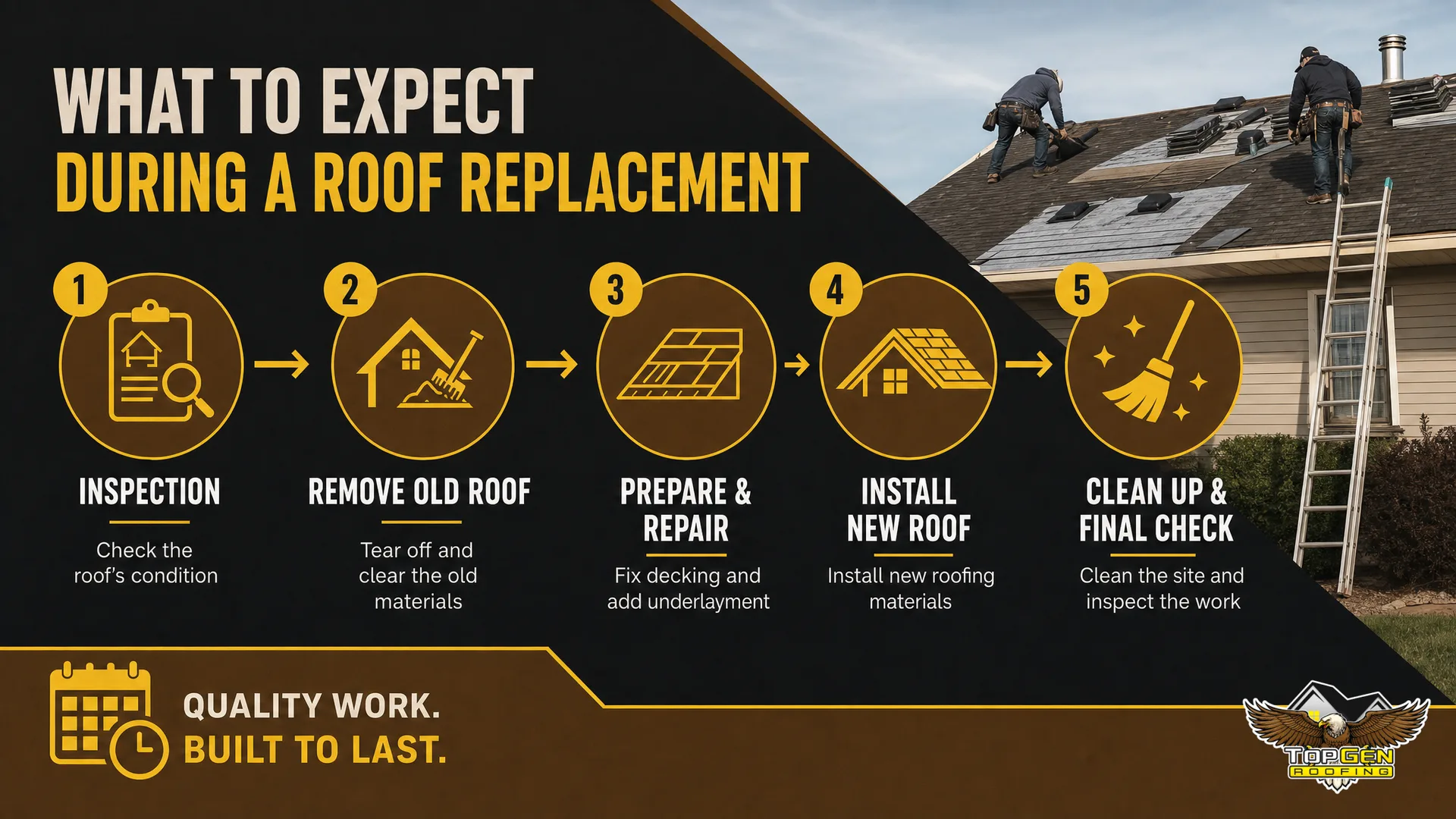
A full residential project in Upstate New York typically takes one to two days for an average-sized home, though deck condition and material availability can affect that timeline.
Timeline and project phases
Understanding the process removes uncertainty. Here is what a standard roof installation looks like from start to finish:
| Phase | Typical Duration | What Happens |
|---|---|---|
| Inspection and estimate | 1 to 2 days | Assessment, measurements, material selection |
| Material delivery | 1 to 3 days | Shingles, underlayment, ice and water shield staged |
| Tear-off | Half to full day | Old shingles and underlayment removed, deck inspected |
| Deck repairs | Same day (if needed) | Rotted or soft sheathing replaced before new install |
| New roof installation | 1 to 2 days | Underlayment, shingles, flashing, ridge cap installed |
| Cleanup and final inspection | Same day | Debris removed, magnetic nail sweep, walkthrough |
You can read more about what each phase involves on the Top Gen Roofing process page, which walks through the approach from first contact to final inspection.
Material selection and warranty considerations
Architectural shingles remain the most practical choice for most Saratoga Springs homeowners: they balance cost, durability, and appearance well in northeastern climates. Metal roofing handles snow loads and ice cycles better than any shingle product, though the upfront cost is higher, often 2 to 3 times more per square foot. For commercial roofing applications, TPO and modified bitumen systems are common in this region because they handle flat or low-slope geometry and upstate weather effectively.
Ask your contractor for manufacturer warranty details in writing before signing anything. Understand what voids coverage (improper ventilation is the most common cause), and confirm the contractor carries both general liability and workers’ compensation insurance. For homeowners across the Capital Region, our roof replacement service for Albany, NY covers material selection guidance as part of every free estimate.
How to Protect Your New Roof and Maximize Its Life
Annual maintenance and inspection schedules
A roof has more useful years ahead when it receives consistent, simple upkeep after installation. We recommend scheduling a professional inspection every 12 to 18 months, plus a visual check from ground level after any major storm. Following replacing an old roof best practices after initial installation means understanding maintenance patterns and staying on top of seasonal upkeep.
Most premature failures we see trace back to skipped annual checks rather than material defects.
Our $249 roof tune-up offer covers a professional check and minor maintenance items that protect your system during the first few years after installation.
Ventilation and attic health as preventive measures
Poor attic ventilation is the single fastest way to shorten a freshly installed system’s life. Heat and moisture trapped in an under-ventilated attic can cut shingle warranty performance by 10 to 15 years, according to general industry guidance from manufacturers. A properly ventilated attic maintains a consistent temperature year-round by moving air from the soffit vents at the eaves to the ridge vent at the peak, which also keeps energy costs lower in both summer and winter.
Next Steps: Getting Your Roof Professionally Evaluated
You do not need to wait until water is coming through the ceiling. A roof has warning signs weeks or months before a failure becomes an emergency, and catching them early is almost always cheaper. Top Gen Roofing serves Saratoga Springs, NY, and the surrounding Capital Region.
If you are not sure whether you need a repair or a full system swap, that is exactly what the inspection is for. Get the facts first, then make the call.
Frequently Asked Questions
How old does a roof have to be before it needs replacing?
There is no single age that automatically triggers replacement. The better question is condition, not age. A roof can need replacement at 15 years if poorly maintained or still be serviceable at 25 years with proper care and favorable conditions.
What are the biggest signs that a roof needs to be replaced rather than repaired?
The clearest signals are widespread granule loss across multiple planes, curling or cupping shingles that cannot be flattened back down, visible sagging between rafters, and active water intrusion showing up as stains on interior ceilings or walls. Also watch for repeat repairs within a short window, which usually signal that replacing an old roof is a better investment than patching.
How long does a roof replacement take in Saratoga Springs, NY?
Most residential projects in the Saratoga Springs area take one to two full days for an average-sized home. You can get a more detailed breakdown on the how long a roof replacement takes in New York page.
Does replacing a roof increase home value?
Yes, a freshly replaced system adds measurable resale value and is one of the few home improvements that consistently resonates with buyers. The financial return depends on material choice and local market conditions at the time of sale.
Can I put new shingles over my existing roof instead of doing a full tear-off?
In some cases, yes. The trade-off is that you cannot inspect the deck for hidden rot or damage without removing the old layer first, which means underlying problems can go undetected until they cause interior damage.
How do I find a reliable roofer near me for a replacement?
Start with licensed, insured contractors who have verifiable local reviews and a physical presence in your area. Word of mouth from neighbors who recently had work done is one of the most reliable filters available, combined with a written estimate that itemizes materials, labor, and warranty terms separately.
 FREE estimate within 24 hours Share a few details with Top Gen Roofing, we’ll help you choose the right next step. Get a free estimate |