


Key Takeaways
- Document damage within 24 to 48 hours using photos, video, and written notes before any cleanup.
- Review your policy for coverage limits, deductibles, and filing deadlines before you call your insurer.
- Never make permanent repairs before the adjuster visits, but do take emergency steps to prevent further damage.
- Present organized documentation to your adjuster to reduce the risk of a partial denial.
- If your claim is denied or underpaid, you have the right to appeal or hire a public adjuster.
Why Speed Matters After Storm Damage
Filing a roof insurance claim for storm damage promptly protects your evidence, meets policy deadlines, and prevents secondary water damage that insurers may refuse to cover.
Delays hurt claims in ways most homeowners don’t see coming. Rain enters through missing shingles, mold grows inside the attic, and the insurer points to that secondary damage as a maintenance failure rather than a storm event. Acting fast keeps the cause of damage clear and unambiguous.
Time-sensitive evidence and documentation deadlines
Most homeowners insurance policies require you to report storm damage within a defined window, often 30 to 60 days from the date of the event. Some policies are stricter. Check your declarations page for the exact reporting deadline before assuming you have unlimited time.
Physical evidence also degrades. Dented flashing, displaced shingles, and hail-cracked granules are obvious right after a storm. Give it a week of foot traffic, sun exposure, and a second rain event, and some of that damage starts to look like ordinary wear.
Document while the storm’s fingerprints are fresh.
How weather patterns affect claim validity
Upstate New York storms, including those that hit Saratoga Springs, often bring a combination of high winds, heavy rain, and occasional hail. Each cause of damage can trigger a different coverage provision in your policy. Wind damage and hail damage may carry separate deductibles, so it matters which storm caused what injury to the roof.
If a second storm follows the first before you document, an adjuster may struggle to separate the events. That ambiguity almost always works against you. Document after every significant weather event, not just the one that felt the worst.
Three Critical Steps Before You Contact Your Insurer
Before you dial your insurance company, three preparatory steps will make every conversation easier and every outcome more favorable.
Ensure your safety and secure the property from further damage
Stay off the roof unless you are a trained professional. Wet, damaged roofing materials are slippery and structurally unpredictable. Inspect from the ground using binoculars, or schedule a professional to assess conditions safely.
You are required by your policy to take reasonable steps to prevent further damage. That means covering exposed areas with tarps, boarding up broken skylights, and removing debris that could worsen structural stress. Keep all receipts for these emergency measures because they may be reimbursable.
For guidance on protecting the rest of your property during roofing work, see how to avoid property damage during roof repair and replacement.
Document everything with photos, video, and written notes
This step is where most homeowners either win or lose their claim before the adjuster ever shows up. Use your phone to shoot video first, walking the perimeter of the home in one continuous take. Then photograph every damaged area individually: missing shingles, dented flashing, split ridge caps, damaged gutters, and any interior water stains.
Timestamp everything. Note the date, the storm that caused the damage, and the specific location of each photo (north slope, south valley, garage roof). A written log paired with visual evidence is far harder for an adjuster to dismiss than photos alone.
If you experienced hail damage, document circular dents on soft metals like gutters and AC units, which act as independent proof that hail reached your property. Our hail damage repair page explains exactly what that damage looks like and how professionals assess it.
Gather your policy documents and coverage details
Pull your homeowners insurance policy and find these specifics before calling:
| Item to Locate | Why It Matters |
|---|---|
| Policy declarations page | Confirms coverage types and limits |
| Roof coverage provision | Shows ACV vs. replacement cost value terms |
| Deductible amount (per event) | Determines your out-of-pocket exposure |
| Wind/hail deductible (if separate) | Many policies list this separately as a percentage |
| Filing deadline | Confirms how many days you have to report |
| Claim process instructions | Some insurers require online filing or a specific phone line |
Understanding what homeowners insurance covers for your roof before you call prevents surprises. Standard policies typically cover sudden damage from wind, hail, lightning, and falling objects. They generally exclude deterioration, improper installation, and neglect.
Filing Your Claim: What to Expect
How to contact your insurance company and report the damage
Call the claims line on your policy declarations page or log into your insurer’s online portal. Have your policy number, the date of the storm, and a brief description of the damage ready before the call starts. Be factual and specific.
"Wind removed approximately eight shingles on the north slope and damaged the ridge cap" is more useful than "my roof has some damage."
Request a claim number immediately and write it down. Every future conversation should reference that number.
Information you must provide in your initial claim
- Your name, address, and policy number
- Date and type of storm (wind, hail, ice storm)
- Description and approximate extent of the damage
- Confirmation of any emergency protective measures taken
- Whether damage extends to the interior (attic, ceilings, walls)
Do not speculate about cause or cost. Stick to observable facts and let the adjuster draw conclusions during the inspection.
Timeline and next steps after filing
Most insurers assign an adjuster within 5 to 15 business days of a filed claim. After a widespread storm event, that timeline can stretch. Ask your insurer for an estimated assignment date and note it.
While you wait, keep a running log of all communications: dates, names of representatives you spoke with, and summaries of what was discussed. This paper trail protects you if a dispute arises later.
Working with the Insurance Adjuster
The adjuster’s evaluation largely determines your claim outcome. Being prepared for this inspection is not about gaming the system. It is about making sure the adjuster has accurate, complete information.
What the adjuster will inspect and evaluate
Adjusters look at the roof surface, flashing, ridge, valleys, gutters, and any interior spaces where water infiltrated. They assess whether damage is consistent with a storm event or with long-term wear. They also check your home’s maintenance history through visible evidence on the roof.
A pre-inspection checklist review can help you understand what adjusters prioritize. Our basic roof inspection checklist for homeowners walks through the key areas an inspector examines so you can cross-reference their findings against your own documentation.
How to present your documentation effectively
Have your photo log, written notes, and any contractor estimates organized and ready to hand over. Walk the adjuster through your documentation in the same order you created it: perimeter video first, then individual damage photos, then interior evidence.
If a roofing contractor has already completed a storm damage assessment, share that report. A professional written assessment adds credibility and gives the adjuster independent data to work from. Angi notes that getting a roofing contractor’s assessment before the adjuster visits is one of the most effective steps a homeowner can take.
Common Claim Denials and How to Avoid Them
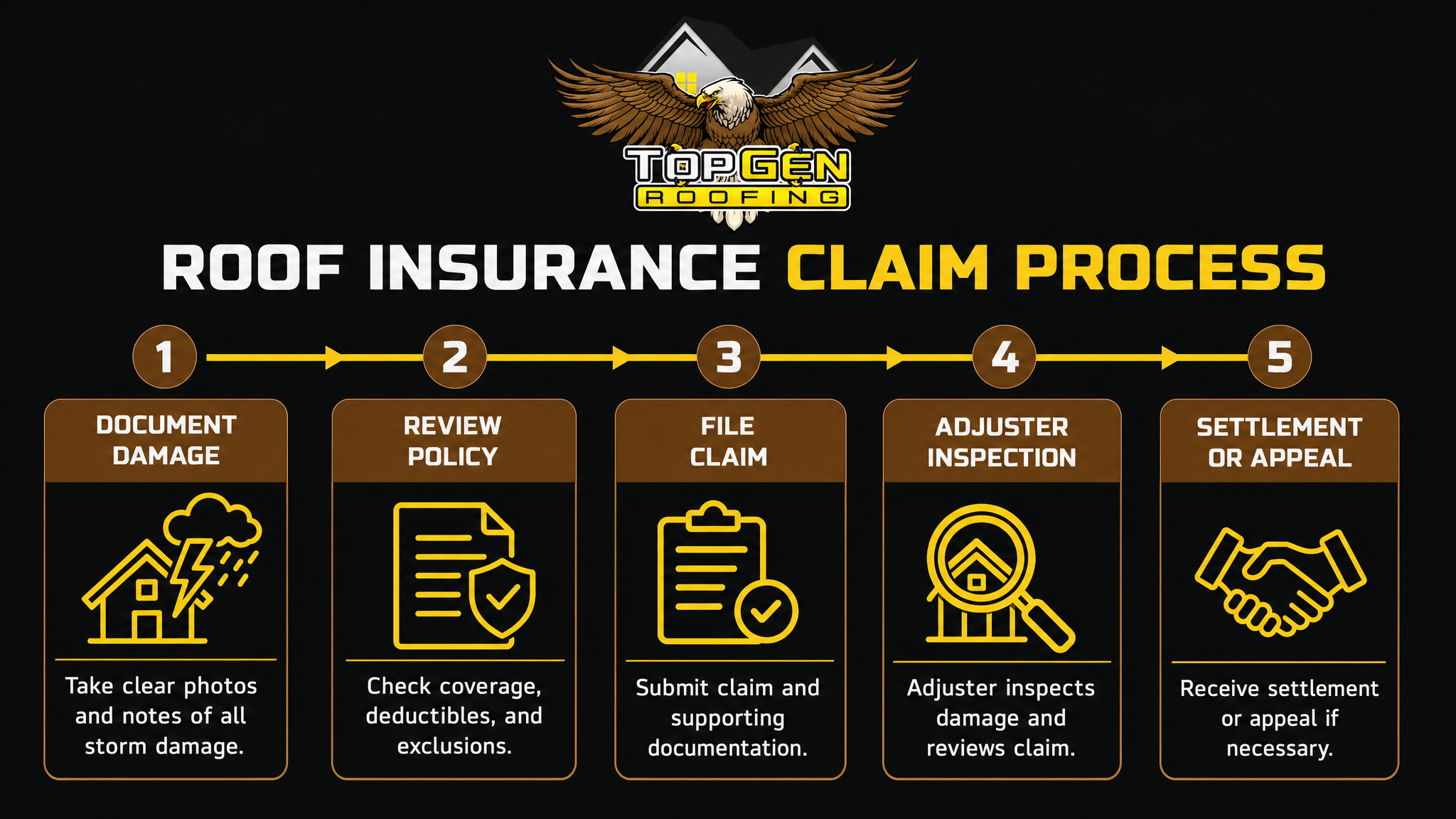
Denials are more common than most homeowners expect, but most are preventable.
Coverage gaps and exclusions in standard homeowner policies
Standard policies exclude damage from flooding, general wear and tear, improper installation, and maintenance neglect. If your roof was already near the end of its service life, some insurers apply actual cash value (ACV) settlement rules, meaning they depreciate the payout based on roof age rather than paying full replacement cost.
Read your policy for terms like "cosmetic damage exclusion" or "ordinance and law" provisions, which affect how much you receive if local building codes require upgrades during the repair.
Preventable documentation mistakes that trigger rejections
The most common documentation errors that lead to partial denials or rejections:
- Waiting too long to file, letting secondary damage cloud the original cause
- Making permanent repairs before the adjuster visits
- Failing to photograph interior water damage alongside exterior damage
- Providing estimates from unlicensed contractors
- Losing receipts for emergency protective measures
Avoid all of these by acting quickly and staying organized from the first hour after the storm. See our guide on essential roof repairs for protecting your home to understand which issues need immediate attention versus which can wait safely for the adjuster.
Next Steps: Repair, Appeal, or Professional Help
Once the adjuster submits their report, your insurer issues a settlement offer. Review it carefully against your contractor estimates before accepting anything.
When to file an appeal or request a second opinion
If the settlement is lower than your contractor estimates, you can file a formal appeal. Document the gap clearly: show the adjuster’s scope of work, your contractor’s scope, and explain every line item that differs. Most insurers have a defined appeal process in your policy under "dispute resolution."
You can also request a reinspection, particularly if significant damage was missed. Heartland Roofing notes that a thorough contractor assessment during the claim process often reveals items that adjusters overlook during a rapid field visit.
Working with a public adjuster or attorney if your claim is denied
A public adjuster works on your behalf, not the insurer’s. They assess the damage independently and negotiate the claim for a percentage of the settlement, typically 10 to 15 percent. If your claim was denied outright or severely underpaid, a public adjuster often recovers enough to justify the fee many times over.
For complex denials involving bad faith claims handling, a policyholder attorney may be necessary. Many work on contingency for roofing and property damagecases, so the financial risk to you is minimal.
If you need help identifying storm damage, understanding the scope of repairs, or navigating the contractor side of a claim, choosing the right roofing contractor for your needs is a critical decision that affects both your repair quality and your claim outcome.
| Claim Outcome | Recommended Next Step | Typical Timeframe |
|---|---|---|
| Full settlement accepted | Schedule licensed contractor repairs | Within 30 days of settlement |
| Settlement underpaid | File formal appeal with contractor estimates | 10, 30 days per policy terms |
| Claim denied | Request reinspection or hire public adjuster | As soon as possible |
| Denial upheld | Consult a policyholder attorney | Varies by case complexity |
Frequently Asked Questions
How long do I have to file a roof insurance claim after storm damage?
Most homeowners insurance policies require you to report storm damage within 30 to 60 days of the event. Some policies extend that window, and a few are stricter. The safest approach is to check your declarations page immediately after a storm and file as soon as your documentation is ready.
Waiting weeks without checking your deadline is one of the most common and costly mistakes homeowners make.
What types of storm damage does homeowners insurance typically cover?
Standard homeowners insurance generally covers sudden, accidental damage from wind, hail, lightning, falling trees, and ice storms. It does not cover flooding, general wear and tear, pre-existing damage, or roofs that failed due to deferred maintenance. If your policy carries a separate wind or hail deductible, that amount comes out of your pocket before coverage kicks in.
Review the roof coverage provision in your policy to understand exactly what is included.
Should I get a roofing contractor estimate before the adjuster visits?
Yes. Having a written professional assessment before the adjuster arrives gives you an independent baseline to compare against their findings. A licensed roofing contractor can identify damage that a general adjuster might miss, particularly granule loss, flashing damage, and subtle structural issues.
Bring that estimate to the inspection and share it directly with the adjuster. It strengthens your claim and reduces the risk of an incomplete scope of work. For practical insight into what a professional inspection covers, our basic roof inspection checklist for homeowners is a useful starting point.
Will filing a storm damage claim raise my homeowners insurance premium?
It can, depending on your insurer, your state, and your claims history. A single weather-related claim typically has less impact than a pattern of multiple claims in a short period. Some states restrict premium increases for claims tied to declared natural disasters.
The best approach is to call your insurer and ask how a claim would affect your rate before filing, particularly if the damage is minor and your repair estimate is close to your deductible. A small claim is sometimes not worth filing when the math does not favor it.
What is the difference between ACV and replacement cost value for a roof claim?
Actual cash value (ACV) pays the depreciated value of your roof at the time of damage. If your roof is 15 years old and a new one costs $12,000, an ACV policy might pay $5,000 to $6,000 after depreciation. Replacement cost value (RCV) pays the full cost to replace the damaged roof with similar materials, regardless of age. RCV policies typically carry higher premiums but provide significantly better protection after a major storm.
Check your policy declarations page for which applies to your home.
Can I make any repairs before the insurance adjuster visits?
You should make emergency protective repairs only, and document everything before and after. Covering exposed areas with tarps, securing loose flashing, and clearing debris that poses a safety hazard are all acceptable. Permanent repairs made before the adjuster visits can void coverage for that portion of work because the insurer loses the ability to verify the original damage.
Keep receipts for all emergency materials and labor, as many policies reimburse these costs as part of the claim.
What happens if my roof insurance claim is denied?
A denial is not always final. Start by requesting the insurer’s written explanation for the denial, then compare it against your documentation and contractor assessment. If the denial is based on incomplete information or a missed scope, file a formal appeal with supporting evidence.
If the scope gap is significant, request a reinspection. For claims that remain denied after appeal, a public adjuster can negotiate on your behalf, and a policyholder attorney can pursue legal remedies if bad faith handling is involved. Acting quickly matters here too, because dispute deadlines are also written into most policies.
 FREE estimate within 24 hours Share a few details with Top Gen Roofing, we’ll help you choose the right next step. Get a free estimate |