


Key Takeaways
- Architectural shingles are the most popular residential choice, offering a balance of durability, aesthetics, and cost.
- Shingle type, roof pitch, climate exposure, and attic ventilation all affect which product performs best on your home.
- Material costs typically range from $3.50 to $7.50 per square foot installed, depending on shingle grade and labor market.
- Never skip a professional roof inspection before choosing a replacement product, existing deck damage changes everything.
- Local roofing companies familiar with your region’s weather patterns give you the most reliable material recommendations.
- According to Owens Corning Roofing Contractors, industry guidance aligns with these recommendations.
Table of Contents
- What you need before you start
- Step-by-step walkthrough
- Common mistakes to avoid
- Timeline, cost, and when to call a pro
- Maintenance and long-term care
- Conclusion and next steps
What you need before you start
Before you select a shingle product or call roofing companies for estimates, you need a clear picture of your roof’s current condition, your budget ceiling, and the performance requirements your climate demands. Rushing this step is the single biggest reason homeowners end up with the wrong product.
The best shingle for your neighbor’s house may be the wrong shingle for yours. Pitch, ventilation, and local weather all drive the right choice.
Tools and materials checklist
You do not need to climb on the roof yourself, but you do need this information ready before any contractor conversation makes sense.
| Item | Why You Need It |
|---|---|
| Current roof age and material | Determines whether a full replacement or layover is appropriate |
| Attic ventilation assessment | Poor ventilation voids most shingle warranties |
| Roof pitch measurement | Steep-slope vs. low-slope products differ significantly |
| Local building code requirements | Some municipalities restrict shingle type or color |
| Approximate roof square footage | Needed for accurate material and labor estimates |
| Insurance documentation (if storm damage) | Required for storm damage claims before work begins |
If you’re not sure about ventilation or deck condition, use this basic roof inspection checklist for homeowners to document what you’re working with before contractor meetings.
Safety and prep considerations
For homeowners evaluating shingle roofing from the ground, safety is mostly about documentation. Take photos of visible issues: lifted shingles, granule loss in gutters, dark staining, or sagging sections. These photos give contractors a starting point and protect you if an insurance claim is involved.
If you’ve had recent storm activity, check whether wind-lifted or ripped shingles are covered under your homeowner’s policy before selecting a replacement product.
Step-by-step walkthrough
Assess the current situation
Walk around your home and look for the signs that tell you which shingle category fits your situation. Are you doing a like-for-like replacement on a budget? Upgrading for curb appeal before a sale?
Or rebuilding after storm damage with durability as the priority? Your shingle category decision starts here, not at the product catalog. Shingle types compared at a glance:
| Shingle Type | Typical Lifespan | Approximate Installed Cost | Best For |
|---|---|---|---|
| 3-Tab Asphalt | 15, 20 years | $3.50, $4.50/sq ft | Budget replacement, low-slope roofs |
| Architectural (Laminated) | 25, 30 years | $4.50, $6.50/sq ft | Most residential homes |
| Impact-Resistant | 30, 40 years | $6.00, $8.50/sq ft | Hail-prone or storm-exposed areas |
| Premium Designer | 30, 50 years | $7.00, $12.00/sq ft | High-end aesthetics, steep pitches |
| Metal Roofing (standing seam) | 40, 70 years | $10.00, $18.00/sq ft | Maximum longevity, commercial overlap |
Note that metal roofing sits at the top of the cost and longevity range. It’s worth considering if you plan to stay in your home long-term, but it requires different installation expertise than asphalt shingles.
Prepare the work area
Once you’ve selected your shingle type, preparation shifts to your home and contractor relationship. Clear the driveway, protect landscaping around the foundation, and notify neighbors of the project timeline. Debris and falling material are unavoidable during a full tear-off.
Confirm with your contractor that the decking will be inspected once old shingles are removed. Rotted or soft sheathing adds cost, but discovering it mid-project costs more than catching it in the estimate.
Execute the core work
Architectural shingles are installed in a staggered pattern from the eaves up, with each course overlapping the one below. Proper nailing depth and placement matter enormously, overdriven nails break the fiberglass mat and reduce wind resistance. Underdriven nails allow shingles to lift.
Ice and water shield should run along all eaves, valleys, and penetrations before any shingle is laid. In upstate New York’s freeze-thaw climate, skipping this step leads to ice dam damage inside your walls within a few seasons. Review the full installation process at mastering the art of roof installation for a closer look at what proper execution involves.
Inspect quality and wrap up
Once installation is complete, walk the perimeter with your contractor and check for exposed nail heads, misaligned courses, incomplete flashing at chimneys and vents, and clean ridge cap installation. A quality roof has straight lines, uniform exposure, and tight seams at every penetration. Request the manufacturer’s warranty documentation and your contractor’s workmanship warranty in writing before making final payment.
Most reputable shingle warranties require certified installation, confirm your contractor qualifies.
Common mistakes to avoid
Skipping prep or planning steps
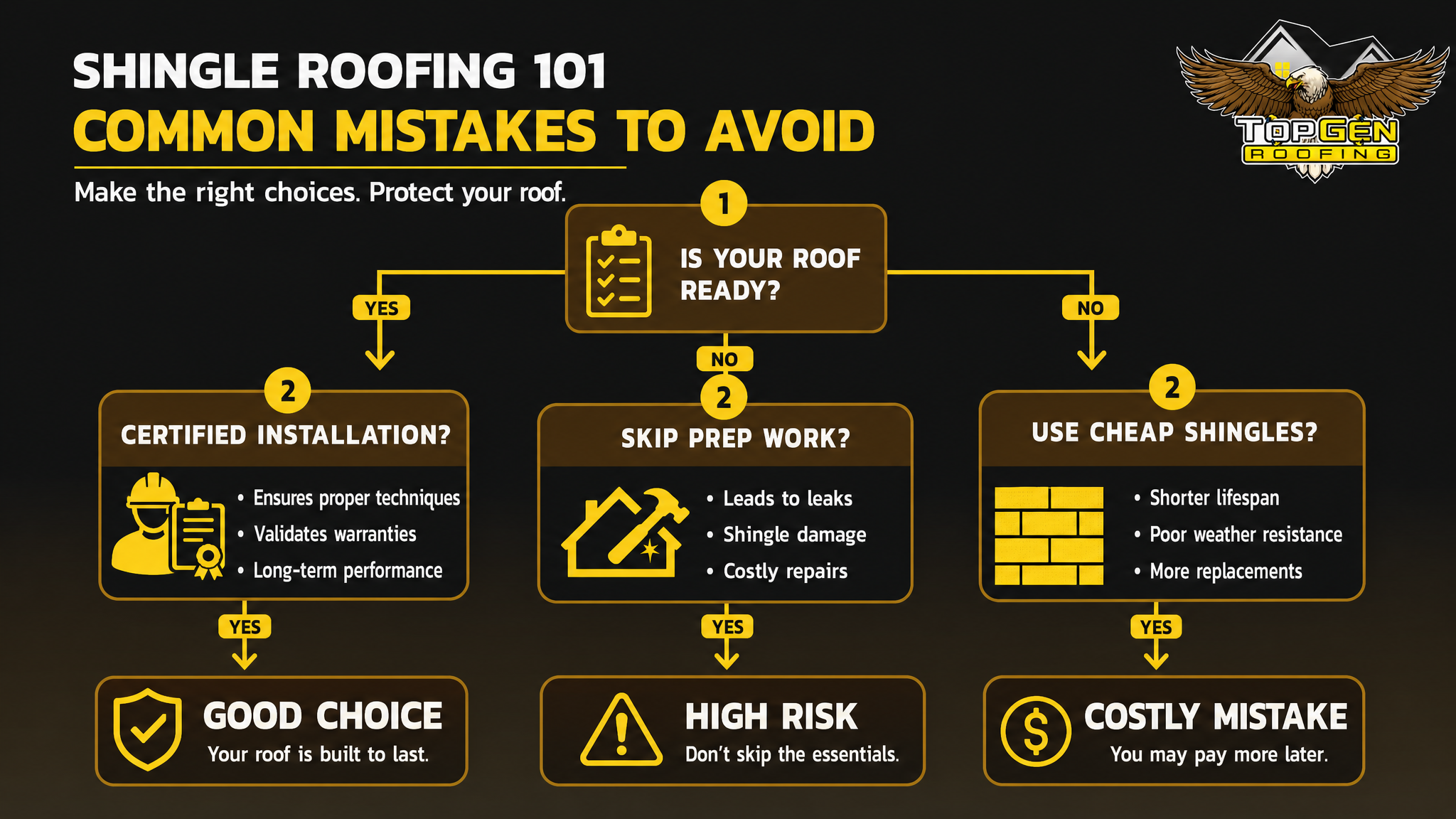
The most common mistake homeowners make is choosing a shingle based on color or price without assessing deck condition, ventilation, or pitch compatibility first. A beautiful shingle installed over a poorly ventilated attic will fail years ahead of schedule and void the warranty in the process.
Cutting corners on quality checks
Accepting a bid without asking about underlayment type, ice and water shield coverage, or nailing specifications is a planning gap that shows up years later in leaks and callbacks. Ask every contractor to spell out what’s included, not just the shingle brand.
Rushing the final inspection
Do not release final payment until you have physically confirmed no exposed fasteners, no lifted courses, and complete flashing around every roof penetration. If you’re unsure what to look for, review this guide on essential roof repairs protecting your home so you know what corners look like when they’re cut.
Timeline, cost, and when to call a pro
Typical project timeline
| Phase | Typical Duration |
|---|---|
| Initial inspection and estimate | 1, 3 days |
| Material ordering and delivery | 3, 10 days (varies by product) |
| Tear-off and installation | 1, 3 days (typical residential) |
| Final inspection and cleanup | Same day or next day |
Total elapsed time from first call to finished roof: typically 2, 3 weeks under normal scheduling conditions.
Budget ranges and cost drivers
Installed cost varies based on shingle grade, tear-off layers, decking repairs, and local labor rates. For a typical 2,000-square-foot home in the Saratoga Springs area, a full replacement using architectural shingles generally falls in the $8,000 to $16,000 range. Impact-resistant or designer shingles push that higher.
Cost drivers include: number of existing shingle layers, roof complexity (valleys, dormers, skylights), decking condition, and the contractor’s warranty terms. To understand what goes into project pricing, see how long does a roof replacement take in New York for a realistic timeline and scope breakdown.
Signs you need professional help
Call a licensed contractor, not a handyman, if you have: active leaks inside the home, visible sagging or soft spots on the deck, storm damage affecting more than a few shingles, or a roof older than 20 years showing widespread granule loss. These situations require a full professional assessment, not a patch.
Maintenance and long-term care
Routine checks
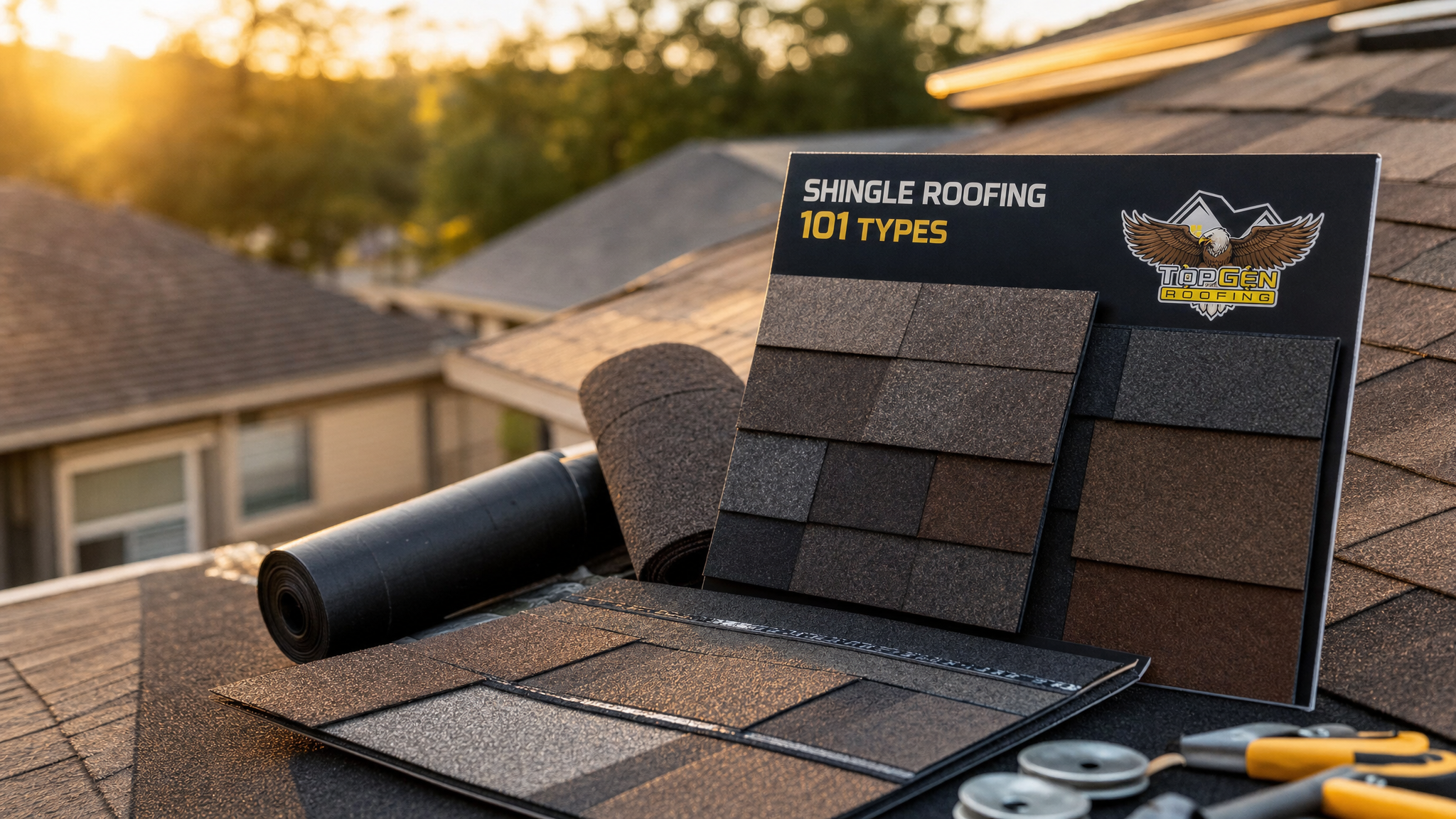
Inspect your roof twice a year: once in spring after winter freeze-thaw cycles and again in fall before snow loads arrive. Look for cracked or curling shingles, granule accumulation in gutters, and any lifted flashing at penetrations. A proactive eye catches small problems before they become interior water damage.
Extending results over time
Keep gutters clear so water drains freely off the roof surface. Overloaded gutters back up water against the fascia and accelerate shingle edge deterioration. Trim overhanging branches that drop debris and hold moisture against the surface.
And if algae streaking appears (common in shaded Northeast exposures), zinc strips at the ridge line slow regrowth without chemical runoff. Most quality shingle roofing systems perform at full capacity for 25 to 30 years when installed correctly and maintained consistently. The maintenance burden is low.
The payoff is decades of reliable protection.
Conclusion and next steps
Quick recap
Understanding shingle roofing 101 types comes down to four decisions: your budget range, the performance level your climate demands, the aesthetic you want for curb appeal, and whether your existing deck and ventilation support the product you’re considering. Skip any of those, and you’re guessing. Architectural shingles hit the sweet spot for most homeowners.
Impact-resistant options make sense in storm-exposed locations. Premium designer shingles reward buyers who plan to stay long-term and want maximum curb appeal.
Recommended next actions
Start with a professional inspection so you know exactly what you’re working with before any shingle conversation. Then compare at least two contractor estimates that specify the same product, underlayment, and warranty terms. That comparison tells you more than any product brochure will.
When you’re ready to move forward, contact Top Gen Roofing for a professional assessment of your roof’s current condition and an honest recommendation on which shingle type fits your home, budget, and Saratoga Springs climate.
Frequently Asked Questions
What is the difference between 3-tab and architectural shingles?
3-tab shingles are a single-layer product with a flatappearance with a uniform cutout pattern. They’re thinner, lighter, and less expensive, but they carry shorter warranties (typically 15, 20 years) and lower wind resistance ratings. Architectural shingles use a two-layer laminated construction that creates a dimensional, textured appearance similar to wood shake or slate. They’re heavier, more resistant to wind uplift, and carry longer warranties, usually 25 to 30 years from the manufacturer.
For most homeowners replacing a full roof, architectural shingles are the smarter long-term investment even at a modestly higher upfront cost.
How do I know if my roof needs replacement or just repair?
Spot repairs make sense when damage is isolated to a small area, the rest of the roof is in sound condition, and the system is less than 15 years old. If you’re seeing widespread granule loss, multiple leak points, soft spots on the deck, or the roof is approaching the end of its rated lifespan, a full replacement delivers better value than repeated repairs. A professional inspection gives you an honest answer.
A reputable contractor will tell you when a repair is sufficient, not push a replacement you don’t need. You can also review practical steps for homeowners facing roof repairs to understand what a legitimate repair scope looks like before you get quotes.
Are impact-resistant shingles worth the extra cost?
In most cases, yes, especially in regions with frequent hail, high winds, or heavy snow loads. Impact-resistant shingles carry a Class 4 rating under UL 2218 testing, which measures resistance to simulated hail strikes. Many insurance carriers in storm-prone states offer premium discounts for Class 4 shingles, which can offset the higher material cost over time. If your area sees regular severe weather, the combination of lower insurance premiums and reduced storm damage repair costs makes impact-resistant shingles a financially sound upgrade.
Ask your insurance provider whether a discount applies in your zip code before making the final call.
How many shingle layers can a roof have before a full tear-off is required?
Most local building codes allow a maximum of two shingle layers on a residential roof. Installing a second layer over existing shingles (a "layover") saves labor cost by skipping tear-off, but it adds weight to the structure, traps heat, and prevents inspection of the underlying deck. It also shortens the lifespan of the new shingles.
If your roof already has two layers, a full tear-off is required before new shingles go on. A tear-off also gives your contractor the chance to find and repair any deck damage before it becomes a leak inside your home. See what to expect during a roof replacement for a clear breakdown of what a full tear-off process involves.
What shingle color should I choose?
Color choice comes down to three practical factors: your home’s exterior palette, your local HOA or municipal guidelines, and your climate. Lighter shingles reflect more solar heat, which can reduce cooling costs in warmer months. Darker shingles absorb heat, which helps in colder climates but may increase attic temperatures in summer without adequate ventilation.
Match your shingle tone to your siding, trim, and masonry so the roof anchors the exterior rather than clashing with it. Most manufacturers offer digital visualization tools on their product pages that let you preview color combinations on a home profile similar to yours. If you’re unsure, a roofing contractor with local experience can tell you which colors perform well and look right in your neighborhood.
How do I compare quotes from different roofing companies?
Do not compare bids by total price alone. Two quotes for the same shingle brand can differ significantly based on underlayment quality, ice and water shield coverage, flashing material, warranty terms, and whether decking repair is included or billed separately. Ask each contractor to provide a written scope of work that itemizes: shingle product and grade, underlayment type, ice and water shield footage, disposal fees, and workmanship warranty length.
Once every bid uses the same line items, the price comparison becomes meaningful. For more guidance on evaluating roofing companies, review this resource on choosing the best roofing company for your home before signing any contract.