

Key Takeaways
- Fall protection, including harnesses and anchor systems, is required by OSHA for any roofing work on structures 6 feet or higher.
- Proper PPE, from hard hats to slip-resistant footwear, reduces injury risk at every stage of a roofing job.
- Pre-job safety inspections and daily briefings are standard practice for professional crews, not optional extras.
- Weather conditions directly affect when and how work proceeds: wind, rain, and extreme temperatures all require specific protocols.
- A safety-focused contractor protects your property, not just workers: debris containment, ladder placement, and equipment staging all affect your landscaping, siding, and driveway.
Why Job Site Safety Matters in Roofing
Roofing is consistently ranked among the most hazardous trades in construction. Falls account for a significant share of work-related fatalities in the industry each year, and most of those incidents involve jobs where safety systems were absent or incomplete. When you hire a contractor, the way they manage risk on your property reflects directly on the quality of their entire operation.
A roofing crew’s commitment to safety on your job site is one of the clearest signals of how seriously they take every other part of their work.
The Real Cost of Roofing Accidents
An accident on your property creates problems beyond the immediate injury. Liability exposure, project delays, and property damage all follow. Contractors who carry proper workers’ compensation and general liability insurance shift that financial risk off of you, but the physical damage to your home from a dropped tool or an unsecured ladder still falls on the crew to prevent.
According to OSHA’s roofing safety guidelines, falls from elevation are the leading cause of fatalities in roofing, which is why federal standards require fall protection on any residential or commercial roofing job where workers are exposed to a 6-foot or greater drop.
How Safety Protects Your Property During Work
A safety-conscious crew protects more than workers. Properly staged equipment keeps ladders from gouging siding. Debris containment systems prevent nails and torn shingles from scattering across your landscaping.
Tarps and protective boards shield driveways and garden beds from material drops. These measures are standard practice for a professional contractor, not upsells.
When you’re researching how to avoid property damage during roof repair and replacement, you’ll find that the right contractor addresses both worker safety and site protection as one interconnected plan from day one.
Essential Fall Protection and Harness Systems
Fall protection is the single most important safety system on any roofing job. OSHA Standard 1926.502 outlines the specific requirements contractors must follow, and reputable crews treat compliance as a baseline, not a ceiling.
Types of Fall Arrest Systems Professional Roofers Use
There are three main fall protection approaches approved for roofing work:
| System Type | How It Works | Typical Application |
|---|---|---|
| Personal Fall Arrest System (PFAS) | Harness connected to an anchor via lanyard; stops a fall in progress | Steep-slope residential roofs |
| Guardrail Systems | Physical barrier at roof edges to prevent falls | Flat commercial roofs |
| Safety Net Systems | Net positioned below the work area to catch falls | High-rise or complex structures |
Most residential jobs in Saratoga Springs rely on personal fall arrest systems because they allow workers to move freely across a sloped surface while staying tethered at all times.
Proper Harness Fit and Inspection Protocols
A harness that fits incorrectly is nearly as dangerous as no harness at all. Before each use, crew members check the D-ring for deformation, inspect webbing for cuts or fraying, and confirm buckle function. The harness should sit snug at the chest and thighs with no slack that could cause excessive drop during a fall.
Anchor Points and Roof Access Safety
Anchor points must be capable of supporting at least 5,000 pounds per worker attached, per OSHA requirements. On asphalt shingle roofs, this typically means anchors fastened through sheathing into structural rafters, not just into the shingles themselves. Roof jacks and ridge anchors are common on residential projects.
Every access point, including the top of every ladder, requires a stable transition so workers can get on and off the roof without an uncontrolled step.
Personal Protective Equipment (PPE) Standards
Beyond harnesses, a full PPE setup protects workers from the secondary hazards that come with roofing: falling debris, power tool kickback, UV exposure, and extreme temperatures.
Hard Hats, Safety Glasses, and Footwear Requirements
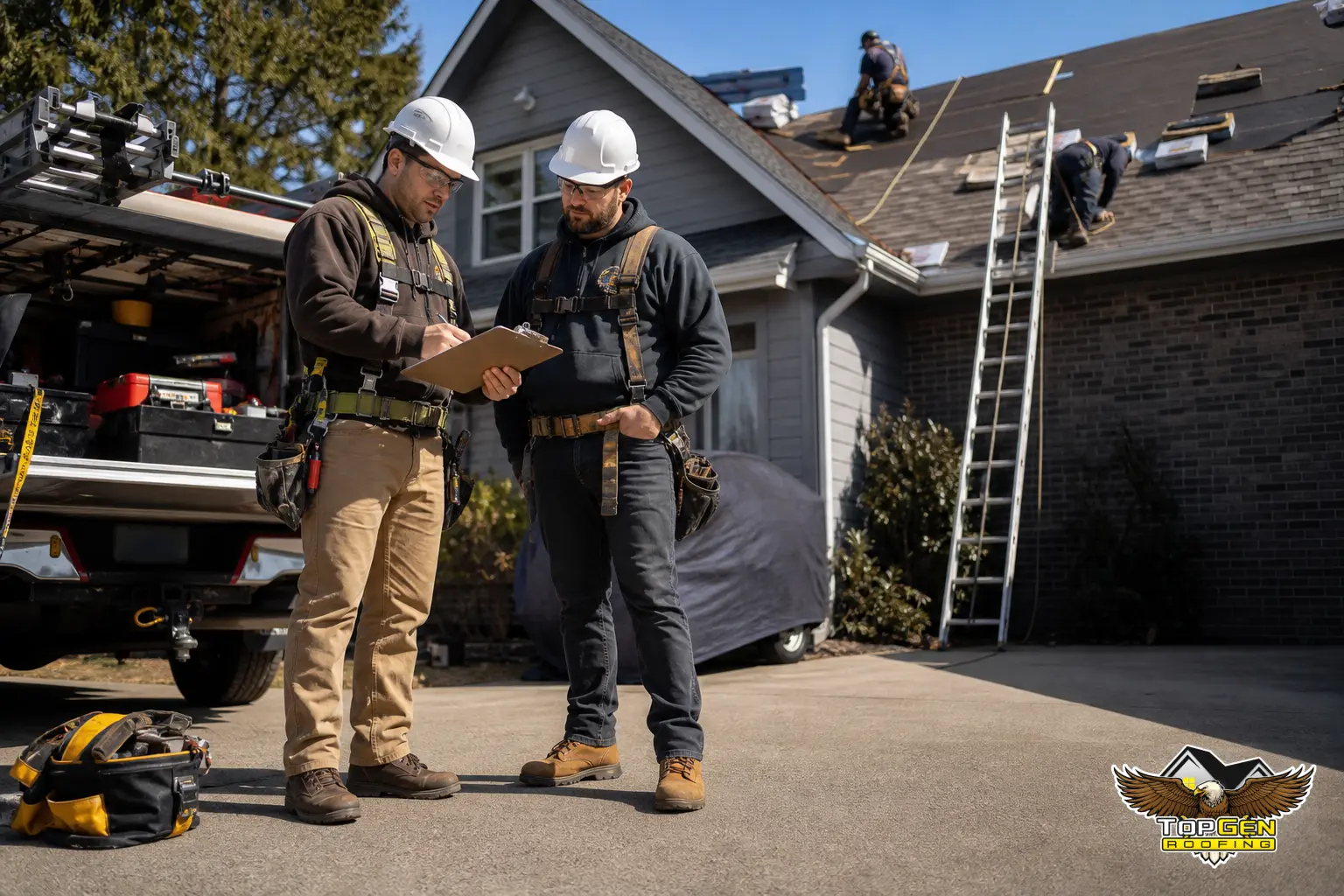
Hard hats protect against tool drops from workers above. Safety glasses shield against flying granules during tear-off. Footwear is where many contractors cut corners, but slip-resistant rubber-soled boots specifically rated for roofing work make a measurable difference on wet or steep surfaces.
Soft-soled boots also reduce the chance of slipping on granule-covered shingles during a replacement job.
As noted in Five Important Safety Items for a Roofing Job Site, footwear selection is among the most overlooked PPE decisions on residential roofing projects.
Weather-Specific PPE for Roofing Conditions
In upstate New York, weather changes fast. Summer heat means high-visibility, breathable workwear and hydration breaks on schedule. Cold-weather jobs call for insulated gloves that still allow dexterity with tools.
Wet conditions require additional slip precautions and, in some cases, a work stoppage until surfaces dry enough to be safe.
| Weather Condition | Required PPE Adjustment |
|---|---|
| High heat (above 90°F) | Cooling towels, lightweight gear, mandatory hydration |
| Cold below 20°F | Insulated gloves, layered workwear, hand warmers |
| Rain or wet surfaces | Non-slip footwear upgrade, work suspension if unsafe |
| High UV / prolonged sun | UV-protective clothing, sunscreen application |
Scaffolding, Ladders, and Equipment Safety
Ground-level equipment choices affect the safety of everyone on and around the job site. A misplaced ladder or an overloaded scaffold creates risk long before anyone reaches the peak of the roof.
Ladder Placement and Stabilization Techniques
Ladders must extend at least 3 feet above the roof eave to give workers a safe handhold during the transition onto the roof surface. The base angle follows the 4:1 rule: for every 4 feet of vertical height, the base sits 1 foot away from the wall. Ladder feet need level ground; if the ground is soft or uneven, a ladder leveler or base plate prevents sinking.
Securing the top with a roof hook or standoff bracket prevents the ladder from shifting during use.
Scaffold Setup and Load-Bearing Standards
On multi-story homes or commercial buildings in the Capital Region, scaffolding replaces ladders for extended work at height. OSHA requires scaffold platforms to support at least four times the intended load. Plank gaps cannot exceed 1 inch.
Guardrails are required on scaffolding any time workers are 10 feet or more above a lower level. A qualified person must inspect the scaffold before each work shift.
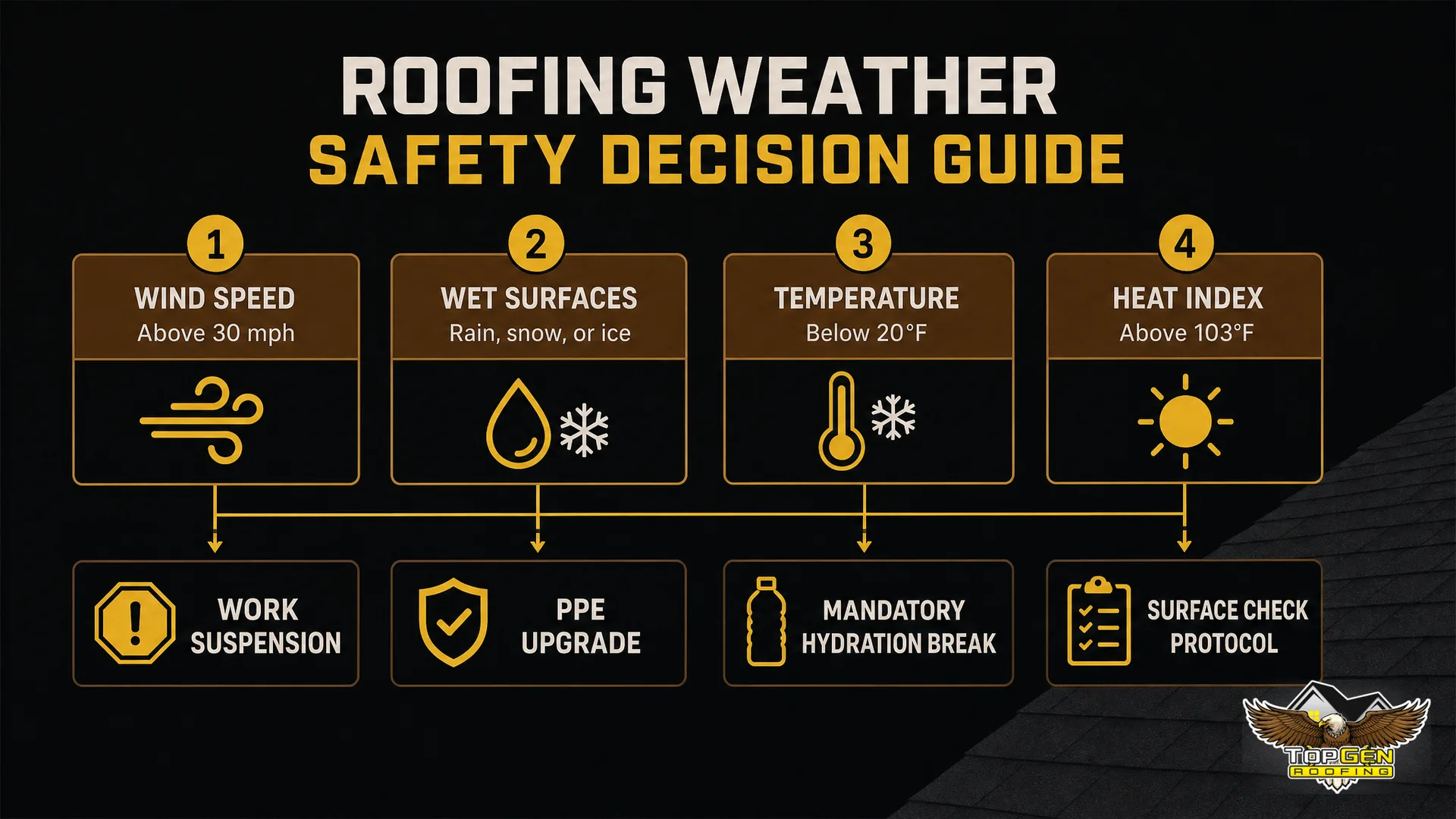
Weather and Environmental Risk Management
No safety plan is complete without a clear weather policy. Experienced contractors build go/no-go decisions into their scheduling before crews ever load the truck.
High Wind and Slippery Surface Precautions
Wind speeds above 25 to 30 mph make material handling dangerous and significantly raise the fall risk on steep-slope roofs. Shingles and underlayment act as sails in gusting conditions. Most professional crews suspend work or restrict tasks to ground-level prep when sustained winds exceed those thresholds.
Wet roofs from rain or morning dew require a surface dry-out period before workers go up.
According to how professional roofing contractors handle on-site risk, a formal weather policy reduces both injury rates and material waste from botched installations done in unsafe conditions.
Heat and Cold Weather Safety Protocols
Heat exhaustion can set in quickly on a dark shingle roof in July. Asphalt surfaces can reach temperatures 40 to 50 degrees higher than the ambient air, meaning a 90°F day produces a working surface well above 130°F. Mandatory water breaks every 20 to 30 minutes and a shaded rest area on-site are baseline requirements for summer roofing.
In winter, cold-temperature adhesion issues with roofing materials are a separate concern: shingles become brittle and must be stored and handled accordingly.
How Professional Roofers Plan and Execute Safe Roofing Projects
The difference between an average contractor and a reliable one often comes down to what happens before the first nail goes in.
Pre-Job Safety Inspections and Site Assessment
Before work starts, a thorough site assessment identifies hazards specific to your property: overhead power lines, soft ground near the foundation, skylights that present fall-through risk, and existing roof damage that could make surfaces unstable. This assessment drives the equipment plan and determines where anchor points, ladders, and debris chutes get placed. If you want to see how a structured roofing process looks from start to finish, the Top Gen Roofing process page walks through each phase.
Daily Safety Briefings and Worker Training
Every work day on a professional job site starts with a brief tailgate meeting. The crew reviews the day’s tasks, identifies new hazards since the previous day (weather changes, partially completed decking, material staging), and confirms that all PPE is present and functional. This practice keeps safety awareness active throughout the project rather than treating it as a checkbox from day one.
Contractors who skip this step are usually the ones where corners get cut in other areas too.
For homeowners comparing contractors, asking directly about daily safety protocols is one of the most useful questions youcan ask. Learn more about choosing the right roofing contractor for your needs before you sign any contract.
Frequently Asked Questions
What certifications should professional roofers have related to safety?
At minimum, look for contractors whose crews have completed OSHA 10 or OSHA 30 training, which cover fall protection, hazard recognition, and job site safety standards. Some states require additional licensing that includes safety components. In New York, roofing contractors must carry workers’ compensation and general liability insurance, which also signals a baseline commitment to operating within safety regulations.
Beyond certifications, ask whether the company has a written safety plan and who on-site is designated as the competent person responsible for daily hazard oversight. A contractor who can answer those questions clearly has thought through safety at an organizational level, not just as a regulatory checkbox.
How do I know if a roofing contractor is following OSHA safety standards on my property?
You can observe a few clear indicators without needing to inspect every detail yourself. Workers should be wearing harnesses and hard hats during all elevated work. Ladders should extend visibly above the roof edge.
Equipment and debris should be contained and staged away from foot traffic areas. If you see workers on a steep roof without tethers, or an unsecured ladder leaning against siding, those are immediate red flags.
Asking for proof of insurance before work starts is also essential. A contractor with active workers’ compensation coverage is operating within the legal framework that OSHA compliance requires. If an uninsured worker is injured on your property, you may face liability exposure.
The Top Gen Roofing reviews page shows how a safety-focused contractor earns trust from real homeowners.
Do professional roofers stop work when it rains?
Yes, and any contractor who does not has a serious gap in their safety policy. Wet roofing surfaces dramatically increase slip risk, and installing shingles or underlayment in rain compromises adhesion and long-term performance. Professional roofers near me who operate in upstate New York know that weather windows matter, and a good contractor builds flexibility into the project timeline rather than rushing through unsafe conditions to hit an arbitrary deadline.
Morning dew and fog can also make surfaces hazardous even without active rain. A surface dry-out period before workers go up is standard on any professional job site.
What is a Job Hazard Analysis and do roofers use it?
A Job Hazard Analysis (JHA) is a formal document that identifies specific tasks in a project, the hazards associated with each, and the controls in place to reduce those hazards. It is a recognized best practice in commercial and residential construction. For roofing, a JHA might break out tasks like tear-off, decking inspection, underlayment installation, and shingle application, each with its own set of hazards and corresponding PPE or procedural requirements.
Not every residential contractor produces a formal JHA for a single-family roof replacement, but the underlying thinking should still be present. A pre-job walkthrough that identifies overhead power lines, soft ground, skylight fall-through risks, and equipment staging areas covers the same ground informally. For professional commercial roofers working on larger structures, a written JHA is often required by building owners or general contractors before work begins.
You can see how this structured approach applies to larger projects by reviewing resources on protecting your business with commercial roofing.
How does a roofing crew protect my landscaping and driveway during a job?
A safety-conscious crew stages tarps and plywood boards over vulnerable areas before any material comes off the roof. Magnetic nail sweepers run across the driveway and lawn at the end of each work day to collect loose fasteners. Debris chutes or contained dumpster placement direct torn-off material away from plantings and hardscape.
Ladder feet get padded or fitted with stabilizer caps to prevent gouging siding or pavers.
These steps are not extras you should have to negotiate for. They are part of what separates a reliable roofing contractor from one who treats your property as an obstacle to get past. If a contractor’s quote does not include site protection details, ask explicitly what their plan is before you agree to anything.
For a closer look at finished work and how a job site should look when it is done right, visit the Top Gen Roofing gallery of completed projects.
What should I ask a roofer about safety before hiring them?
Start with these direct questions:
| Question to Ask | What the Answer Reveals |
|---|---|
| Do you carry workers’ comp and liability insurance? | Whether you have legal protection if something goes wrong |
| Who is the designated safety person on site? | Whether safety is assigned, not assumed |
| What is your wind or rain policy? | Whether they have a weather decision framework |
| How do you protect landscaping and driveways? | Whether site care is built into their process |
| Are your crews OSHA trained? | Whether safety is formalized or informal |
A contractor who answers these questions confidently and specifically is one who has thought through job site risk before you even asked. One who deflects or gives vague answers is showing you exactly how they will handle problems during the actual job.
 FREE estimate within 24 hours Share a few details with Top Gen Roofing, we’ll help you choose the right next step. Get a free estimate |