


Key Takeaways
- Document all visible damage with photos and video before touching anything on the roof.
- Never climb a wet or structurally compromised roof yourself.
- Temporary protective measures, like tarping, can prevent secondary water damage while you wait for a professional.
- Hail and wind damage often hide in areas that are easy to overlook, including gutters, soffits, and flashing.
- Contacting a licensed roofing contractor promptly protects your insurance claim timeline..com), industry guidance aligns with these recommendations.
- Why Storm Damage Roof Repair Matters Now
- After a storm, the clock starts immediately.
Table of Contents
- Common Storm Damage Roof Repair Mistakes to Avoid
- Practical Storm Damage Roof Repair Improvements
- Tools, Examples, and Proof Points
- Comparison and Decision Guide
- Conclusion and Next Steps
Common Storm Damage Roof Repair Mistakes to Avoid
Most homeowners make one or more avoidable mistakes in the first 24 to 48 hours after storm damage. These errors can compromise your insurance claim, put you at physical risk, or cause additional damage to your property.
Mistake 1 and How It Hurts Results
Climbing onto the roof immediately after the storm is the most dangerous mistake. Wet shingles, compromised decking, and hidden structural damage make a post-storm roof extremely hazardous. Beyond the safety risk, walking on a damaged roof can worsen existing damage and give an insurance adjuster reason to question whether the deterioration was pre-existing or storm-related.
Stay at ground level. Use binoculars if you need a closer look at the surface. Take photos from the yard, from upstairs windows, and from the edges of the property.
Mistake 2 and How to Spot It Early
Skipping interior documentation is equally costly. Many homeowners photograph the roof exterior but forget to check inside. Walk through your attic and look for wet insulation, water stains on the decking, and daylight visible through the roof boards.
Check ceilings and walls on upper floors for fresh water marks or bubbling paint. Interior evidence often tells the story of where water entered and how far it traveled, which supports a more complete insurance claim. If you notice active water intrusion, visit our roof leak repair guide for immediate containment steps.
How to Fix Each Mistake Quickly
Use this quick-reference checklist before you contact a contractor:
| Step | Action | Why It Matters |
|---|---|---|
| 1 | Photograph exterior from ground level | Documents scope without safety risk |
| 2 | Inspect attic and upper ceilings | Captures water infiltration evidence |
| 3 | Check gutters and downspouts | Hail leaves dents and granule buildup |
| 4 | Note date, time, and storm details | Ties damage to a weather event |
| 5 | Place tarps over exposed decking | Prevents secondary water damage |
| 6 | Contact your insurance company | Starts the claim clock officially |
Practical Storm Damage Roof Repair Improvements
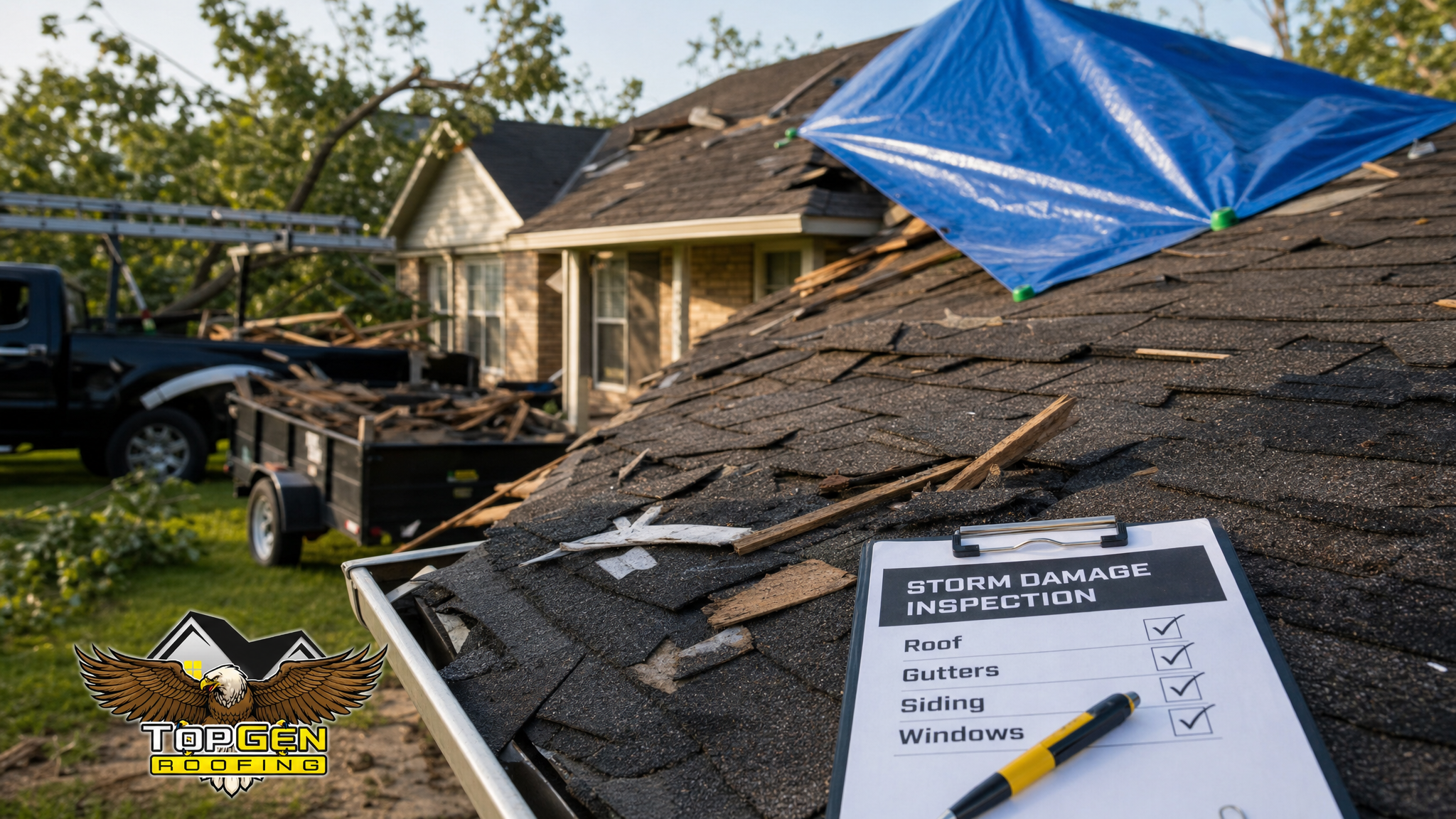
Once you have documented the damage and contained any active leaks, the next phase is getting an accurate picture of what actually needs to be repaired. This step shapes everything that follows, from your insurance claim to your contractor’s scope.
Audit Your Current Approach
Walk the perimeter of your home at ground level and look for these specific signs of storm damage:
- Missing or displaced shingles along ridges and edges, where wind uplift is strongest
- Granule loss on asphalt shingles, which often collects in gutters after a hail storm
- Dented or cracked flashing around chimneys, skylights, and vents
- Gutter damage including bent sections, separated joints, or granule accumulation
- Soffit and fascia damage from wind-driven debris
If your area experienced hail, read more about the specific inspection process on our hail damage repair page. Hail damage is often subtle and easy to underestimate from street level.
Implement the Highest-Impact Fixes
Before your contractor arrives, there are two protective steps worth taking yourself if it is safe to do so from ground level or a ladder set against the gutters: Temporary tarping is the most effective way to stop water infiltration while you wait for professional repairs. Use a heavy-duty polyethylene tarp and weight or secure the edges. Do not nail the tarp directly into damaged shingles if you can avoid it; secure it over the ridge and anchor the edges with sandbags or boards. Clear interior drainage paths by placing buckets under active drips and removing wet insulation that is in contact with your ceiling drywall.
Wet insulation loses its thermal value and accelerates mold growth within 24 to 48 hours. For a broader look at protecting your home during repair work, see our guide on how to avoid property damage during roof repair and replacement.
Track and Refine Over Time
Keep a storm damage file with your photos, dates, weather reports, insurance correspondence, and contractor estimates. This file protects you if a dispute arises later. Your insurance company may request additional documentation weeks after the initial claim, and contractors bidding on the job may have questions about the timeline of events.
Tools, Examples, and Proof Points
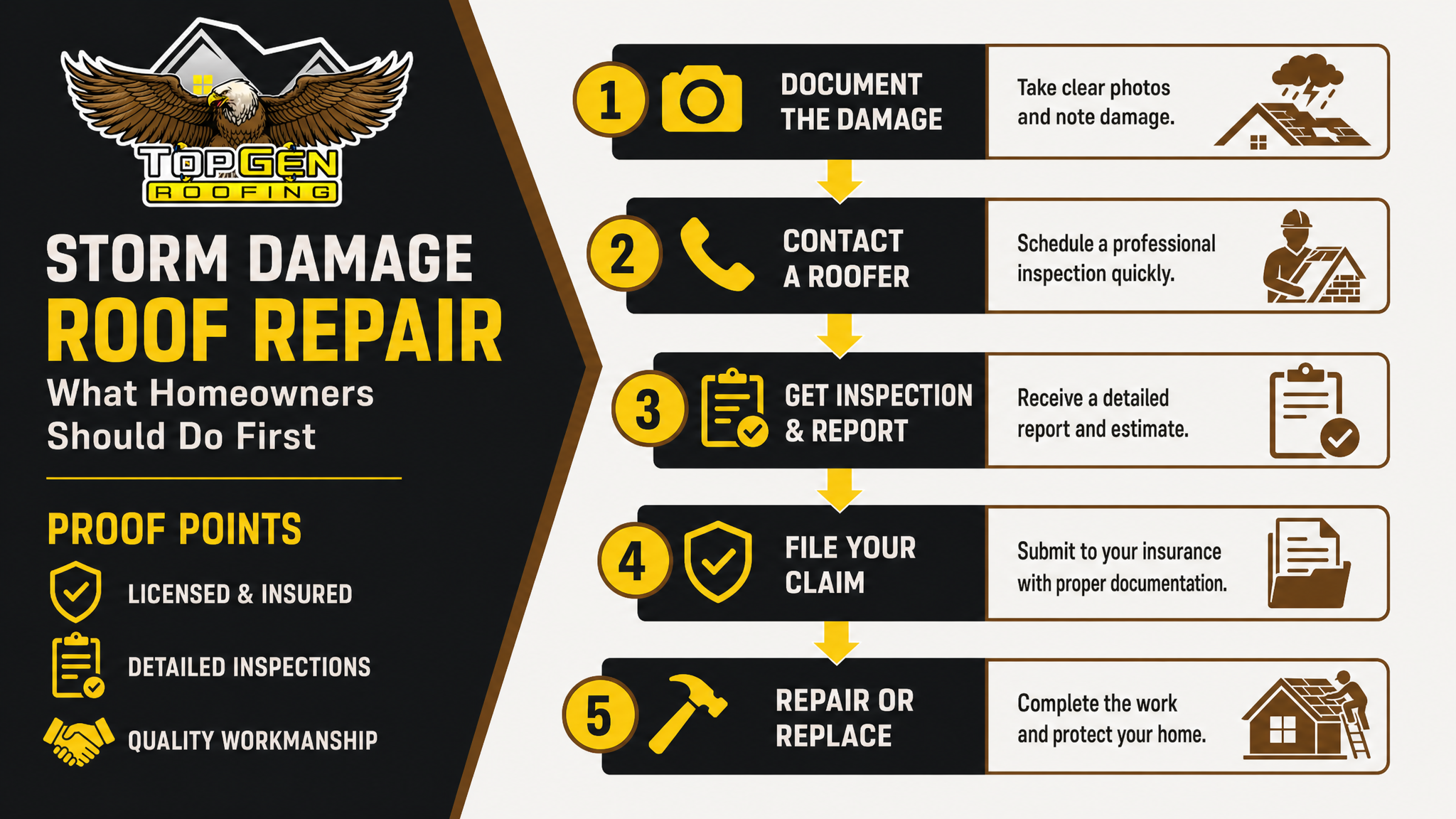
Good documentation does not require expensive equipment. Most modern smartphones capture sufficient detail for insurance purposes when used correctly. Here is what works:
Recommended Tools or Workflows
- Smartphone camera with geotagging enabled (captures date, time, and location automatically)
- Binoculars for close-up views from the ground
- Weather verification apps or NOAA storm reports to confirm hail size and wind speed on the event date
- A voice memo app to narrate what you are seeing as you walk the property
The National Oceanic and Atmospheric Administration (NOAA) maintains storm event databases that contractors and insurance adjusters use to verify whether a qualifying weather event occurred on a specific date in your area. Pulling this report yourself, before anyone asks for it, strengthens your claim.
Real-World Examples
A homeowner in the Capital Region discovers missing ridge cap shingles after a windstorm. They photograph the damage from the yard, check the attic for daylight and wet spots, and contact their insurer the same day. The adjuster approves the claim quickly because the documentation is clean and the timeline is tight.
Compare that to a neighbor who waits two weeks, does not check the attic, and discovers mold behind the drywall during the repair. The secondary damage is classified as a maintenance failure, not storm damage, and the insurer covers only the original shingle replacement. That difference is documentation and timing, nothing more.
Comparison and Decision Guide
Not every storm-damaged roof needs the same response. The scope of repair depends on the type of storm, the age of your roof, and the extent of damage found during your audit.
When to Choose Each Approach
| Damage Scenario | Recommended Action | Typical Timeline |
|---|---|---|
| 1, 3 missing shingles, no interior leak | Targeted shingle repair | 1, 3 days to schedule |
| Hail bruising across large surface area | Full inspection, potential partial replacement | 1, 2 weeks |
| Active leak with attic water infiltration | Emergency tarping plus prompt contractor call | Same day |
| Multiple systems affected (roof, gutters, flashing) | Full storm damage assessment | 3, 7 days for scope |
| Roof over 20 years old with widespread damage | Replacement evaluation alongside repair estimate | 1, 3 weeks |
Cost, Effort, and Timeline Tradeoffs
Minor repairs for a few missing shingles typically cost far less than a full replacement, but only if addressed quickly. Delayed repairs on an aging roof often escalate into larger replacements because water damage compounds fast. If you are weighing repair versus replacement, the roof replacement: what to expect and how to prepare guide walks through the decision criteria in detail.
When choosing a contractor for any scope of work, read our guidance on choosing the right roofing contractor for your needs before signing any contract. License verification, written estimates, and warranty terms are non-negotiable.
Conclusion and Next Steps
Storm damage roof repairstarts with what you do in the first 24 hours, not when the contractor shows up. Document everything from ground level, protect exposed areas with tarps, check your attic for hidden water intrusion, and contact your insurance company promptly. These steps protect your claim, your home, and your budget.
What to Do Next
If a recent storm has affected your roof, do not wait to see how things develop. Contact Top Gen Roofing for a professional assessment. Kyle Hitchcock and the Top Gen Roofing team serve homeowners across Saratoga Springs and the Capital Region with honest estimates, thorough inspections, and reliable repair work you can count on.
Reach out to discuss your situation and get a clear picture of what your roof actually needs.
Frequently Asked Questions
How soon should I file an insurance claim after storm damage?
File as soon as possible, ideally within 24 to48 hours of discovering the damage. Most homeowners insurance policies have a reporting window, and some carriers will question claims filed weeks after an event. Prompt reporting also gives your insurer the opportunity to schedule an adjuster visit while the damage is still clearly visible and before any weather events complicate the picture further.
Can I do temporary storm damage repairs myself?
Yes, with important limits. Ground-level tasks like placing buckets, removing wet insulation from finished ceiling areas, and laying tarps from a secured ladder are reasonable for most homeowners. What you should not attempt is walking on a damaged or wet roof surface, removing or replacing shingles, or working near live electrical equipment that may have been affected by storm debris.
If there is any doubt about structural stability, wait for a professional.
How do I know if my roof needs repair or full replacement after a storm?
The honest answer depends on three factors: the age of your roof, the extent of the damage, and how many systems were affected. A 10-year-old roof with isolated shingle loss from wind usually warrants targeted repair. A 20-plus-year-old roof with widespread hail bruising, granule loss across multiple slopes, and compromised flashing is often a stronger candidate for full replacement, especially when an insurer is already involved.
Get a written assessment from a licensed contractor before making that call. Our detailed breakdown of practical steps for repairing a roof covers the decision points in plain language.
What should I look for when hiring a contractor for storm damage roof repair?
Verify the contractor holds a valid license in New York State, carries general liability insurance and workers’ compensation coverage, and provides a written estimate before any work begins. Be cautious of contractors who knock on your door unsolicited after a storm, ask you to sign anything on the spot, or request a large cash deposit upfront. A reputable contractor will give you time to review the estimate, check references, and confirm the scope of work in writing.
Read verified customer feedback before committing, and check our reviews page to see what homeowners in the Capital Region say about working with Top Gen Roofing.
Does storm damage affect my gutters too?
Frequently, yes. High winds can pull gutters away from the fascia, and hail leaves visible dents along the gutter face and inside the channel. Beyond the cosmetic damage, compromised gutters divert water toward your foundation and siding rather than away from it.
After any significant storm, inspect your gutters carefully for separation at the seams, bent sections, and granule buildup from shingle impact. If you find damage, address it alongside your roof repairs rather than treating it as a separate project later. Our essential gutter repair tips for homeowners covers what to look for and when to call a professional.
Will my homeowners insurance cover storm damage roof repair?
Most standard homeowners insurance policies cover sudden storm damage from wind, hail, and falling debris, but the details vary by policy. Coverage typically excludes damage caused by neglect, aging, or lack of maintenance. That distinction matters because an adjuster will look at the overall condition of your roof alongside the storm-specific damage.
A well-documented claim with timestamped photos, weather verification, and a professional inspection report gives you the strongest possible position. Review your policy’s deductible and any cosmetic damage exclusions before your adjuster visits, and ask your contractor to walk through the inspection with you when possible.