

Key Takeaways
- Falls from roofs are one of the leading causes of fatal injuries among do-it-yourself workers.
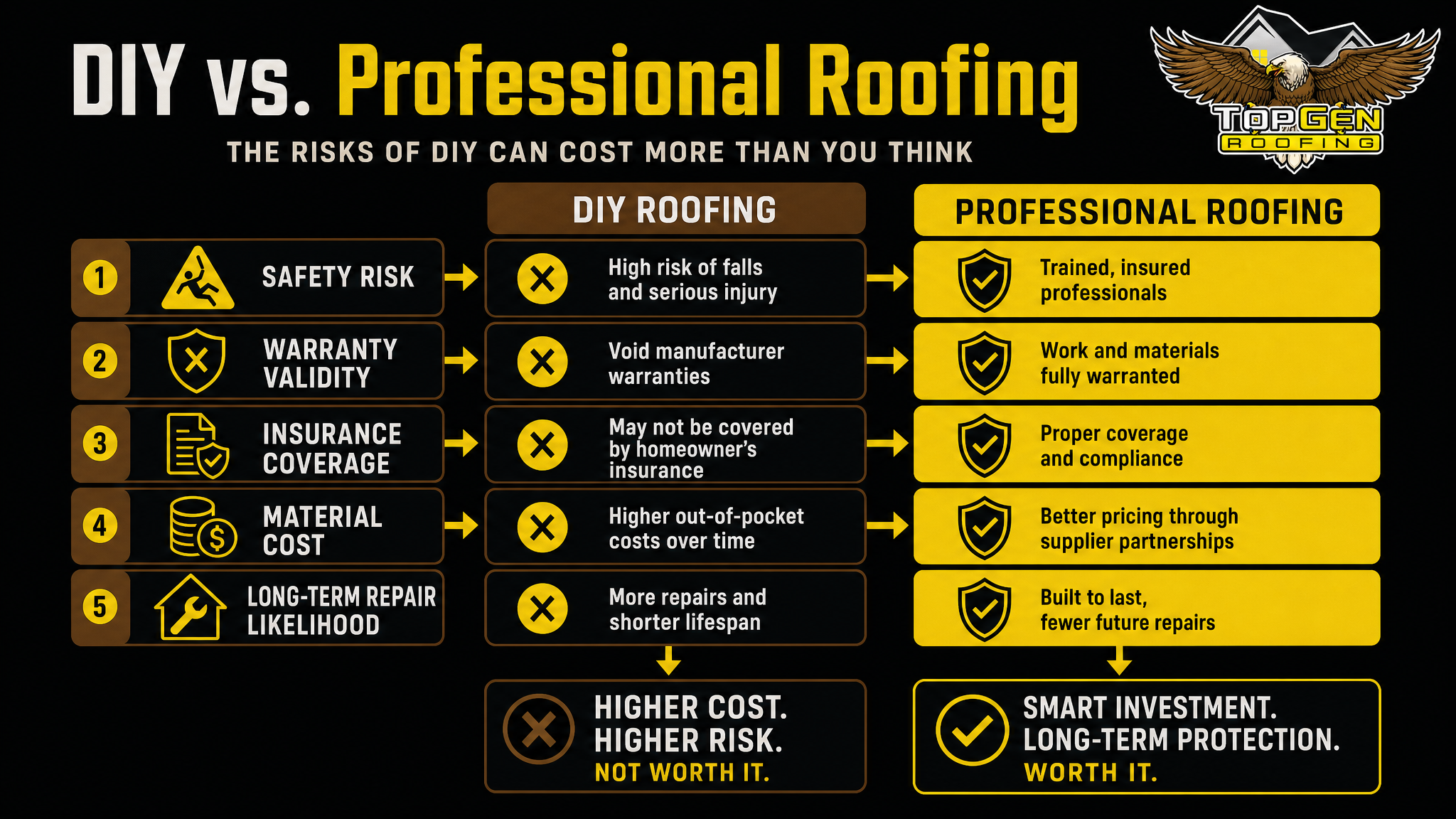
- DIY roofing mistakes often void manufacturer warranties and create problems your insurance won’t cover.
- Material costs alone won’t save you money if a professional has to redo faulty work.
- A licensed roofing contractor brings tools, training, and liability coverage you simply can’t replicate.
- A professional roof inspection can identify problems early before they require a full replacement.
Why Never DIY Matters Now
The home improvement content wave has made roofing look straightforward. You watch a few videos, price out shingles at the hardware store, and convince yourself it’s manageable. The reality on a 12-pitch roof in August, or a wet November morning in Saratoga Springs, is a lot different from what plays on screen.
What Has Changed Recently
Material costs have climbed, and so have the stakes. Asphalt shingles, underlayment, and roofing fasteners all cost more than they did a few years ago. At the same time, roofing warranties have become more conditional.
Many manufacturers now require certified installation by a licensed contractor for the warranty to apply. If you install the product yourself, you may be holding materials with no coverage at all.
Homeowners insurance policies have also tightened up. Carriers increasingly distinguish between damage from weather events and damage from improper installation. A claim that traces back to a DIY repair may be denied outright.
What Readers Need to Understand First
DIY roofing mistakes are not just cosmetic. They affect structural integrity, create water infiltration paths, and can void both product warranties and homeowners insurance coverage.
Roofing is a licensed trade in most states for good reason. The work involves load-bearing surfaces, waterproofing systems, flashing integration, and fall exposure that require specific training and equipment. Understanding what a professional does differently is the first step in making an informed decision.
Common Never DIY Mistakes to Avoid
You should never DIY a roofing project without understanding where things typically go wrong. These are the mistakes that cost the most to fix.
Mistake 1 and How It Hurts Results
The most damaging mistake is improper flashing installation. Flashing is the metal material that seals the joints around chimneys, skylights, vents, and roof valleys. Get it wrong and water finds its way into the framing, insulation, and drywall below.
Most DIYers either skip flashing entirely, use the wrong material, or fail to integrate it correctly with the underlayment.
Water damage from bad flashing often doesn’t show up immediately. You might not notice it until mold appears in the attic or a ceiling stain develops a full season later. By then, the repair cost goes well beyond what you would have paid for professional installation.
Mistake 2 and How to Spot It Early
The second major mistake is incorrect shingle nailing patterns. Shingles must be fastened at specific depths and positions according to manufacturer specs. Overdriven nails crack the shingle mat.
Underdriven nails leave shingles loose. Nails placed too high on the shingle don’t hit the nailing zone, which means the shingle is technically floating.
You can spot early signs of this problem by looking for shingles that lift at the edges during wind or that show cracking along the top third of the tab. If you see wavy or blistered sections across a relatively new roof, nail placement is often the cause.
How to Fix Each Mistake Quickly
Fixing flashing requires removing affected shingles, replacing the flashing, resealing with roofing cement, and re-laying the shingle courses above. It’s not a patch job. Fixing nailing errors requires removing and re-setting each shingle in the affected section, which means buying matching materials and hoping you can source the same product.
Both repairs cost more in labor when a contractor has to undo someone else’s work first. Getting a basic roof inspection before any repair attempt helps you understand exactly what you’re dealing with.
Practical Never DIY Improvements
The smarter approach is not to abandon all involvement in your roof, but to focus your energy where it actually pays off.
Audit Your Current Approach
Start with a ground-level visual check. Look for missing shingles, sagging sections, granule buildup in gutters, or daylight visible near roof penetrations from inside the attic. These are signals that you need professional assessment, not a ladder and a caulk gun.
If you’ve already done some DIY work on your roof, document it. A reputable contractor can assess what was done and tell you honestly what needs to be redone versus what holds. You can also review what to expect during a roof replacement so you’re prepared for that conversation.
Implement the Highest-Impact Fixes
The highest-impact thing you can do is hire a licensed roofing contractor for any repair that involves flashing, underlayment, ridge caps, or structural decking. These are the components that protect everything below. Minor surface tasks like cleaning debris from gutters or checking attic ventilation are appropriate owner-level tasks.
Focusing professional resources on structural and waterproofing elements, while handling surface maintenance yourself, is the most cost-effective roofing strategy for most homeowners.
Track and Refine Over Time
Keep a simple roofing log: installation date, any repairs made, who did the work, and what materials were used. This documentation helps when filing insurance claims, selling your home, or disputing a warranty. A contractor who stands behind their work will usually provide receipts and product information automatically.
Tools, Examples, and Proof Points
Recommended Tools or Workflows
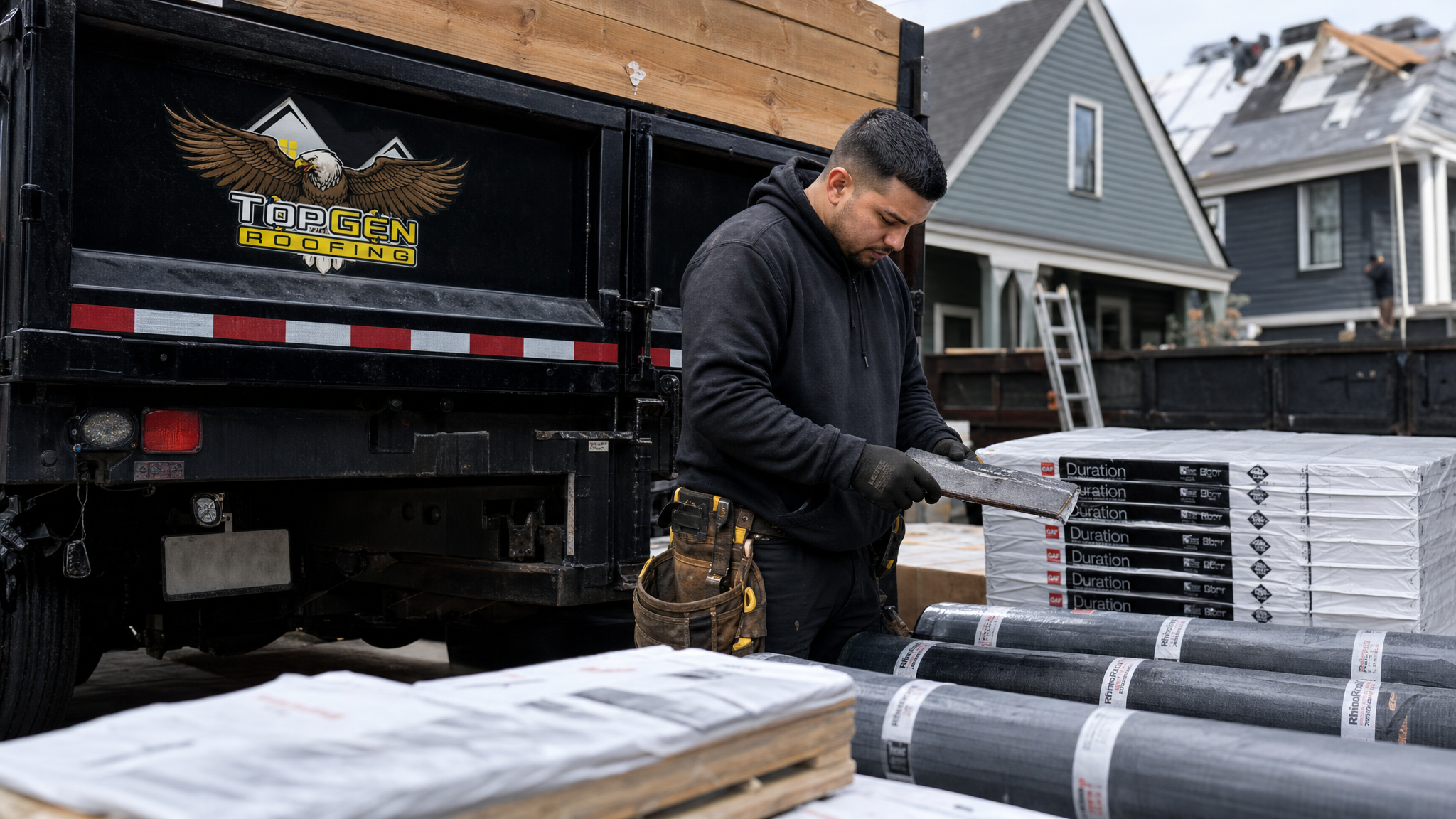
Professional roofers use equipment you won’t find at a hardware store: pneumatic nail guns calibrated to manufacturer depth specs, staging scaffolding that meets OSHA safety standards, and harness systems rated for rooftop use. The Occupational Safety and Health Administration (OSHA) roofing safety requirements are specific and extensive. A homeowner without that equipment is working at a real disadvantage, not just a minor inconvenience.
The cost of renting proper fall protection and staging alone often eliminates most of the savings a DIY project was supposed to produce.
Real-World Examples
Consider a homeowner who replaces three missing shingles after a storm. The shingles cost around $30. But if the underlayment below was also compromised and not replaced, water infiltration continues.
Six months later, the decking is soft, the insulation is saturated, and a repair that should have cost a few hundred dollars now costs thousands.
This is not a rare scenario. It’s the typical outcome when surface-level fixes mask underlying system failures. A full roof repair assessment from a licensed contractor identifies those hidden issues before they multiply.
Comparison and Decision Guide
When to Choose Each Approach
| Factor | DIY Roofing | Professional Roofing |
|---|---|---|
| Fall safety | High risk, no training | Staged, harnessed, OSHA-compliant |
| Warranty validity | Typically voided | Maintained with certified installer |
| Insurance coverage | May be denied | Generally supported |
| Material sourcing | Retail pricing | Contractor pricing and availability |
| Quality outcome | Variable | Consistent, guaranteed |
| Liability | Entirely on homeowner | Contractor carries coverage |
Cost, Effort, and Timeline Tradeoffs
DIY roofing looks cheaper on day one. The math shifts when you account for tool rental, wasted materials from errors, re-purchasing matching shingles, and the labor cost of fixing mistakes. A professional installation typically comes with a workmanship warranty that covers exactly those failure points.
Timeline is another hidden cost. A two-person professional crew can complete a full shingle roof replacement on an average home in one to two days. A homeowner working on weekends, with no staging or crew, can stretch the same job across weeks, leaving the roof exposed and vulnerable in between.
For homeowners in the Saratoga Springs area, understanding your specific weather exposure matters. Upstate New York winters are hard on roofing systems. Freeze-thaw cycles, ice dam formation, and heavy snow loads are specific stressors that require correctly installed underlayment and ventilation to manage.
Working with a local Saratoga Springs roofing contractor who knows these conditions is a practical advantage.
Conclusion and Next Steps
Main Points to Remember
Roofing is not a project where effort compensates for expertise. The risks are real: falls, voided warranties, denied insurance claims, and repair costs that dwarf the original savings. The wisest move is knowing where the line is between owner maintenance and licensed trade work.
What to Do Next
If your roof is showing signs of wear, damage, or age, the first step is an honest assessment, not a hardware store run. Get eyes on the problem from a contractor who can tell you exactly what’s needed and what it will cost.
Top Gen Roofing serves homeowners across Saratoga Springs and the Capital Region with professional roof inspections, repair, and full replacement. Contact us today for a FREE estimate within 24 hours and get a straight answer about what your roof actually needs.
Frequently Asked Questions
Is DIY roofing ever safe for homeowners?
Minor tasks like removing debris from gutters or checking attic ventilation from inside are generally safe for homeowners. Any task that requires walking on the roof, handling flashing, or working near penetrations like chimneys or skylights carries significant fall risk and should be handled by a licensed contractor. The OSHA roofing safety requirements spell out the fall protection standards that professional crews follow.
Will my homeowners insurance cover a DIY roofing mistake?
Not always. Many insurance policies draw a distinction between weather-related damage and damage caused by improper installation or maintenance. If an adjuster determines that a leak or structural failure resulted from DIY work, the claim may be partially or fully denied.
Check your policy language and consult your insurer before attempting any repair.
Does a DIY roof installation void the shingle warranty?
In most cases, yes. Major shingle manufacturers require installation by a licensed contractor for their product warranties to be valid. If you install the shingles yourself, you may be purchasing materials with no coverage against defects or premature failure.
Always read the warrantyterms before purchasing materials.
How much does it cost to fix a DIY roofing mistake?
The cost depends entirely on what went wrong and how long the problem went undetected. A simple reflashing repair might run a few hundred dollars. Water damage that has spread to the decking, insulation, and interior ceiling can push repair costs into the thousands.
Catching problems early through a professional inspection is almost always cheaper than waiting until visible damage appears inside the home.
What roofing tasks can a homeowner safely handle?
Homeowners can reasonably handle surface-level maintenance: cleaning gutters, removing debris from the roof using a long-handled rake from the ground, checking attic insulation and ventilation from inside, and monitoring for early warning signs like granule loss or soft spots. Refer to a homeowner roof inspection checklist to stay on top of what to look for each season without putting yourself at risk.
How do I know if my roof needs repair or full replacement?
Age, extent of damage, and underlying deck condition are the three main factors. A roof with isolated storm damage and sound decking is usually a repair candidate. A roof older than 20 to 25 years with widespread granule loss, multiple leak points, or sagging sections typically needs full replacement.
A licensed contractor can give you a clear answer after a proper inspection rather than a guess based on surface appearance alone. You can also review guidance on roof replacement: what to expect and how to prepare before that conversation.
 FREE estimate within 24 hours Share a few details with Top Gen Roofing, we’ll help you choose the right next step. Get a free estimate |