


Most homeowners treat their roof and gutters as separate systems. That’s the first mistake. Roofing and maintenance is really a single discipline, and when any part of it breaks down, the consequences ripple from your shingles all the way to your foundation. This article is for homeowners in Upstate New York and across the United States who want to protect their property from preventable water damage.
Whether you own a decades-old Colonial in Guilderland or a newer build in Malta, the principles here apply directly to your home.
Key Takeaways
- Gutters, roofs, and foundations work as one interconnected water management system.
- A failure in any part puts the whole structure at risk.
The Hidden Connection Between Gutters, Roofs, and Foundations
Gutters, roofing, and foundations function as one interconnected water management system. A failure at any point in the chain puts the entire structure at risk.
Why Gutters Are Part of Your Roofing System
Most people picture a gutter as trim, something that finishes the edge of the roofline. In reality, gutters are the drainage exit for every drop of water your roof sheds. When rain or snowmelt runs off your shingles, it moves to the drip edge, into the gutter trough, through the downspout, and away from the foundation.
That chain has to work without interruption. When gutters clog, crack, or pull away from the fascia, water backs up against the roof deck and eaves. Over time, that moisture penetrates the wood sheathing underneath your shingles, a pattern we see repeatedly on Residential Roofing projects across the Capital Region.
For a deeper look at how the roofing system connects to gutters and drainage, the Top Gen Roofing gutter repair resource explains what proper installation looks like and when repairs are warranted.
How Water Damage Cascades From Roof to Foundation
The path of damage follows gravity. Backed-up water first saturates the fascia board, the wooden trim where gutters attach. Then it soaks the soffit, works into the attic, and eventually compromises the roof deck itself.
Below the roofline, the same overflow pools at the base of your exterior walls, where it gradually saturates soil and applies hydrostatic pressure against your foundation. How gutter care protects your home’s foundation explains how this progression, left unchecked, leads to basement water intrusion and structural cracking. What starts as a $75 gutter cleaning skipped too many times can escalate to a foundation repair costing $8,000 to $15,000 or more.
Common Roofing Maintenance Myths That Cost Homeowners Money
Myth 1: Gutters Only Need Cleaning Once a Year
**This is the most common and costly misconception in roofing and maintenance. A single annual cleaning might be sufficient in low-tree areas with mild weather, but most Upstate New York homes sit near mature hardwoods that drop leaves, seed pods, and debris throughout the year. Industry guidance consistently recommends cleaning gutters at least twice a year**, once in late spring after tree pollination, and again in late fall after leaf drop.
Homes with heavy tree coverage or pine trees overhead may need cleaning three to four times annually. Pine needles compact into a dense mat that holds moisture and accelerates corrosion of aluminum gutters. If you’re unsure how often should you clean gutters for your specific property, the essential gutter cleaning guide for homeowners provides a detailed breakdown.
Myth 2: Sagging Gutters Are Just a Cosmetic Problem
A gutter that sags or pulls away from the fascia has lost its slope. Water no longer drains toward the downspout. It sits in low spots, adds weight, and eventually tears the gutter from the roofline entirely. Sagging is a structural warning, not a cosmetic flaw.
Left alone, it accelerates fascia rot, creates entry points for insects and pests, and deposits water exactly where you don’t want it: right at the exterior wall base.
Myth 3: New Roofs Don’t Need Gutter Maintenance
A new roof does not guarantee a functioning gutter system. In fact, a freshly installed roof can expose gutter problems that were previously hidden by failing shingles. If the gutters were already aging, misaligned, or improperly sloped before your re-roof, they remain that way afterward.
New shingles shed water more efficiently than worn ones, which can overwhelm undersized or partially clogged gutters faster than homeowners expect. In our experience with Roof Installation and Roof Replacement projects, at least 1 in 4 re-roofing jobs surfaces a gutter alignment issue that needed correction.
What Happens When Gutter Maintenance Is Neglected
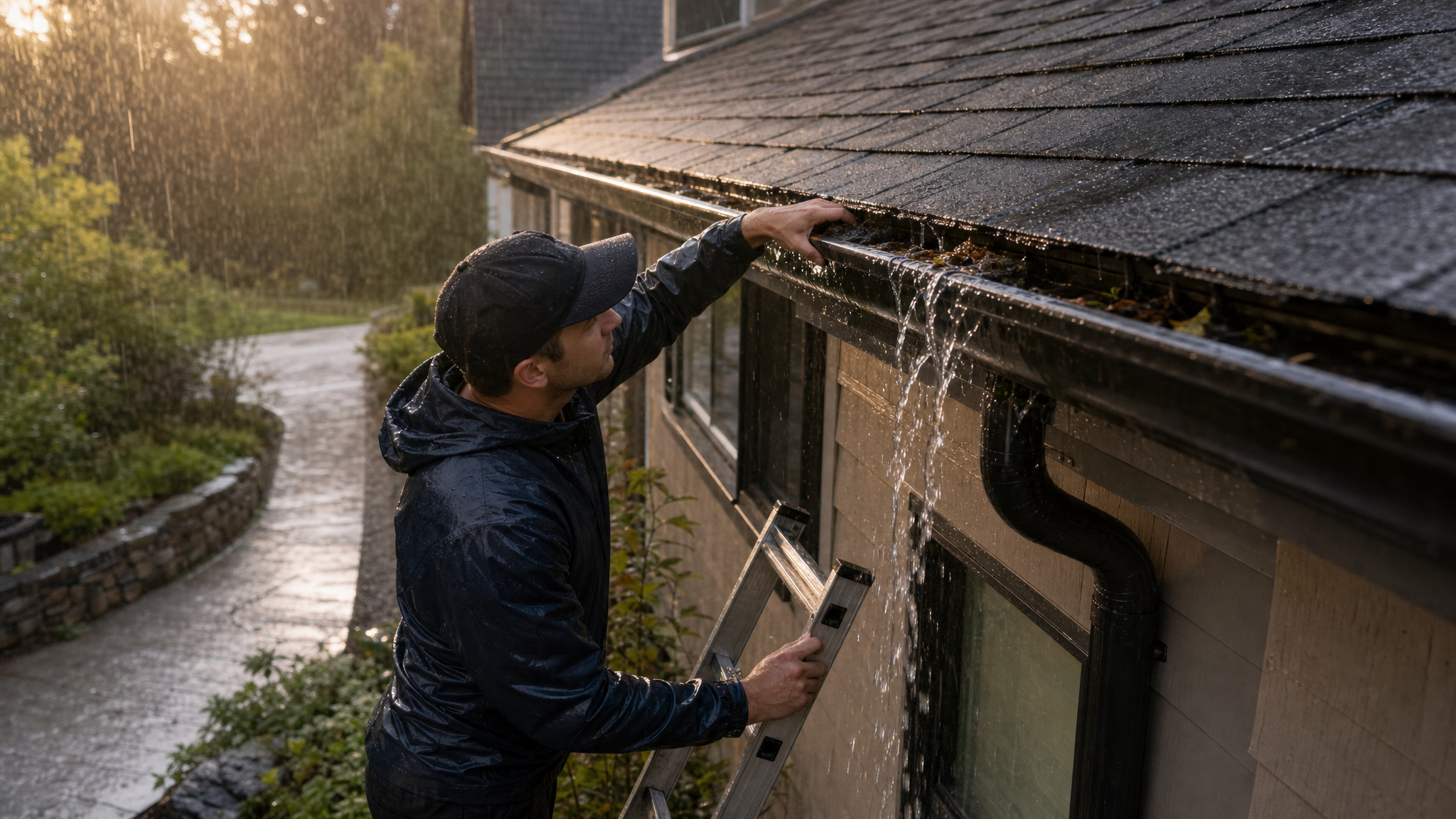
Roof Damage: From Shingles to Structural Decay Standing water in a clogged gutter wicks back under your drip edge and shingles during freeze-thaw cycles, a problem Upstate New York homeowners face regularly from November through March. This process is called ice damming. As water freezes and expands beneath shingles, it lifts them, breaks the seal strips, and allows liquid water to penetrate the roof deck on the next warm day.
Over multiple winters, this cycle causes granule loss, shingle cracking, and eventually rot in the underlying wood sheathing. What started as a drainage problem becomes a Roof Repair or even a full Roof Replacement situation. The seasonal gutter maintenance guide from Werner Roofing confirms that winter-related water damage is among the leading causes of premature roof deterioration in northern climates, with some estimates suggesting it shortens shingle lifespan by 3 to 7 years.
Foundation Failures and Basement Water Intrusion
When downspouts discharge water too close to the house, or gutters overflow directly against the foundation, the soil around your basement walls becomes saturated. Hydrostatic pressure builds against the concrete or block, and water finds any crack or joint to enter. Even a small seam in a poured concrete foundation wall can admit gallons of water per hour during a heavy rain. Foundation repair is among the most expensive home improvement categories, with costs ranging from $3,000 to $5,000 for crack injection to $20,000 or more for full waterproofing systems or wall reconstruction.
Proper gutter downspout placement and grading away from the foundation are among the cheapest preventative measures available to any homeowner.
The Roofing and Maintenance Checklist That Works
A consistent routine requires less than two hours twice a year and prevents the majority of water-related home damage claims.
Spring and Fall Gutter Inspection and Cleaning
| Task | Spring | Fall |
|---|---|---|
| Remove debris from gutters | Yes | Yes |
| Flush gutters with a hose | Yes | Yes |
| Check for sagging or separation | Yes | Yes |
| Inspect downspout outlets | Yes | Yes |
| Check fascia for soft spots or rot | Yes | Yes |
| Confirm downspout extensions clear the foundation | Yes | Yes |
| Look for standing water after rain | No | Yes |
Complete each task in sequence. If water drains slowly or pools in the trough after flushing, the slope needs adjustment. If the fascia feels soft under pressure, the wood has absorbed moisture and requires prompt attention.
Annual Roof Condition Assessment
Pair your fall gutter cleaning with a basic Roof Inspection. Walk the perimeter and use binoculars to look for curling, cracking, or missing shingles. Check the flashing around chimneys, skylights, and pipe penetrations for rust, gaps, or separation.
If your roof is more than 15 years old, an annual professional inspection adds significant value. We’ve seen minor flashing gaps that cost $150 to seal escalate to interior water damage exceeding $4,000 when they went unaddressed for even one winter season. The basic roof inspection checklist for homeowners covers what to look for from the ground and when to escalate to a professional.
Downspout Extensions and Drainage Verification
Gutter downspout placement matters more than most homeowners realize. The discharge point should direct water at least 4 to 6 feet away from the foundation, and the ground should slope away from the house at roughly 1 inch per foot for the first 6 feet. Rigid extensions or flexible corrugated tubes accomplish this simply and inexpensively, often for under $30 per downspout.
After every heavy rain, verify the discharge path is clear and water is moving away from the house, not toward it.
When to Call a Professional for Roofing and Maintenance Services
Signs Your Gutters Need Repair or Replacement Some gutter problems are easy DIY fixes. Spiked hangers can be replaced with hidden screws, and minor end-cap leaks can be resealed with gutter caulk. But certain conditions call for professional assessment.
- Gutters that sag more than 1 inch over a 10-foot span
- Visible rust, holes, or cracked seams along the trough
- Fascia board that is soft, discolored, or separating from the wall
- Gutters that overflow at multiple points during moderate rain despite being clean
- Downspouts that are crushed, disconnected, or draining into the foundation perimeter
If you’re seeing any of these signs, review the essential gutter repair tips for homeowners before deciding whether the situation requires professional service.
Roof Damage Indicators That Require Expert Inspection
Certain roof conditions should never wait for your next seasonal check. When working with clients on Storm Damage Roofing and Commercial Roofing properties, we consistently find that delayed inspections lead to claim complications and higher out-of-pocket costs. Call a professional when you notice:
- Shingles that are curling at the corners or buckling along the surface
- Dark staining or algae streaks running vertically down the roof face
- Granules accumulating in the gutters (a reliable sign of advanced shingle wear)
- Any visible daylight in the attic when you inspect from inside
- Water stains on interior ceilings, particularly near exterior walls or chimneys
If your home experienced a hail storm or high winds, schedule an inspection promptly. Storm damage often isn’t visible from the ground, and delayed claims can complicate insurance reimbursement. Understanding what to expect during a roof replacement helps you ask the right questions when a contractor assesses storm-related deterioration.

Getting Started: Your Next Steps for Protecting Your Home
The clearest action most homeowners can take right now is scheduling the maintenance they’ve been deferring. If you haven’t cleaned your gutters since last year, that’s the starting point. If your roof is approaching or past the 15-to-20-year mark, a professional inspection should be on your calendar this season, not next.
For homeowners in the Capital Region, including communities like Colonie, Troy, and surrounding areas, seasonal timing is especially important. Upstate winters are hard on gutters and roofing systems alike, and pre-winter preparation in October and early November is the single highest-value maintenance window of the year. Property protection isn’t about any one repair.
It’s about consistent attention to the systems that manage water: your roof, your gutters, and the drainage path away from your foundation. Get any one of those wrong, and the others are compensating for it.
Frequently Asked Questions
How often should you clean gutters in Upstate New York?
Most homes in Upstate New York need gutter cleaning at least twice a year, once in late spring after pollen and seed drop, and again in late fall after leaves are down. Homes surrounded by mature trees, especially oaks or pines, may need a third cleaning in midsummer. The region’s heavy snowfall and freeze-thaw cycles make pre-winter cleaning particularly critical.
What is the best time to clean gutters before winter?
The best time to clean gutters heading into winter is late October through mid-November, after most leaves have fallen but before the first hard freeze. Cleaning during this window ensures downspouts are clear before ice and snowmelt begin cycling through the system. Cleaning after a freeze is both harder and riskier, and debris left in place contributes directly to ice dam formation along the eaves.
How does gutter downspout placement affect my foundation?
Gutter downspout placement is one of the most underestimated factors in foundation health. If a downspout discharges water within 2 feet of the foundation, that water saturates the soil directly against your basement wall. Over time, the repeated wetting and drying cycle weakens mortar joints, causes concrete to crack, and creates conditions for basement water intrusion.
Extending downspouts 4 to 6 feet from the foundation and ensuring the ground slopes away from the house resolves the majority of these problems without any major excavation.
Can clogged gutters really damage a new roof?
Yes. A new shingle roof actually sheds water more efficiently than a worn one, which means a clogged or undersized gutter system becomes overwhelmed faster. Backed-up water pushes under the drip edge and against the starter course of shingles.
During freezing temperatures, that water expands and lifts shingles, breaks the adhesive seal strip, and creates pathways for leaks. New roofing materials do not protect against damage caused by a gutter system that cannot handle the drainage load.
What are the signs that my gutters need professional repair rather than DIY cleaning?
DIY cleaning handles debris removal, but certain conditions require a professional eye. Call a roofing or gutter specialist when you see persistent overflow during moderate rain despite clean gutters, visible holes or rust along the trough, fascia boards that feel soft or look discolored, or gutters that have separated from the roofline by more than a half-inch. These are signs the system has deteriorated beyond what cleaning alone can address.
The essential gutter repair tips for homeowners covers the line between a fixable DIY issue and one that warrants professional intervention.
How does keeping gutters clear connect to roof replacement timelines?
Gutters that function correctly extend the service life of your roofing system by preventing moisture accumulation at the eaves and roof deck. When gutters fail and water backs up repeatedly, it accelerates shingle deterioration, fascia rot, and decking damage, all of which shorten the useful life of the roof. Homeowners who maintain their gutters consistently often see their asphalt shingle roofs reach or exceed the manufacturer’s rated lifespan of 20 to 30 years.
Those who skip maintenance frequently find themselves considering Roof Replacement years earlier than expected.
Is it worth upgrading to seamless gutters for better maintenance outcomes?
Seamless gutters eliminate the seamed joints found in sectional gutters, which are the most common points of leakage and debris accumulation. For homes with persistent gutter leaks or frequent joint failures, upgrading to a seamless system reduces long-term maintenance demands and improves water flow reliability. According to roofing industry guidance, seamless gutters can reduce leak-related callbacks by a significant margin compared to standard sectional systems.
Learn more about how proper gutter systems protect your roof and foundation before deciding whether an upgrade makes sense for your property. — The table below summarizes the most common gutter and roof maintenance tasks, recommended frequency, and the risk level of skipping each one.
| Maintenance Task | Recommended Frequency | Risk If Skipped |
|---|---|---|
| Gutter cleaning (light tree coverage) | Twice per year | Moderate: overflow, fascia damage |
| Gutter cleaning (heavy tree coverage) | 3, 4 times per year | High: ice dams, roof deck moisture |
| Downspout extension check | Annually | High: foundation saturation |
| Fascia and soffit visual inspection | Annually | Moderate: hidden rot, pest entry |
| Roof condition walkthrough | Annually | High: missed damage, voided warranty |
| Professional roof inspection (15+ yr roof) | Annually | High: accelerated deterioration |
| Gutter slope and alignment check | Every 2, 3 years | Moderate: standing water, bracket failure |
Consistent roofing and maintenance doesn’t require a large time investment. What it requires is regularity. A two-hour routine twice a year, combined with a professional inspection every year or two, addresses the vast majority of risks before they become costly repairs.
If you’re a homeowner in the Capital Region and you’re unsure where your property stands, contact Top Gen Roofing for a professional assessment. Kyle Hitchcock and the team serve communities across Upstate New York, from Colonie and Latham to Troy and beyond, with straightforward guidance and workmanship built to last.