

Key Takeaways
- Roof age is the starting point: most asphalt shingle roofs last 20 to 30 years, and an older roof with damage usually warrants replacement over repair.
- The 50 percent rule is a practical financial benchmark: if repair costs exceed half the price of a new roof, replacement is usually the smarter investment.
- Localized, minor damage on a roof with years of life remaining is the clearest case for repair.
- Multiple leaks, widespread shingle failure, or compromised roof decking are strong signals that replacement is overdue.
- Always get a professional inspection before committing to either path.
- Deciding whether to repair roof damage or invest in a full teardown is one of the most consequential calls a homeowner makes.
- This guide gives you a direct answer: if your roof is under 15 years old and damage is isolated, repair is almost always the right move.
Key Factors That Determine Repair vs. Replacement
Whether you repair or replace comes down to three things above everything else: how old the roof is, how much of it is damaged, and what shape the underlying structure is in.
No single factor tells the whole story. You need to weigh age, damage scope, and structural integrity together before drawing any conclusion.
Roof Age and Remaining Lifespan
Standard asphalt shingle roofs are designed to last roughly 20 to 30 years depending on material quality, installation, and local weather conditions. If your roof is under 15 years old and damage is isolated, repair almost always makes sense. Once a roof pushes past 20 years, the calculus changes.
Even a successful repair leaves you with aging shingles that are losing granules, becoming brittle, and approaching the end of their service life.
A roof that’s 25 years or older with any meaningful damage is often a replacement candidate, not a repair candidate. According to guidance from Owens Corning’s roofing resource center, age combined with the scale of damage is one of the most reliable indicators contractors use to steer homeowners toward the right solution.
Extent and Location of Damage
Small, contained problems, a few missing shingles, minor flashing failure around a chimney, a single leak at a pipe boot, are straightforward repair jobs. The damage is finite and the fix is proportionate.
Widespread problems are a different story. If damage covers more than 25 to 30 percent of the roof surface, or if multiple sections are failing at the same time, repair starts looking more like a temporary fix than a real solution. As Bob Vila’s expert guidance on repair vs. replacement notes, location matters too: damage directly above living spaces or near structural penetrations causes faster and more expensive secondary damage when it isn’t addressed comprehensively.
Current Roof Condition and Underlying Structure
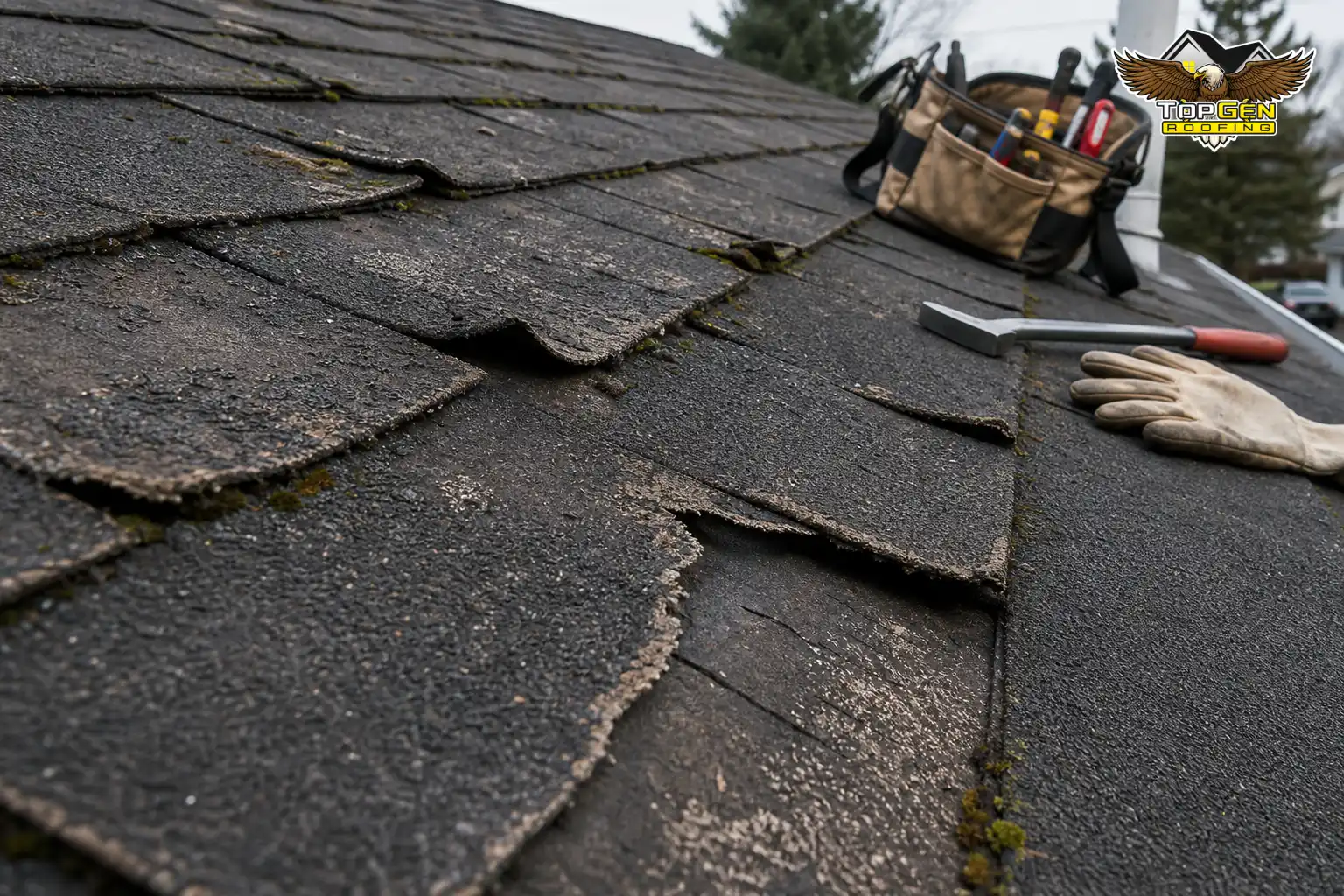
Shingle condition tells a story beyond the obvious damage. Widespread granule loss, curling edges, cracking, or moss growth across most of the roof surface signals systemic decline. The bigger concern is what’s underneath.
If the roof decking shows signs of rot, softness, or water saturation, repair alone won’t fix the underlying problem.
Cost Comparison: Repair Expenses vs. Replacement Investment
Understanding the real numbers helps you make a financially sound decision rather than a reactive one.
Typical Repair Costs by Damage Type
Repair costs vary with what’s actually failing. Minor jobs, sealing a flashing gap or swapping out a handful of shingles, typically run a few hundred dollars.
More involved work, such as tracking down an active roof leak, replacing damaged decking in a localized section, or pulling and resetting a larger shingle area, can range from $500 to $1,500 or more.
For accurate guidance on what a professional repair involves, see the roof leak repair service page at Top Gen Roofing.
| Repair Type | Typical Cost Range |
|---|---|
| Minor shingle replacement (few shingles) | $150, $400 |
| Flashing repair or reseal | $200, $500 |
| Roof leak repair (single area) | $400, $1,200 |
| Larger section repair or decking patch | $800, $2,000+ |
| Hail or storm damage repair | $500, $2,500+ |
Full Replacement Cost and Financing Options
A new roof replacement on a typical residential home in upstate New York runs roughly $8,000 to $20,000 or more, depending on roof size, pitch, material choice, and whether existing layers need to come off first. That’s a real number worth planning around. Most homeowners cover it through insurance claims, a home equity line of credit, or contractor payment plans, especially after a weather event that qualifies as a covered loss.
If you’re weighing that investment, the roof replacement cost guide for Albany, NY gives regional pricing that maps directly to the Capital Region.
The 50 Percent Rule and Long-Term Value Analysis
A reliable industry benchmark is the 50 percent rule: if the cost of repairing your roof exceeds 50 percent of what a complete new roof would cost, replacement is typically the smarter investment. The logic is straightforward, you’re spending nearly as much either way, but a repair leaves you with an aging system while a new roof comes with a full warranty and 20 or more years of remaining life.
Warning Signs Your Roof Needs Immediate Repair
Some problems can’t sit on a to-do list. These are the signals that should put roof repair on your calendar this week.
Visible Damage and Leaks
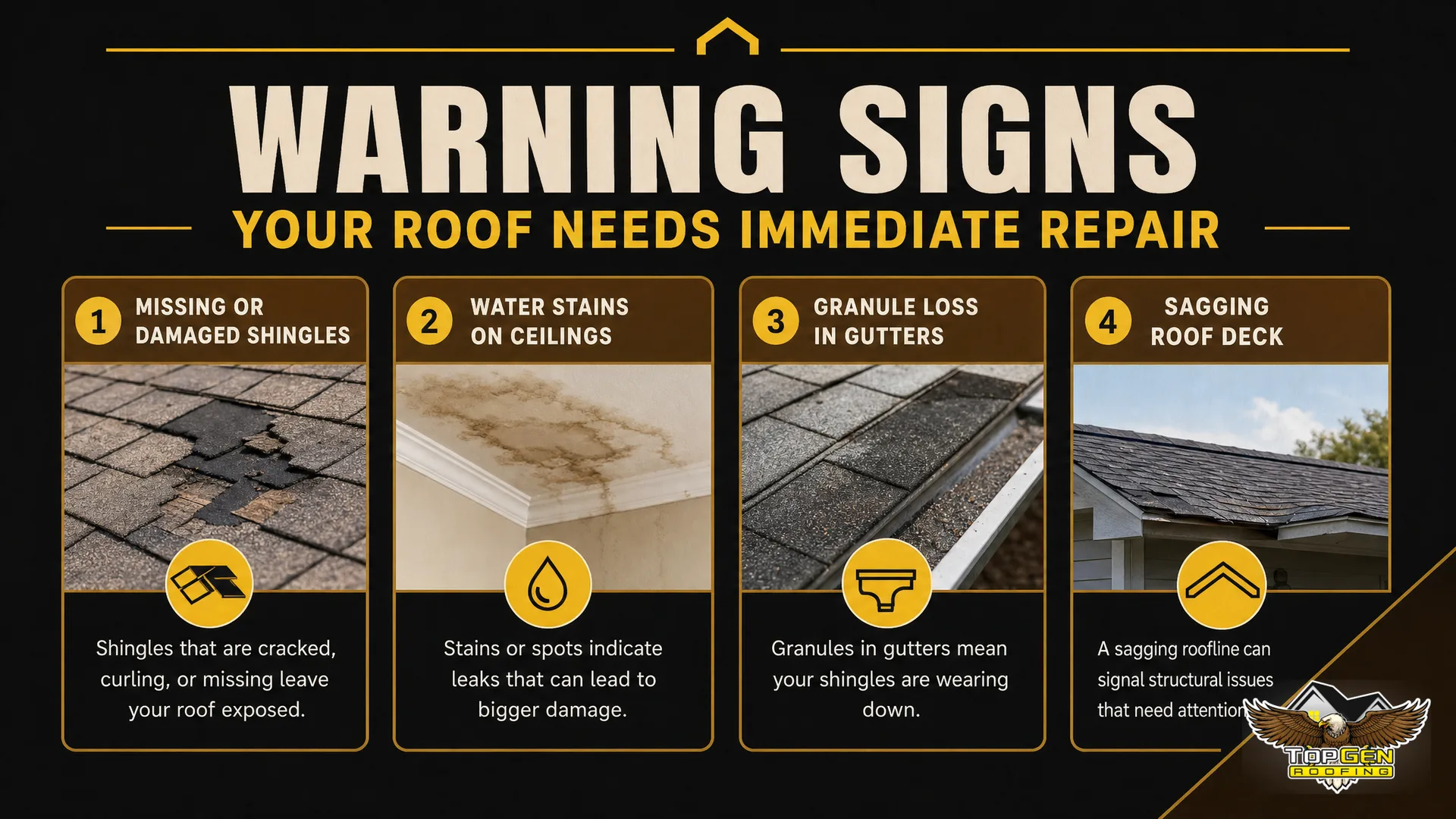
Missing shingles, cracked or lifted shingles, and damaged flashing around chimneys, skylights, or vents are all active entry points for water. A leak dripping into your attic or ceiling during rain is already causing damage beyond the roof itself. If you need guidance on stopping active water intrusion, the expert roof leak repair guide covers the process in detail.
Don’t ignore granule accumulation in your gutters either. Heavy granule loss accelerates UV exposure and shingle failure.
Structural Issues and Interior Water Damage
Water stains on ceilings or walls, sagging on the roof plane, or soft spots in the attic floor all mean the damage has moved well past the surface. Interior water damage from a failing roof compounds fast. Wet insulation loses its R-value, wood rot spreads, and mold can take hold within days of sustained moisture exposure.
If you notice any of these inside your home, get a professional on the roof immediately. These aren’t watch-and-wait situations.
When Roof Replacement Is the Better Long-Term Choice
Some roofs have hit the point where repair just buys time. Recognizing that early saves you from spending money on a system that’s already past its useful life.
Multiple Problem Areas and Repeated Repairs
Two or three service calls in the past few years for different issues isn’t bad luck, it’s a failing roof. That pattern shows up consistently in Residential Roofing assessments across the Capital Region: problem areas scattered across different sections, on a roof at or past 20 years old, almost always means replacement is overdue.
Each repair bought time. Now the time is up.
As Gorilla Roofing explains in their contractor perspective, experienced contractors evaluate the whole roof, not just the spot that got the call. When a roofer identifies five other problem areas while fixing the one you knew about, that’s honest guidance, not upselling.
If replacement is the direction you’re heading, the roof replacement preparation guide walks through the full process so you know what to expect before the crew shows up.
Energy Efficiency and Insurance Considerations
An aging, deteriorating roof does more than leak. It loses insulating effectiveness. Gaps, poor ventilation, and degraded shingles all drive up heating and cooling costs, and a new roof with modern materials and properly designed ventilation can put a real dent in that energy loss.
Your insurance policy is worth reviewing before you decide. Some carriers apply depreciation schedules to older roofs or cap coverage once a system passes a certain age. Working through Storm Damage Roofing claims across New York’s Capital Region, we’ve seen payouts on older roofs reduced significantly by depreciation, a detail that catches many homeowners off guard after a major weather event.
Claims tied to Roof Repair or Roof Replacement after hail and wind events go most smoothly when the system is still within its effective service life.
Steps to Make Your Decision
Don’t guess. Follow a clear process and you’ll have the information you need to make a confident, well-supported call.
Schedule a Professional Roof Inspection
A qualified roofer can assess age, damage scope, decking condition, and shingle health in a single visit. This step should come before any quotes or commitments. A professional Roof Inspection gives you an objective picture of where your system actually stands, not where you hope it stands.
For Commercial Roofing properties, the same principle applies: a documented inspection is the foundation for any sound repair-or-replace decision.
Get Multiple Quotes and Compare Options
Once you have an inspection report, get two to three quotes covering both the repair option and a full new system. Compare scope of work, materials, warranties, and timeline. Price alone is a poor decision driver: a contractor who comes in $500 lower but skips proper flashing detail or installs lower-grade shingles will cost you more within a few years.
For guidance on vetting contractors, see how to choose the best roofing company for your home.
Review Your Home’s Insurance Coverage
Pull out your homeowner’s insurance policy before making a final call. Confirm what’s covered, whether your roof is insured at replacement cost value or actual cash value, and whether your current damage qualifies as a covered loss. Hail, wind, and weather-related failures are frequently covered, but policy details vary.
Next Steps: Getting Your Roof Fixed or Replaced
You have a clear framework. The next move is simple: get a professional look at your roof before committing to either path.
Top Gen Roofing works with homeowners and commercial property owners across Saratoga Springs, New York and the surrounding Capital Region. Every job starts with an honest assessment of what the roof actually needs, not what generates the largest invoice. With hands-on experience in Roof Installation, Shingle Roofing, and project estimation, the team brings the same straight-talking approach to every job, residential or commercial.
You can also explore essential roof repairs that protect your home for a closer look at what professional repair work involves before your inspection appointment.
Ready to stop guessing and get a real answer? Request your FREE estimate within 24 hours and someone from the Top Gen Roofing team will reach out to schedule your inspection.
Frequently Asked Questions
How do I know if I should repair or replace my roof?
Start with age and scope. A roof under 15 years old with a single localized problem is typically a repair candidate. A roof over 20 years old showing multiple failing areas, granule loss across most of the surface, or any decking damage is usually better served by a full new system.
When in doubt, a professional inspection gives you the objective information you need to decide with confidence.
How much does roof repair cost?
Minor repairs, replacing a few shingles or sealing flashing, typically run $150 to $500.
How much does a new roof cost compared to repair?
Repair costs are significantly lower upfront, but that gap narrows when repairs are frequent or extensive.
How do I repair a roof leak myself as a temporary fix?
For minor, accessible leaks, roofing cement or a peel-and-stick patch applied over the damaged area can serve as a temporary stop-gap.
A professional should still inspect the roof to find the true source, water rarely appears inside directly below where it’s entering.
Does homeowner’s insurance cover roof repair or replacement?
Coverage depends on the cause of the damage and your policy terms.
If a storm recently hit your area and you’re seeing new damage, file a claim promptly and photograph everything before any work starts.
Your insurer will send an adjuster to assess the scope.
What is the 50 percent rule for roof replacement?
The 50 percent rule is a practical industry guideline: if your repair cost equals or exceeds 50 percent of a complete new system, replacement is typically the financially sound move.
How long does a roof repair typically take?
Most minor to moderate repairs wrap up in a single day, often just a few hours.
 FREE estimate within 24 hours Share a few details with Top Gen Roofing, we’ll help you choose the right next step. Get a free estimate |