


Key Takeaways
- A legitimate roofing estimate names specific materials, product lines, and labor costs separately.
- Low bids often hide missing line items like underlayment, ventilation, or disposal fees.
- Comparing estimates on an equal scope is the only way to make a fair cost-per-square calculation.
- Pressure tactics and vague descriptions are the clearest signs of a contractor you should avoid.
- Always verify insurance, permits, and warranty coverage before you commit.
Why Roofing Estimates Confuse Homeowners
Most homeowners buy a new roof once or twice in a lifetime. Contractors write estimates every week. That information gap is where confusion and costly mistakes happen.
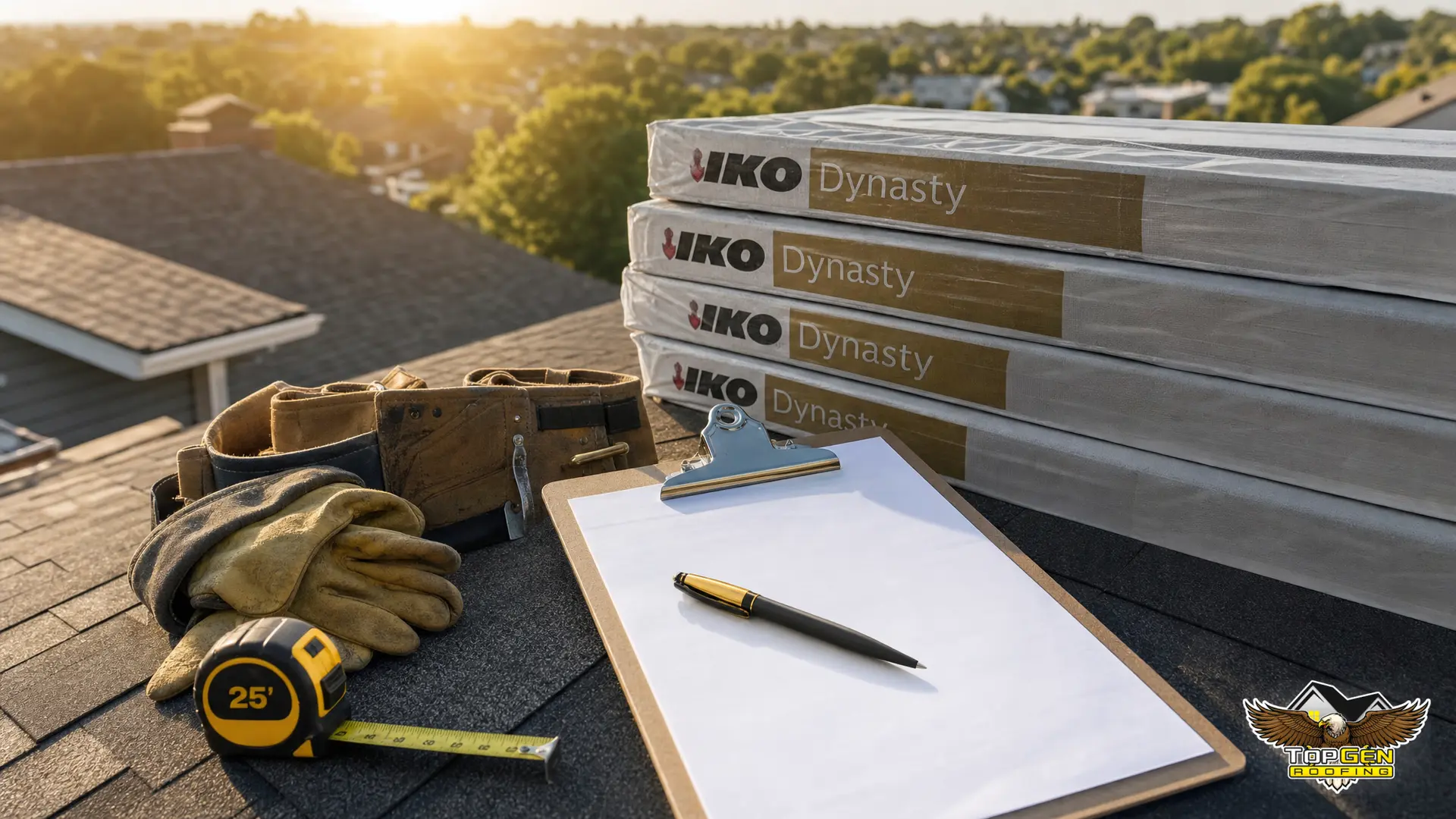
A roofing estimate should read like a clear project plan, not a puzzle. If you cannot identify what materials are being installed and who is doing the work, the estimate is incomplete.
Industry jargon and unfamiliar terminology
Terms like "roofing square," "starter course," "drip edge," "ice and water shield," and "ridge cap" show up in every quote. Without context, these words blur together. A roofing square equals 100 square feet of roof surface, so a 2,000-square-foot roof is roughly 20 squares.
Knowing this one term lets you immediately evaluate roofing estimate per square pricing across competing bids.
Understanding basic terminology also prevents substitutions. If an estimate lists "standard underlayment" but a competitor specifies "synthetic underlayment," those are different products with different performance levels and lifespans.
Hidden costs and vague line items
Removal of old shingles, disposal fees, plywood decking replacement, and ventilation upgrades are common items that disappear into vague totals on low-quality estimates. You end up approving a price only to face add-on charges mid-project. A clear estimate itemizes every cost so there are no surprises when the crew shows up.
Wide price variations between contractors
Quotes for the same roof can vary by thousands of dollars. Some of that reflects genuine differences in material quality and labor experience. But a lot of it comes from one contractor including every cost while another leaves out decking replacement, cleanup, or permits.
You are not always comparing the same job.
The Anatomy of a Clear Roofing Estimate
A honest roofing estimate breaks the project into distinct, readable sections. If yours reads as one lump sum, ask for an itemized version before going any further. Reputable contractors provide itemized quotes as standard practice, as outlined in roofing estimate guides from industry sources.
Materials section and product specifications
The materials section should name the shingle manufacturer and product line (for example, GAF Timberline HDZ or Owens Corning Duration), the shingle weight class, underlayment type, ice and water shield coverage, drip edge material, ridge cap brand, and flashings. Generic references like "architectural shingles" without a product name leave the door open for substitutions you did not agree to.
Warranty coverage ties directly to product specifications. Many manufacturer warranties require installation of a complete matching system, not just the shingle. If the estimate lists off-brand components paired with a name-brand shingle, you may void the manufacturer warranty without knowing it.
Labor costs and timeline breakdown
Labor should be a separate line from materials, not bundled into a single number. Look for the crew size, projected start date, and completion window. A roof replacement on a typical single-family home in New York generally takes one to three days, depending on roof size and complexity.
You can learn more about realistic timelines in our guide to how long a roof replacement takes in New York.
Permits, taxes, and additional fees
Building permits are required for most roof replacements in New York State. A contractor who does not mention permits either plans to skip them (a serious liability for you as the homeowner) or has quietly embedded the cost somewhere. Verify that permit fees appear as a named line item.
Also confirm whether disposal and dumpster fees are included or charged separately.
| Line Item | Should Appear On Estimate | Common Omission |
|---|---|---|
| Shingle brand and product line | Yes | Replaced with "architectural shingles" |
| Underlayment type | Yes | Listed as "standard" only |
| Ice and water shield | Yes | Left off entirely |
| Decking/plywood replacement | Conditional (if needed) | Quoted as an unapproved add-on later |
| Disposal and cleanup | Yes | Hidden or charged separately |
| Permit fees | Yes | Skipped or bundled without disclosure |
| Labor (separate from materials) | Yes | Merged into a single total |
Red Flags in Roofing Estimates
If a bid is significantly lower than every other quote you received, something is missing, not saving you money.
Unusually low bids and missing details
A bid that comes in much lower than competitors is almost always missing something. Common omissions include the tear-off and disposal of existing shingles, ice and water shield (especially important in upstate New York winters), deck inspection and board replacement, and permit fees. What looks like savings on paper often becomes a mid-project change order that costs more than the original difference.
Vague descriptions and generic line items
Watch for phrases like "all necessary work," "standard materials," or "roofing as needed." These give a contractor room to install whatever is cheapest and still claim they delivered what was promised. Every material and every task should have a name, a quantity, and a unit cost. Detailed guides on what a roofing estimate must include consistently point to vague line items as the top cause of homeowner disputes.
Pressure tactics and time-limited offers
A contractor who tells you the price expires in 24 hours or that they can start immediately if you sign today is using urgency to prevent you from comparing quotes. Honest pricing does not disappear overnight. Take the time you need to evaluate at least two or three estimates before making a decision.
How to Compare Multiple Roofing Estimates
Ensure estimates are based on the same scope
Before comparing dollar figures, confirm that each estimate covers the same scope. Does every quote include tear-off, decking inspection, new underlayment, and cleanup? If one contractor left out ice and water shield and another included it, the cheaper quote may actually deliver less value.
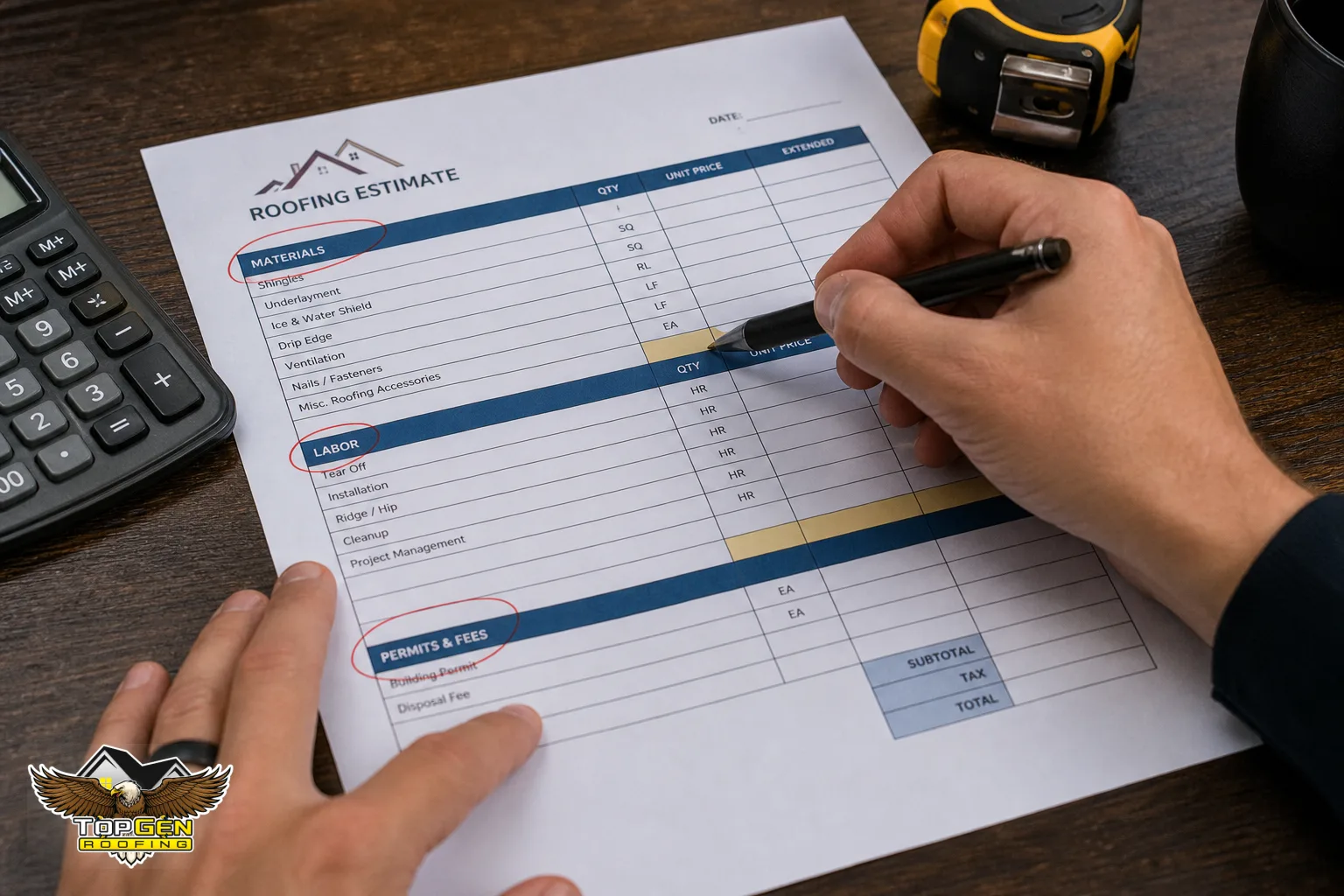
Build a side-by-side checklist for each estimate you receive.
Verify contractor credentials and insurance
Every contractor you consider should carry general liability insurance and workers’ compensation coverage. Ask for certificates directly. A contractor without workers’ comp leaves you financially exposed if someone is injured on your property.
In New York State, roofing contractors must be properly licensed, so verify any required local licensing before signing. You can review our process and credentials at the Top Gen Roofing roofing process page.
Calculate the real cost per square and warranty coverage
Once you have itemized estimates on equal scope, divide the total price by the number of roofing squares to get a meaningful cost per square comparison. A higher cost per square can be justified by better materials, longer warranties, or experienced crews. A lower cost per square with identical specs may simply mean one contractor is more efficient, or cutting corners somewhere.
| Comparison Factor | What to Look For |
|---|---|
| Scope of work | Same items on every estimate |
| Material brand and grade | Named product lines, not generic descriptions |
| Labor warranty | Minimum 1, 2 years on workmanship |
| Manufacturer warranty | 25, 50 years depending on shingle class |
| Insurance | Current COI for liability and workers’ comp |
| Payment schedule | Deposit only, balance on completion |
Key Questions to Ask Before Signing
Clarifying warranty terms and coverage
Ask specifically what the workmanship warranty covers and for how long. Then ask about the manufacturer warranty on the shingle system. These are two separate warranties, and both matter.
A shingle might carry a 50-year warranty from the manufacturer but only a one-year labor warranty from the installer. Know what each covers before you sign. You may also want to spot roofing problems early so you can document anything that falls outside normal wear.
Understanding payment schedules and deposit policies
A reasonable deposit for a residential roof is typically 10, 30% upfront, with the balance due on completion. Any contractor asking for 50% or more before work begins is a warning sign. Never pay in full before the crew starts.
Structure payments to track with project milestones when possible.
Confirming cleanup, disposal, and protection measures
Ask how the crew will protect your landscaping, siding, and windows during tear-off. Old shingles and nails fall in every direction. A contractor who plans for this includes tarps, magnetic nail sweepers, and a clear debris removal plan in the estimate.
Learn more about protecting your home in our guide on how to avoid property damage during roof repair and replacement.
Next Steps: From Estimate to Contract
Once you select a contractor, the estimate converts into a formal contract. Review it carefully to confirm it matches every item on the estimate. The contract should name the start date, completion window, payment schedule, warranty terms, and a process for handling unforeseen issues like damaged decking discovered during tear-off.
Do not rely on verbal promises. Every scope change should be documented as a written change order before work proceeds. This protects you and the contractor from disputes about what was agreed.
For a full look at what the replacement process involves, see our guide to what to expect from a roof replacement.
A solid estimate handled correctly becomes a project you can track against expectations at every stage, with no surprises at the final invoice.
Frequently Asked Questions
What should a roofing estimate always include?
Every roofing estimate should include named materials with brand and product line, a separate labor cost, tear-off and disposal fees, permit costs, and a clear warranty breakdown. If any of these are missing, ask for a revised estimate before comparing it to other bids.
Vague estimates leave room for substitutions and change orders. An itemized estimateprotects you from discovering mid-project that the contractor swapped materials without notice.
How do I get a roofing estimate without being pressured into signing?
To get a roofing estimate without pressure, contact at least three contractors and make clear upfront that you are gathering multiple quotes before making a decision. Any reputable contractor will respect that process. If a company pushes back or withdraws their offer when you ask for time, that tells you everything you need to know about how they operate.
Schedule estimates on separate days so you can review each one without a salesperson in the room. Take notes, ask questions by email so you have a written record, and never sign anything on the first visit.
How is roofing cost calculated per square?
Roofing cost per square is the total installed price divided by the number of squares on your roof. One roofing square equals 100 square feet. A contractor measuring a 2,200-square-foot roof will calculate approximately 22 squares, then price materials and labor against that figure.
Per-square pricing varies by material, region, and project complexity. Steep-slope roofs, multiple valleys, and extensive flashing work all add cost. When comparing bids, confirm that each contractor measured the same number of squares, discrepancies in the square count often explain large price gaps between estimates.
Industry resources like this roofing estimate comparison guide explain how per-square pricing works across different material types.
What is a reasonable deposit for a roofing project?
A reasonable deposit is typically 10, 30% of the total project cost, paid after you sign a written contract. This amount covers material ordering and scheduling. Any contractor asking for 50% or more upfront, or demanding full payment before work begins, is operating outside normal industry practice.
Pay deposits by check or credit card so you have a paper trail. Avoid cash payments at any stage of the project.
How long is a roofing estimate valid?
Most contractors hold estimates for 30 days, though material prices can shift with supply chain conditions. If you receive an estimate and take several weeks to decide, ask the contractor to confirm whether pricing is still current before you sign.
An estimate that "expires in 24 hours" is almost always a sales tactic, not a genuine material cost issue. Honest contractors build reasonable validity windows into their quotes because they want your business and respect your decision-making timeline. Guides covering how to read a roofing estimate line by line consistently note that artificial urgency is one of the clearest warning signs in the bidding process.
Does a roofing estimate include permits?
It should. Building permits for roof replacements are required in most New York municipalities, including the Saratoga Springs area. The permit cost is the homeowner’s responsibility, but a reputable contractor pulls the permit on your behalf and includes the fee as a named line item in the estimate.
If permits are not mentioned, ask directly. Working without a permit can create issues when you sell the home or file an insurance claim. Never assume a contractor has handled permits unless you see documentation confirming it.
You can find answers to more common questions about the roofing process on our frequently asked questions page.
 FREE estimate within 24 hours Share a few details with Top Gen Roofing, we’ll help you choose the right next step. Get a free estimate |